Google is using the Declaration of Independence to sell collaborative software, because apparently the AI pitch deck has reached powdered-wig territory.
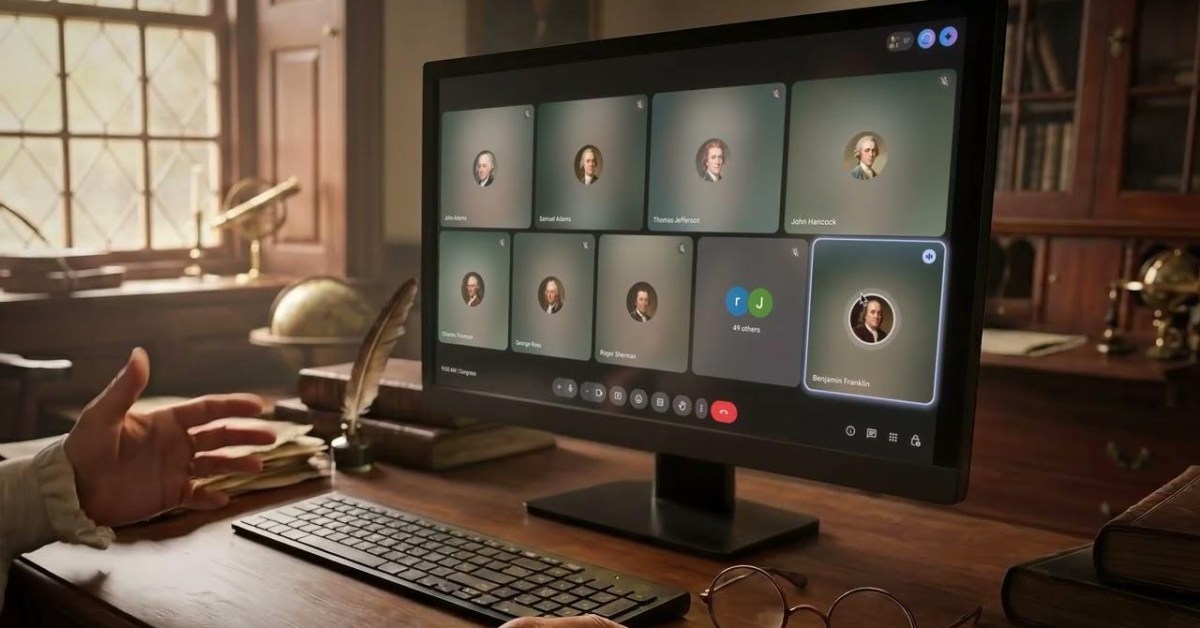
A commercial for Google Workspace casts the American founders as if they were wrangling a shared document in 1776. The conceit is straightforward: Thomas Jefferson, Benjamin Franklin and John Adams get access to Google Docs, Meet and Gemini while drafting the Declaration of Independence.
According to Google’s video, the ad starts with the line, “Group project, but make it 1776.” From there, Franklin messages Jefferson about the draft. Jefferson photographs handwritten text, then uses AI to turn it into a Google Doc. Franklin and Adams join the file and propose changes using suggestion mode.
The spot then pushes more of Google’s current work stack. Gemini finds a time for the group to meet, records notes during a Google Meet call and advises on the document workflow. The ad also shows Nano Banana generating a proposed United States seal with a turkey, rather than the eagle that became the national emblem.
The final gag has the founders ask Gemini whether King George III should receive editing permission on the Declaration. That is the sort of joke only a cloud permissions screen could love.
The ad turns political writing into a SaaS demo
The mechanics are familiar to anyone who has been trapped in a shared document: photo-to-text capture, collaborative edits, calendar scheduling, meeting notes and access control. Google’s pitch is that Workspace plus Gemini can smooth the friction out of group writing. The ad’s historical packaging argues, through comedy, that even one of the country’s best-known political documents would have benefited from the company’s tools.
That framing drew criticism from tech and history observers. The Verge’s Terrence O’Brien described the commercial as irritating and questioned the premise of using AI as a helper for founding-era politics. TechCrunch also covered the ad, linking it to Google’s broader effort to market AI features through Workspace.
CUNY history professor Angus Johnston criticized the premise in a Bluesky post quoted by The Verge. “Even in a corny fantasy joke, it’s impossible to make the case that AI is a useful tool for political organizing, writing, or human collaboration,” Johnston wrote.
The commercial does not claim that Gemini wrote the Declaration, at least in the sequence described by Google’s video and The Verge. It presents the AI system as a transcription, scheduling, note-taking and advice layer around the drafting process. That distinction matters, though it may not rescue the ad from the larger weirdness of turning revolutionary political work into a workplace productivity skit.
Google’s immediate point is mundane: Workspace is where teams draft, comment, meet and manage permissions, now with Gemini plugged into the plumbing. The cultural bet is less mundane. The company is asking viewers to accept generative AI as a natural participant in writing and organizing. For critics, the 1776 costume only makes that ask more grating.
This story draws on original reporting from The Verge.