Eight Sleep’s Pod 5 gives buyers a bed that can heat, cool, track sleep and adjust itself overnight. WIRED reviewer Boutayna Chokrane, who tested the Core bundle for three months, rated it 7 out of 10 and found the temperature control useful enough to keep using. The catch is the familiar smart-home bargain: the hardware is costly, the best features sit behind a subscription, and the device sends intimate sleep data into a cloud-connected system.
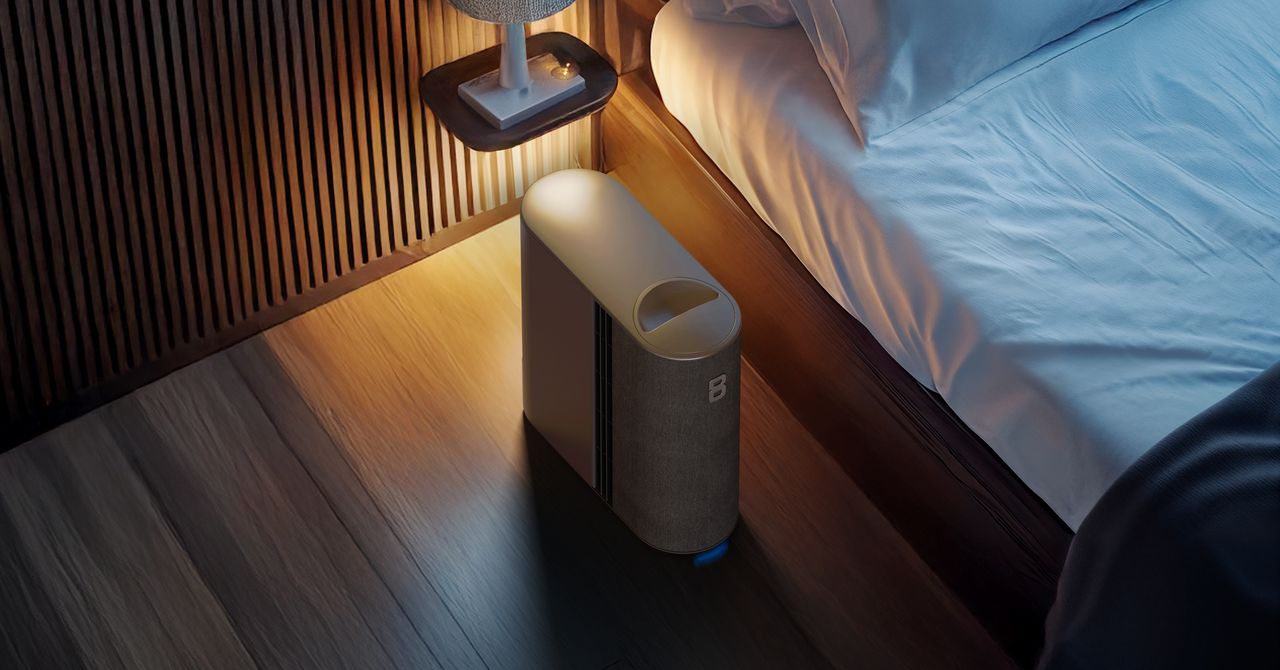
The Pod 5 Core bundle consists of a fitted cover for an existing mattress and a bedside hub. Under the cover’s polyester top layer, Eight Sleep uses water channels and sensors. The hub pumps water through the cover so each side of the bed can be set separately from 55 to 110 degrees Fahrenheit.
Chokrane reported that setup took about 40 minutes: scanning a QR code, installing the app, stretching the cover over the mattress, connecting tubes to the hub and filling the reservoir three times to prime the system. After that, the unit did not need another refill until roughly two months into nightly use, according to the review.
The core appeal is obvious for couples and hot sleepers. Each sleeper can choose a different temperature, and Eight Sleep’s Autopilot software changes settings through the night based on the user’s sleep patterns. Chokrane said the pump was nearly inaudible, the embedded water channels were not noticeable while lying down, and the chilled-bed effect helped with night sweats. During an illness, she used the system to switch between warming and cooling without getting out of bed.
What the bed collects
The Pod 5 tracks sleep without a wearable. According to WIRED, the app reports sleep duration, time awake, sleep stages, sleep consistency, resting heart rate, heart-rate variability, breathing rate, snore time and snoring intensity. The app also sends a morning text summary.
Chokrane compared the Pod 5 with an Oura Ring 4 and found similar trends for respiratory rate and heart-rate variability. Both devices detected illness-related sleep disruption, she wrote, though Eight Sleep’s sleep scores were consistently higher than Oura’s. That comparison matters less than it sounds: sleep scores are proprietary math dressed up as certainty.
The company also offers Health Check, a feature on its Elite subscription tier that analyzes cardiovascular and respiratory signals during sleep. WIRED said it flagged respiratory disturbances while Chokrane was sick.
The bill does not end at checkout
The Core bundle costs $2,848 for a full size and $3,248 for a California king, according to WIRED. Eight Sleep also requires a 12-month commitment to its standard Autopilot plan, priced at $17 per month or $199 billed annually. Without that plan, the Pod can still be controlled with physical temperature buttons, but buyers lose automatic adjustments, sleep reports and thermal and vibration alarms.
The Enhanced plan costs $25 per month, or $299 annually, and extends the warranty to five years. The Elite tier costs $33 per month, or $399 annually, and adds Health Check while also providing a five-year warranty.
There are security and reliability trade-offs too. WIRED cited 2025 reporting from Cybernews and a Truffle Security blog post by Dylan Ayrey and Jake King that described firmware vulnerabilities, including back doors that could allow remote access, arbitrary code execution and transmission of user data to Amazon Web Services. Eight Sleep later updated its security policies and said customer support can remotely access a Pod only with explicit consent while the user is physically present with the device.
Cloud dependence has already caused pain. WIRED noted that during an AWS outage in late 2025, some Eight Sleep users temporarily lost temperature regulation and adjustable-base functions. Eight Sleep has since introduced Backup Mode to reduce the damage from connectivity failures. That is better than pretending the internet is a utility-grade bed frame, but it is still a workaround for a bed that needs servers to behave like a premium appliance.
This story draws on original reporting from WIRED.


