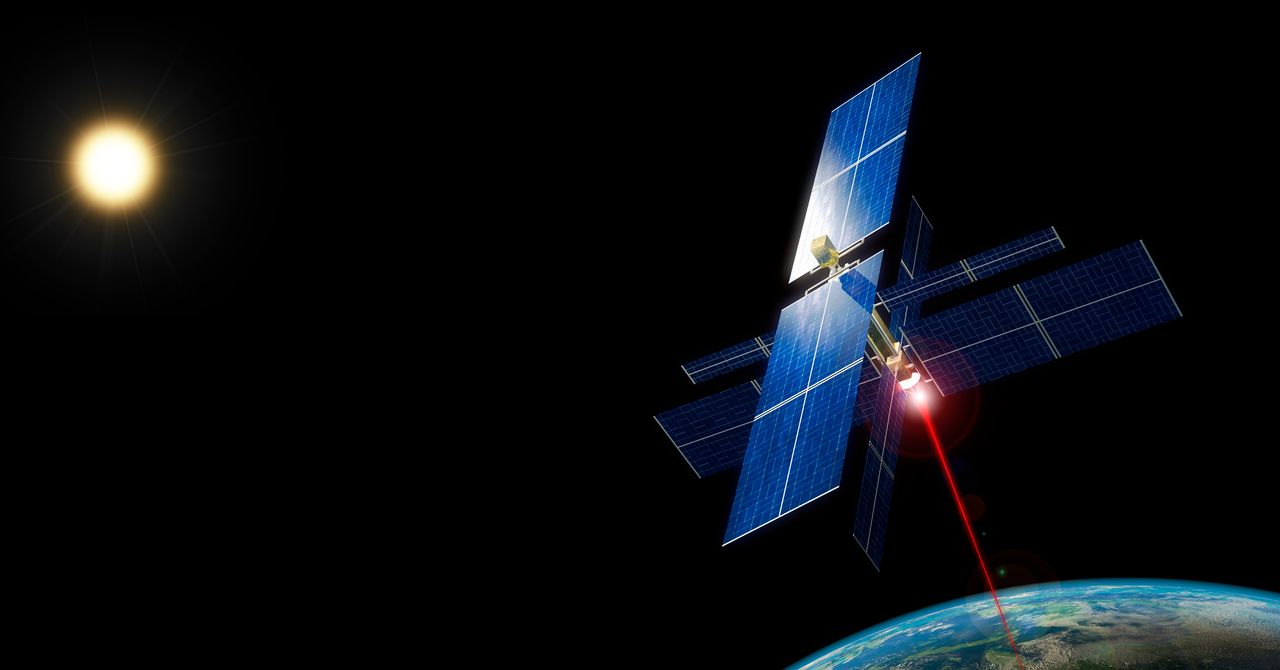
The Federal Communications Commission has authorized Reflect Orbital to build, launch and operate a single experimental satellite designed to bounce sunlight onto Earth after dark, giving the California startup a regulatory opening for a test that astronomers and dark-sky advocates have been trying to slow down.
The satellite, called Eärendil-1, would fly in low Earth orbit at roughly 625 kilometers, according to the FCC authorization issued July 9. Reflect Orbital’s plan is to deploy an ultrathin, highly reflective film as an 18-meter reflector, then aim reflected sunlight at selected places on the ground for short intervals.
According to the company, the test craft could light an area about 5 to 6 kilometers across. The point of the mission, as described in the FCC decision, is to find out whether the reflector works as claimed and what problems would appear before anyone tries to scale the idea. That is regulator-speak for: one shiny satellite first, arguments about a fleet later.
Reflect Orbital says the system could be used for civilian, commercial and government purposes, including search-and-rescue lighting, emergency support for critical infrastructure, temporary illumination at remote construction sites, and extra operating time for solar farms at night. The startup has described its broader pitch as “on-demand” sunlight.
The company celebrated the FCC decision on social media, saying it was grateful for approval of the test mission and calling the ruling a validation of its work on new space technology.
A one-satellite approval with constellation-sized baggage
Reflect Orbital’s ambitions extend well beyond Eärendil-1. The company has said it imagines operating 50,000 satellites by 2035. That number is not part of the FCC approval, and the agency said future multi-satellite deployments would need separate regulatory review.
That distinction did not calm the critics. The FCC received nearly 2,000 public comments raising concerns about the proposal. The American Astronomical Society, DarkSky International and the Royal Astronomical Society were among the organizations objecting, warning about possible effects on astronomy, night-adapted ecosystems and aviation safety.
Ground-based observatories already deal with streaks and interference from satellites in low Earth orbit. Opponents argue that reflective satellites could add a new kind of light pollution, especially if the concept grows from a demonstration into an industry. Some researchers also warned that bright flashes could affect aircraft pilots, drivers or wildlife that depends on natural darkness.
Tony Tyson, a researcher at the University of California, Davis and chief scientist for the Vera C. Rubin Observatory, told WIRED he doubts Reflect Orbital can aim the reflected light as precisely as the company claims. “Imagine the sky filled with moons,” Tyson said.
Betty Kioko, institutional affairs officer for the European Southern Observatory, also warned before the FCC decision that mirror satellites could pose an “existential threat” to optical astronomy.
FCC leaves astronomy concerns outside the gate
The FCC did not deny those concerns on the merits. It said they were outside the scope of its review for this particular space station authorization. In the agency’s view, Eärendil-1 is a limited-duration technology demonstration, not approval for a commercial constellation.
The agency said astronomy-related objections did not justify rejecting Reflect Orbital’s application or adding extra operating conditions. That leaves a familiar space-policy gap: the FCC can approve communications-linked satellite operations while major questions about the shared night sky get treated as someone else’s docket.
Reflect Orbital says on its website that it will work with affected communities and scientific institutions, limit brightness and duration, measure real-world effects, and change course if evidence does not support deployment. Eärendil-1 is now the test of whether that promise survives contact with orbit.
This story draws on original reporting from WIRED.