Katalyst Space Technologies has launched its Link spacecraft on a rushed mission to grab NASA’s aging Swift observatory and push it to a higher orbit. If the attempt works, NASA preserves a $500 million astronomy satellite and gets a real test of robotic servicing for spacecraft that were not built to be serviced.
NASA picked Katalyst last September after asking commercial companies for a fast way to keep Swift from reentering. Less than 10 months later, the company’s nearly half-ton satellite is in orbit. That schedule is unusually compressed for a new spacecraft built to do a first-of-its-kind job, especially one that has to approach, inspect and physically capture another satellite.
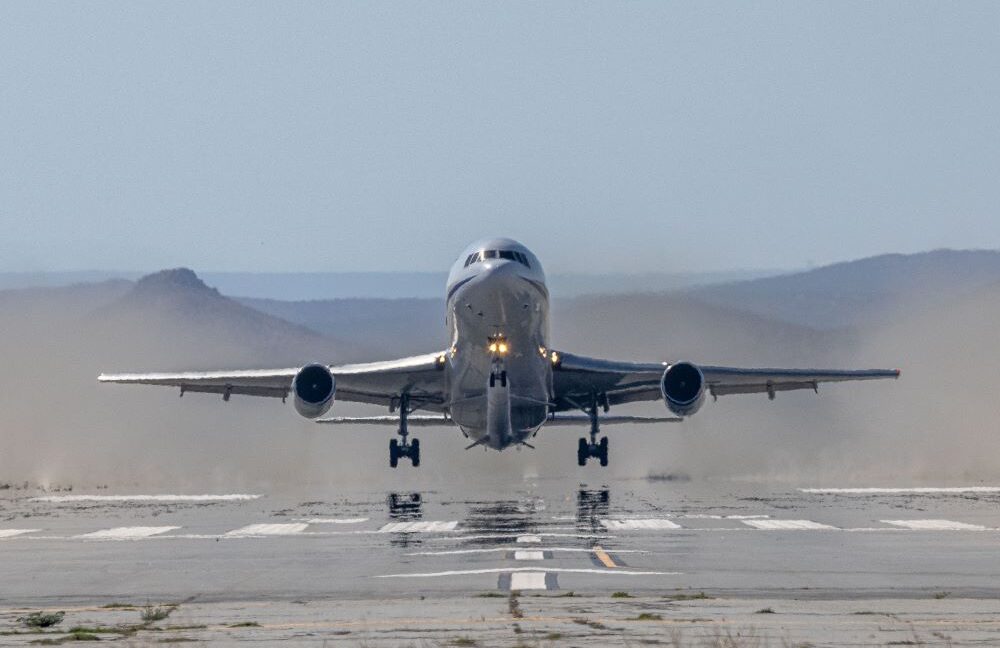
The launch used Northrop Grumman’s Pegasus XL, an air-launched rocket that has flown only once in the past seven years. Technicians enclosed Link inside the rocket’s nose cone at NASA’s Wallops Flight Facility in Virginia, then the rocket and its L-1011 carrier aircraft flew to the US Army’s Ronald Reagan Space and Missile Test Range at Kwajalein Atoll in the Marshall Islands.
After waiting on weather, the aircraft released the 58-foot rocket at 41,000 feet over the Pacific south of Kwajalein at 4:36 am EDT Friday, according to NASA. Pegasus ignited five seconds later. Its three solid motors reached orbital velocity in just under eight minutes, and the upper stage deployed Link nearly 13 minutes after launch. NASA said Katalyst established communications with the spacecraft later Friday.
Why an old air-launched rocket made sense
Swift orbits at an inclination of 20.6 degrees to the equator. Reaching that path from a conventional US launch site such as Cape Canaveral would have required a larger and more expensive rocket, according to the mission plan described by NASA and Katalyst. Flying Pegasus from the equatorial Pacific gave Link a cleaner shot at matching Swift’s orbit.
The deadline is not ornamental. NASA officials said Swift is expected to drop below 300 kilometers, or 186 miles, in October. Below that altitude, atmospheric drag would make the rendezvous much harder and would reduce Link’s odds of completing the rescue.
Swift has been in orbit for 21 years and was never designed for a visitor. Katalyst’s Link vehicle carries cameras and navigation sensors to inspect the telescope, three robotic arms to hold it, and three plasma thrusters to raise the combined stack after capture. NASA said Katalyst will spend the next several weeks checking Link’s propulsion, sensor and navigation systems before approaching Swift, surveying it, capturing it and lifting it over several months.
Kieran Wilson, Katalyst’s principal investigator for Link, said the mission remains risky. Swift lacks built-in capture points, its documentation does not give Katalyst easy answers about where such features would be, and engineers do not know the condition of its multilayer insulation. Wilson said Swift’s ability to point itself will be part of the plan as Link inspects possible grapple locations from tens of meters away.
NASA wants Swift alive because astrophysicists still use it to detect and localize gamma-ray bursts, the powerful cosmic explosions that trigger follow-up observations by other telescopes. The agency also has a broader reason to try: Hubble servicing required astronauts and the Space Shuttle. A robotic system that can capture an unprepared satellite would be a different tool entirely.
Robert Lamontagne, Katalyst’s vice president of strategic partnerships, described the Swift job as a commercial service rather than a lab demo. He said the company wants satellite operators to be able to refuel, reposition, repair, repurpose or upgrade spacecraft after launch. Swift is now the hardware test for that argument, and orbital mechanics will not grade on ambition.
This story draws on original reporting from Ars Technica.


