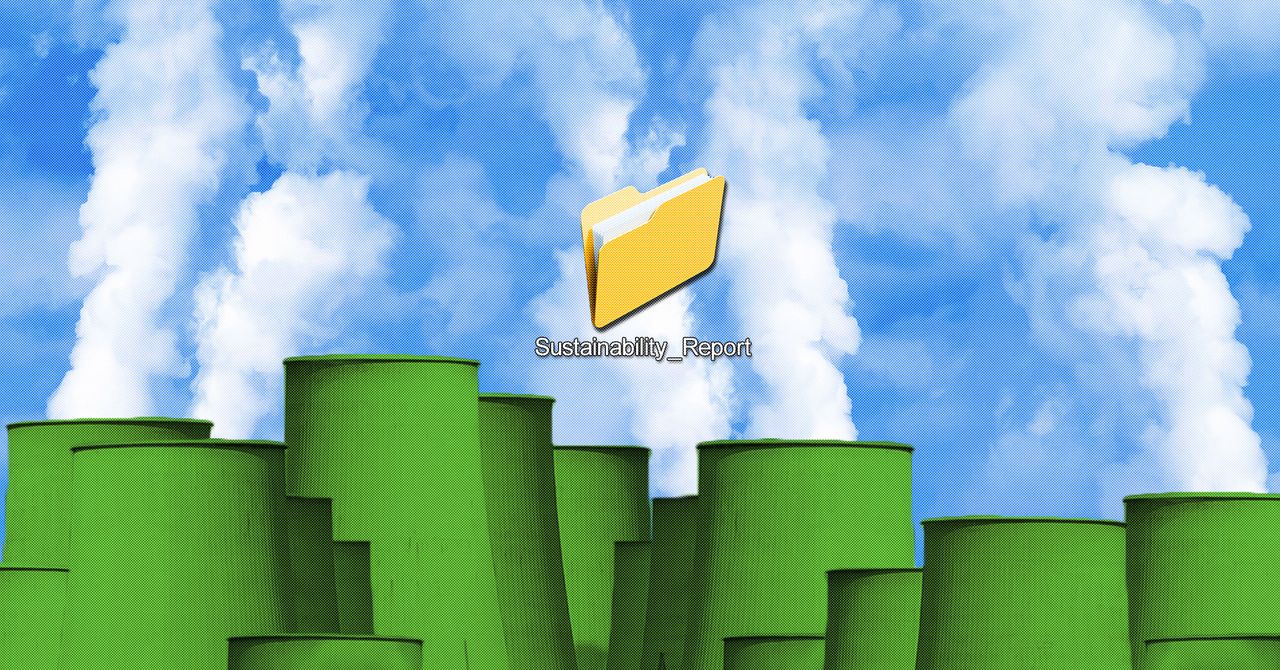
Microsoft reported that its greenhouse gas emissions climbed by about 25 percent in its latest fiscal year, a reminder that the AI buildout has a power bill and the atmosphere gets the invoice.
The company disclosed the increase in a sustainability report released Thursday. In a blog post announcing the report, Microsoft vice chair and president Brad Smith and chief sustainability officer Melanie Nakagawa said the increase came mainly from the expansion of Microsoft’s data center infrastructure.
That explanation is not mysterious. Data centers running AI workloads need large numbers of specialized chips, and those chips require a lot of electricity. Microsoft said emissions tied to electricity it bought or otherwise acquired for its operations, known in corporate carbon accounting as Scope 2 emissions, made up 13 percent of its total emissions.
The report covers Microsoft’s 2025 fiscal year, which ended last June. Since then, the company has made several data center power deals involving gas, according to WIRED, which could push future emissions higher depending on how those projects are built and counted.
AI growth is straining climate targets
Microsoft is not alone. Amazon recently reported a 16 percent rise in carbon dioxide emissions. Google said in its 2026 environmental report that its annual greenhouse gas emissions increased 18 percent from 2024, which Axios reported was the company’s largest single-year increase. Google has bought renewable power aggressively, but it has also begun adding fossil fuel power for some data centers, according to WIRED.
Microsoft said in its sustainability report that it matched all of its electricity use with carbon-free sources. That accounting does not erase the operational problem facing large AI companies: new data centers are arriving faster than clean power systems can easily absorb them.
Several Microsoft-linked projects show the size of the power demand. Microsoft announced a partnership last month with Chevron, which is building a power plant for a future Microsoft data center in West Texas. Permits cited by WIRED show that plant could emit more than 11.5 million tons of carbon dioxide equivalent each year, more than the state of Rhode Island.
Microsoft has also leased buildings at the Stargate campus in Abilene, Texas, which is expected to use an onsite power plant. WIRED reported that the plant could emit more than 7.8 million tons of carbon dioxide equivalent annually. The company has also signed a nonbinding letter of intent for compute capacity at a West Virginia data center that would use off-grid gas power, with potential emissions above 11 million tons of greenhouse gases a year, according to Oil and Gas Watch data cited by WIRED.
In a statement to WIRED, Nakagawa said Microsoft is looking at several ways to reduce emissions from its electricity use while pursuing its sustainability goals.
Microsoft changes how it counts clean power
Microsoft also said it has stopped buying unbundled renewable energy certificates, a change that partly contributed to the rise in its Scope 2 emissions. These certificates can be bought separately from the electricity a company actually uses, which has made them a favorite accounting tool and a frequent target for greenwashing criticism.
Danny Cullenward, a University of Pennsylvania researcher and visiting faculty member at Google, told WIRED that unbundled certificates are a paper transaction disconnected from physical outcomes. He said Microsoft’s move away from them is commendable because long-term power purchase agreements and similar contracts can help bring new clean electricity onto the grid. Cullenward said he was not speaking for Google.
Microsoft still says it plans to become carbon negative by 2030. Smith and Nakagawa wrote that the global AI race is increasing demand for energy, water, land and materials, and said Microsoft has a duty to make sure technology supports the systems and communities it depends on rather than overloading them.
This story draws on original reporting from WIRED.