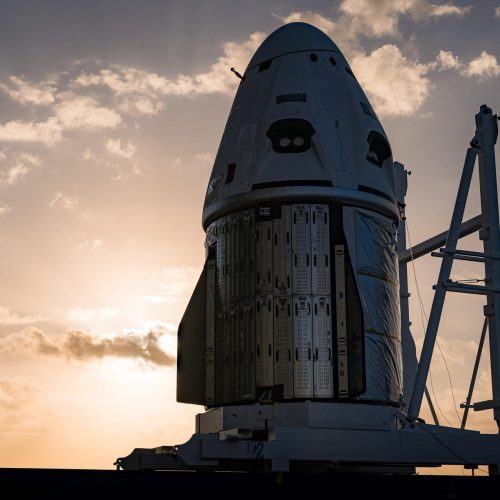
NASA’s plan to hand low-Earth orbit over to private space stations has a transportation problem: the agency still has only one proven U.S. spacecraft for carrying astronauts there.
SpaceX’s Crew Dragon restored NASA’s domestic crew launch capability in 2020, when Doug Hurley and Bob Behnken flew to the International Space Station and returned safely. That mission ended a gap of nearly 10 years in which the United States could not launch its own astronauts to orbit after the retirement of the space shuttle.
NASA did not design its Commercial Crew program around one winner. In 2014, the agency awarded multibillion-dollar contracts to SpaceX and Boeing with the goal of buying crew transportation from two separate providers. The redundancy was the point: if one vehicle had a technical problem, schedule slip, or grounding event, the other could keep astronauts moving.
That is not how the program has worked out so far. SpaceX has flown operational crew missions for NASA. Boeing, by contrast, has not yet completed a successful crewed test flight of Starliner. Its 2024 crewed test flight was later classified as a Type A mishap, and Boeing is not expected to fly another crewed mission before 2028.
The timing is awkward for NASA and for the companies trying to build the next set of orbital outposts. The International Space Station is planned for retirement in the early 2030s. NASA is working with several U.S. companies on privately owned stations intended to take over at least some of the work now done aboard the ISS.
Those stations will need more than press releases, renderings, and docking ports. They will need a reliable way to move crews to orbit and bring them home. NASA expects the private station developers to work with the agency on those transportation plans, according to the program outline described by NASA. Some of the stations could launch as soon as 2030.
One working capsule is not much of a market
The mechanism of the bottleneck is straightforward. A space station without crew transport is not a crewed station in any useful operational sense. If SpaceX remains the only U.S. provider with a demonstrated spacecraft, station operators may have to plan around Crew Dragon’s availability, NASA mission needs, certification limits, and whatever fleet capacity SpaceX chooses to maintain.
That does not mean Crew Dragon is unavailable, unsafe, or incapable. The confirmed point is narrower and less comforting: NASA wanted two commercial crew systems, and only SpaceX’s has reached routine service. Boeing’s delayed Starliner leaves NASA’s low-Earth orbit transition with less redundancy than the agency originally sought.
For private station companies, the risk is commercial as much as technical. A station that is ready before transportation is sorted could sit underused. A transportation provider with a grounding or delay could ripple across NASA missions and private customers alike. That is the kind of single-provider dependency the Commercial Crew program was supposed to reduce.
NASA’s early-2030s ISS retirement schedule gives the agency and its partners a deadline. Boeing’s next crewed opportunity is not expected before 2028, and some private stations are targeting launches around 2030. That leaves little room for another long certification slog if NASA wants a real market for orbital destinations rather than a queue for one capsule.
This story draws on original reporting from Ars Technica.


