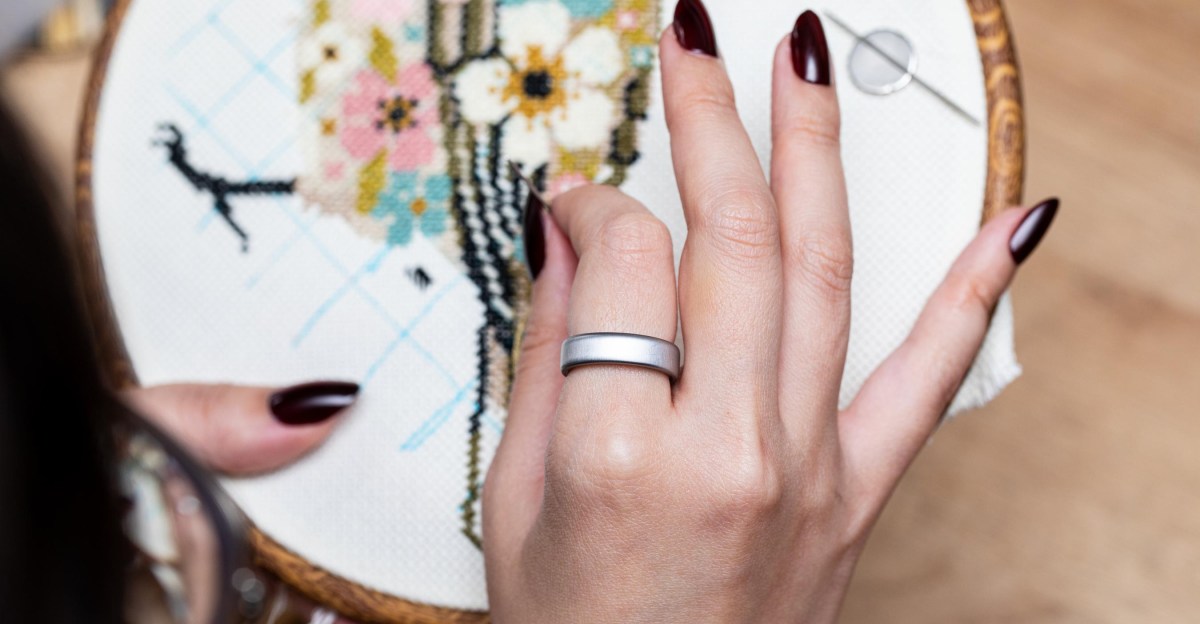
Oura’s Ring 5 is smaller and lighter than the Ring 4, but existing owners should not expect a sensor or software leap. In a review for The Verge, Victoria Song found that the new $399 smart ring keeps the same sensors, offers roughly the same battery life, and does not lock any new software features to the latest hardware.
That makes the Ring 5 a cleaner pitch for first-time buyers than for people already wearing a recent Oura ring. Song called it the best smart ring on the market and a strong casual health tracker, while noting that users who care about detailed fitness metrics may still be better served elsewhere. The Verge gave the device an 8 out of 10.
The hardware change is mostly physical. Song described the Ring 5 as a smaller, lighter version of the Ring 4, with a more durable metal finish. After about a month and a half of wear, though, her review unit still picked up a few nicks. She also said current users with damaged finishes may want to consider the ceramic Ring 4 instead, since Oura has not released a ceramic Ring 5.
Same core ring, narrower sizing
The biggest tradeoff is fit. Oura told Song that the Ring 5 is not available in sizes 4, 5, 14, or 15 because the company is still assessing demand after expanding the Ring 4 size range. Song called that disappointing for accessibility, and it also makes the new model harder to recommend as a straight replacement for the Ring 4.
Oura also made the charging case a separate $99 accessory instead of including it as the standard charger. According to Song, the Ring 4 case will not work with the Ring 5, and the Ring 5 case will not work with the Ring 4, because the generations use different sizing.
Oura’s app now supports pairing multiple rings, which means an older model does not need to become drawer sludge if a customer buys the new one. That is useful, but it does not change the math much: the Ring 5 starts at $399, and Oura’s subscription costs $6 a month.
More health features, more clutter
Oura paired the hardware release with a batch of software updates. Song listed GLP-1 Insights, Health Radar, medical lab imports, health data deletion by time period, improved live activity tracking, and a medical AI chatbot that can connect users with a doctor through Counsel Health.
Those features are not exclusive to the Ring 5, and Song said most are optional. The larger issue is that Oura’s app, once centered on activity, readiness, and sleep scores, now asks users to read through more metrics and AI-generated context. One example is nighttime breathing, which now shows a 30-day pattern and factors such as demographics, weight, activity level, sleep regularity, and average sleep duration. Song found the metric useful in theory but buried across multiple screens.
Health Radar runs mostly in the background and combines Symptom Radar with nighttime breathing patterns and blood pressure signals to flag notable health changes. Song could not judge its accuracy during six weeks of testing because she did not experience significant health changes.
Song found GLP-1 Insights more useful, especially for people newer to the medication. It can send dose reminders, track injection sites, log symptoms, and provide AI summaries. The catch is the familiar app tax: it works best when users tag symptoms daily, and Song said it was less helpful for unusual side effects.
The medical AI chatbot is included in Oura’s subscription, while consultations or prescriptions cost extra. Song said it seemed best suited to quick health questions that do not justify a doctor visit, rather than serious care.
Using the Ring 5 also requires agreeing to Oura’s terms of use, health privacy policy, and Teams privacy policy, according to The Verge. Optional integrations, including Apple Health, Google Fit, Strava, Natural Cycles, lab imports, Counsel Health, and Oura Labs research features, bring their own terms and data-sharing choices. Wearables still want your pulse and your paperwork.
This story draws on original reporting from The Verge.


