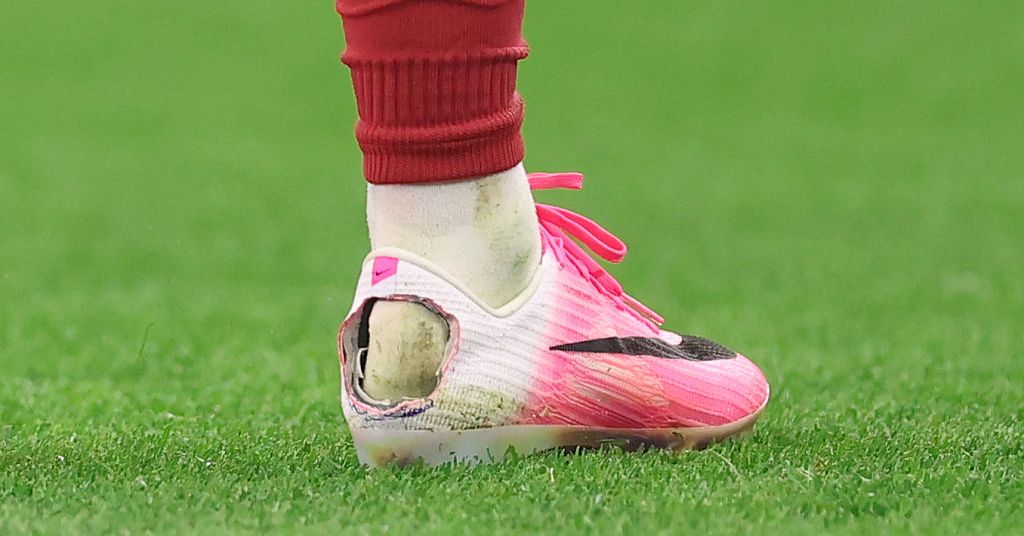
Pedro Neto walked onto a World Cup pitch with the back of his cleats cut away above the heel, and the internet did what the internet does when a professional athlete appears to have taken scissors to expensive gear. The Portugal forward’s footwear looked broken. The point was comfort.
The modification is used to reduce pressure where the boot meets the back of the foot. In elite soccer, cleats are fitted with little room for error because players sprint, stop, and change direction under load. A heel that rubs, pinches, or presses in the wrong place can turn a boot into a small torture device, which is bad kit design and worse workplace equipment.
Players have been making this kind of alteration for years. Neto’s version drew attention after Portugal’s match against Spain, where he wore two pairs of cleats with the heel section removed. There is no public statement from Neto or his team explaining his reason for the change, and no confirmed diagnosis tied to the modification.
What the cut is trying to fix
Heel pain in soccer boots can come from several causes. The mild version is familiar to anyone who has worn stiff shoes too long: chafing and blisters. Training load can add soreness or tendon irritation. Some players also have chronic anatomical issues, including bone shapes that create a larger or more prominent heel.
One condition discussed in connection with cut-heel cleats is Haglund’s syndrome. The American Academy of Orthopaedic Surgeons describes it as a bony prominence on the back of the heel bone that can rub near the Achilles tendon and lead to pain and inflammation. The academy also notes symptoms associated with the condition can include insertional tendinopathy and discomfort in closed shoes.
That explanation fits the mechanics of the boot modification, but it should not be treated as Neto’s medical file. No public information confirms he has Haglund’s syndrome. The observable fact is narrower: he wore cleats with the rear heel area cut out.
Why players modify boots instead of changing them
The standard first response for heel irritation is to change the footwear: use cushioning, avoid tight shoes, and add heel protection when needed. Soccer complicates that advice. Players must wear cleats, and match boots are built for traction and control rather than orthopedic generosity.
So players alter what they are allowed to wear. Cutting the back of the boot reduces contact between the shoe and the painful area while preserving the rest of the cleat. It is the same basic regulatory dance seen when players cut holes in socks to relieve calf pressure: the required equipment remains present, just customized around the athlete’s body.
Professional boots also are less standard than they look from the stands. The models may share names and silhouettes with retail versions, but players commonly adjust fit for their own feet or to manage discomfort. The cleat that drew attention in Neto’s case was identified as a Nike Mercurial Vapor 16 Elite.
There is no mystery technology here, just a blunt intervention. When the heel counter hurts, some players remove the part doing the hurting.
This story draws on original reporting from WIRED.