India’s private launch industry is about to get its first real orbital exam. Skyroot Aerospace plans to fly the debut test mission of its Vikram-1 rocket between July 12 and August 4 from the Satish Dhawan Space Center, according to the Economic Times. If it succeeds, the flight would be India’s first private attempt to put a launch vehicle into orbit.
The mission is a data-gathering flight, not a victory lap. The company is looking at propulsion, stage separation, guidance, navigation and control, and general vehicle behavior in flight. The rocket will lift off from a pad originally built for India’s government space program.
Vikram-1 uses three solid-propellant stages and a liquid-fueled fourth stage for the final orbital placement burns. Skyroot says the vehicle is designed to carry close to half a ton to low-Earth orbit. The Economic Times reported that the company has raised about $160 million, including a $60 million round announced in May that pushed its valuation above $1 billion.
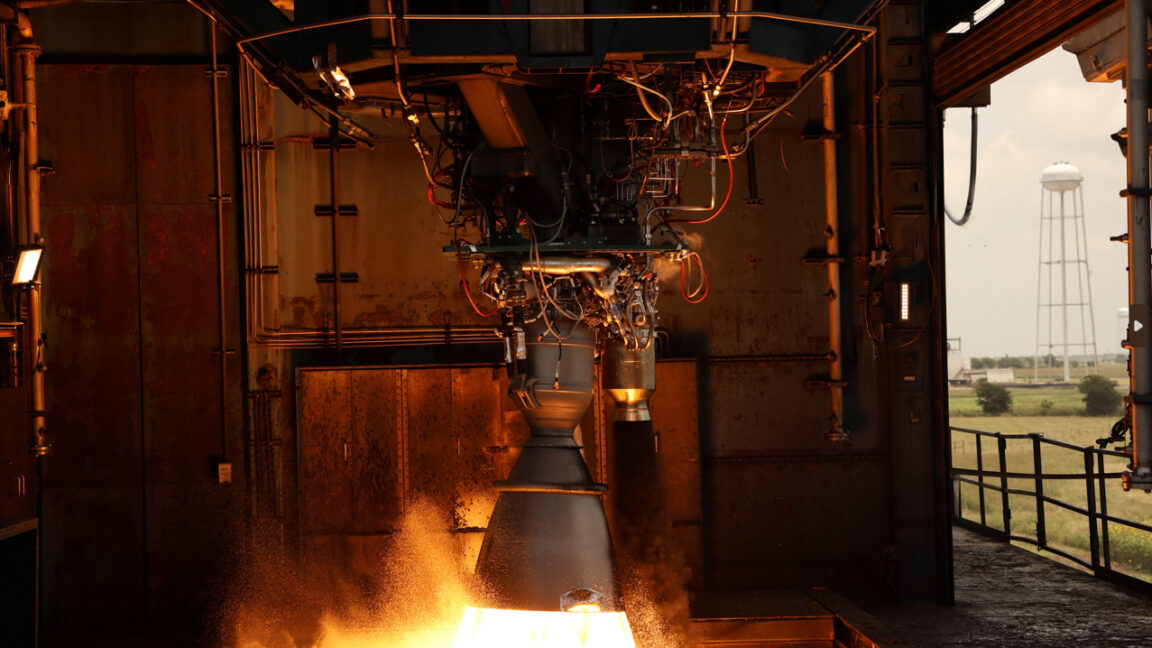
SpaceX, meanwhile, used a different metric to remind the industry what operational scale looks like. The company said on X that it has manufactured the 1,000th Merlin 1D engine for the first stage of its Falcon rockets. A Falcon 9 flies with nine of the kerosene-burning engines on its booster, while Falcon Heavy uses 27. A modified Merlin variant powers the upper stages.
The number is less straightforward than old launch-industry production tallies because the Merlin 1D is reused. SpaceX said Falcon reuse has allowed the company to recover engines and feed reliability improvements back into the fleet. Ars Technica reported that those 1,000 Merlin 1D units have recorded more than 6,000 engine flights. By comparison, Russia’s single-use RD-107 and RD-108 engine family has flown in variants of the R-7 rocket line, now represented by Soyuz, for more than 2,000 launches.
NASA, Europe and small launchers keep busy
NASA has selected Rocket Lab for three Electron launches in 2027, Space News reported. Two will carry NASA’s PolSIR mission, a pair of small satellites intended to measure how ice crystals move in tropical clouds. Those launches are planned from Rocket Lab’s New Zealand site no earlier than June 2027.
A third Electron will carry TSIS-2, a NASA spacecraft that will measure solar energy entering Earth’s atmosphere. NASA had planned to put TSIS-2 on a SpaceX Falcon 9 rideshare, according to Space News, but the mission is now set for its own Rocket Lab launch from New Zealand in early 2027.
NASA has also delivered braking engines for the European Space Agency’s Rosalind Franklin Mars mission, European Spaceflight reported. The ESA-led rover is scheduled for launch in late 2028 after years of delays, mostly tied to geopolitics rather than engineering. NASA’s contributions include the braking engines, launch services and radioisotope heater units to keep rover hardware warm on Mars.
The four MR-80 engines for Rosalind Franklin’s final descent burn hydrazine and were built by L3Harris, formerly Aerojet Rocketdyne. NASA and L3Harris will also send a fifth spare engine to Europe. Similar engines helped land NASA’s Curiosity and Perseverance rovers in 2012 and 2021.
Old rockets, damaged pads and a rare Pegasus flight
Katalyst Space Technologies’ Link servicing satellite reached orbit on a Northrop Grumman Pegasus XL launched from a modified L-1011 aircraft over the Pacific. The mission will try to raise the orbit of NASA’s Swift astronomy satellite, which launched in 2004, cannot fight atmospheric drag on its own and could reenter later this year. Ars Technica reported that this was the last scheduled Pegasus flight.
United Launch Alliance also moved closer to the end of Atlas V operations. Ars Technica reported that an Atlas V launched 29 Amazon Leo broadband satellites from Cape Canaveral, the ninth Atlas V mission for that constellation and the final Atlas V flight using a payload fairing. Six Atlas V rockets remain, all assigned to Boeing Starliner crew missions without fairings.
Blue Origin is still repairing the consequences of its late-May New Glenn explosion. NASA Administrator Jared Isaacman told reporters the company’s cleanup response was “almost beyond impressive,” according to Ars Technica. Blue Origin CEO Dave Limp said early analysis points to the first stage’s aft section. The company lost its lightning tower and transporter-erector and plans to use a crane to stand New Glenn on the pad for its return-to-flight attempt before year-end.
This story draws on original reporting from Ars Technica.