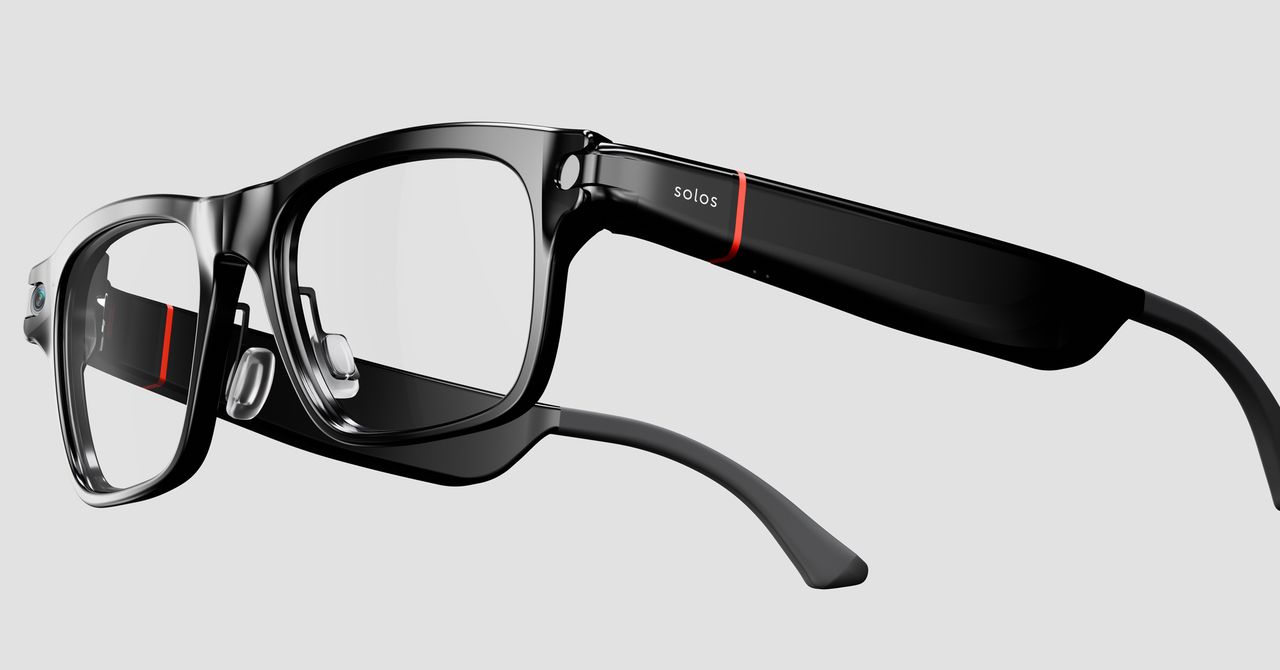
Solos announced two new pairs of smart glasses on Tuesday, including a camera-equipped model with an optional clip-on shield meant to stop the glasses from recording. For people tired of guessing whether the person across from them is filming, that sounds useful. The catch is that Solos is selling the blocker as part of a separate $79 accessory kit, which means privacy depends on someone buying, carrying, and attaching the extra piece.
The new lineup includes the AirGo A6, which keeps to Solos’ longtime audio-only approach, and the Solos AirGo V2, the company’s second camera-enabled model. Solos first announced the V2 last year while pitching it as an effort to “outshine Meta,” according to the company’s own marketing.
The AirGo V2 costs $299, matching the price of Meta’s newer smart glasses. Solos says the glasses can take photos and video, play music, and work with an AI assistant that can respond based on what the wearer is looking at. The company also says the frames can use prescription lenses and run for 10 to 12 hours on a charge.
How the privacy kit works
The Privacy Kit is a set of modular clip-ons for the AirGo V2. Its main piece is a physical shield that covers the cameras, blocking both the lenses and their ability to record the wearer’s surroundings. With the shield attached, the glasses can still be used in audio-only mode. The kit also includes a clip-on polarized lens.
That is a mechanical answer to a social problem, and a fairly fussy one. A built-in shutter would at least make the camera state part of the device. Solos’ approach makes the privacy control an add-on, and add-ons have a habit of being left in bags, drawers, or the checkout cart. The shield also does nothing permanent: someone can remove it later, including after entering a venue or space that bans recording.
Solos previously released camera glasses in 2024 with the AirGo Vision. WIRED put that model in the “Don’t Bother” section of its smart glasses guide, saying the design had some good choices but was dragged down by weak media capture, irritating touch controls, and an app that used too much power and asked for too many permissions.
Meta’s shadow over the category
Meta remains the company other smart-glasses makers are reacting to. Its camera-forward glasses have drawn criticism from people who dislike discreet recording devices on faces. WIRED reported that Meta silently added face recognition code to its glasses and then removed it after public pushback. Meta also recently announced that it would begin charging for some smart glasses features that had previously been free.
Meta has at least acknowledged that some buyers may want glasses without cameras. CTO Andrew Bosworth said in a private media Q&A that he thinks there is “market demand for that product for sure,” according to WIRED. Meta has not shifted away from camera-based glasses.
Other companies are trying different angles. Google and Samsung are working on Google’s Android XR platform, with glasses expected later this year from Warby Parker and Gentle Monster. Apple has reportedly been developing smart glasses of its own. Smaller firms are also looking for room around Meta, including Even Realities, which sells camera-free smart glasses.
Solos’ bet is narrower: offer Meta-like camera features, then sell a physical cover for users who want to prove the camera is off. That may appeal to people who want the option to record without wearing a permanently suspicious gadget. It also leaves the burden of trust on a removable plastic part, which is a very smart-glasses kind of compromise.
This story draws on original reporting from WIRED.