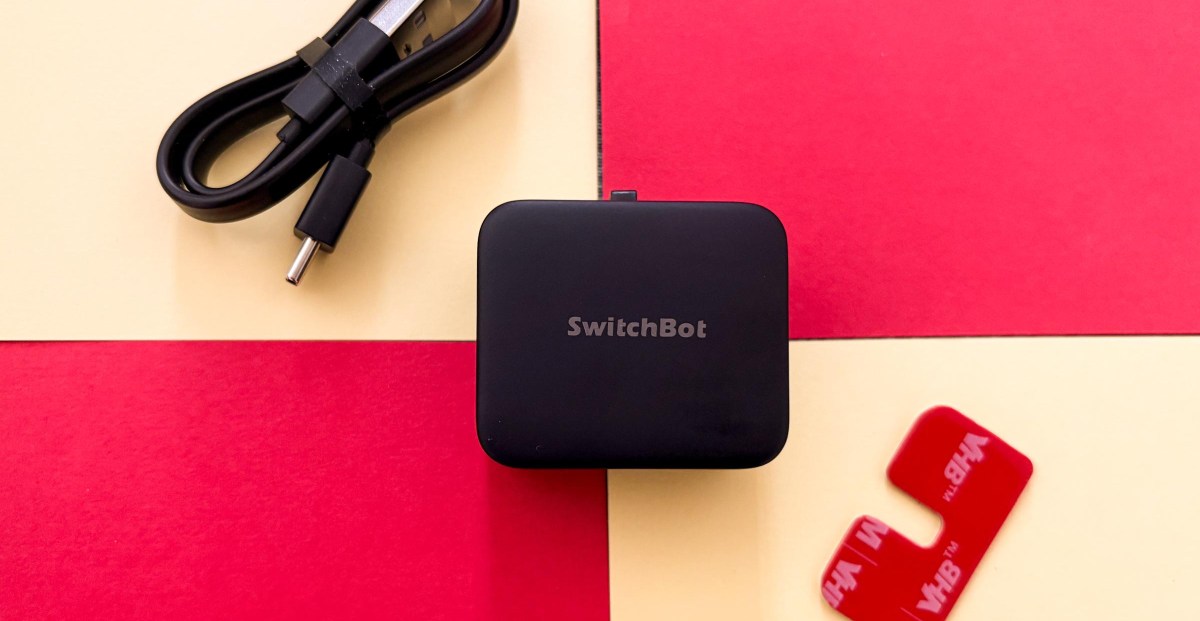
SwitchBot’s latest tiny button-pushing robot solves a very specific smart-home problem: what to do with the appliance, garage opener, coffee maker, or wall switch that still expects a human finger. According to a hands-on review by The Verge’s Sheena Vasani, the $33.99 SwitchBot Bot Rechargeable did that job reliably, including for the deeply glamorous use case of turning on a kitchen light before walking into a room with cockroaches.
The device is a small motorized actuator that sticks near a physical button or switch with adhesive. When triggered, its arm moves to press or pull the control. That is the whole trick, and honestly, the restraint is the point. It does not require replacing a wall switch, rewiring a fixture, or pretending every dumb appliance deserves a cloud account.
Vasani reported using it to control a light switch from elsewhere in her apartment, so the room was lit before she entered. She wrote that once installed correctly, the Bot stayed attached, responded from across the apartment, and did not miss scheduled actions during testing.
What changed from the older Bot
The rechargeable model has the same basic function as the original SwitchBot Bot, The Verge reported. The main difference is power. The new version charges over USB-C instead of relying on disposable batteries.
That swap comes with a battery-life penalty. SwitchBot advertises up to six months of use on a charge if the device is triggered once per day, according to The Verge. The older model is rated for up to 600 days. The original also costs a little less, according to the review, so the rechargeable model is a convenience and waste-reduction trade rather than an across-the-board upgrade.
The Verge listed the SwitchBot Bot Rechargeable at $33.99, with sale pricing shown at $25 on Amazon and $27 through SwitchBot at the time of publication. Those prices are retail listings, not promises from the laws of physics, so check before buying.
The installation is the fiddly part
The Bot’s simplicity ends when alignment begins. Vasani found that even a straightforward light-switch setup required more adjustment than expected. The arm has to sit where it can reach the switch, push it far enough, and return cleanly. That is still easier than replacing electrical hardware, but it is not a slap-it-on-and-leave job.
SwitchBot includes a small plastic piece that adheres to the light switch and loops around the Bot’s arm. That lets the robot push the switch in one direction and pull it back in the other. Vasani said this was the most confusing part of installation: she initially placed the attachment near the middle of the switch, then found it needed to sit toward the bottom. The instructional video suggested the right position more clearly than the written instructions, which she described as vague.
The company includes an extra adhesive pad in the box, a detail that became useful after repeated repositioning, according to the review. That is less a feature than an admission that alignment can get annoying.
The Bot can also work with a SwitchBot Hub, which adds control through Amazon Alexa and Google Assistant and enables operation from outside the home, The Verge reported. Without filling a house with smart bulbs and smart plugs, it gives old hardware one narrow robotic behavior: press the thing when told.
Vasani’s verdict was favorable with caveats. The rechargeable Bot is chunky, installation may take patience, and the battery life is far shorter than the disposable-battery model. For a stubborn physical switch that still needs automation, it did the job.
This story draws on original reporting from The Verge.