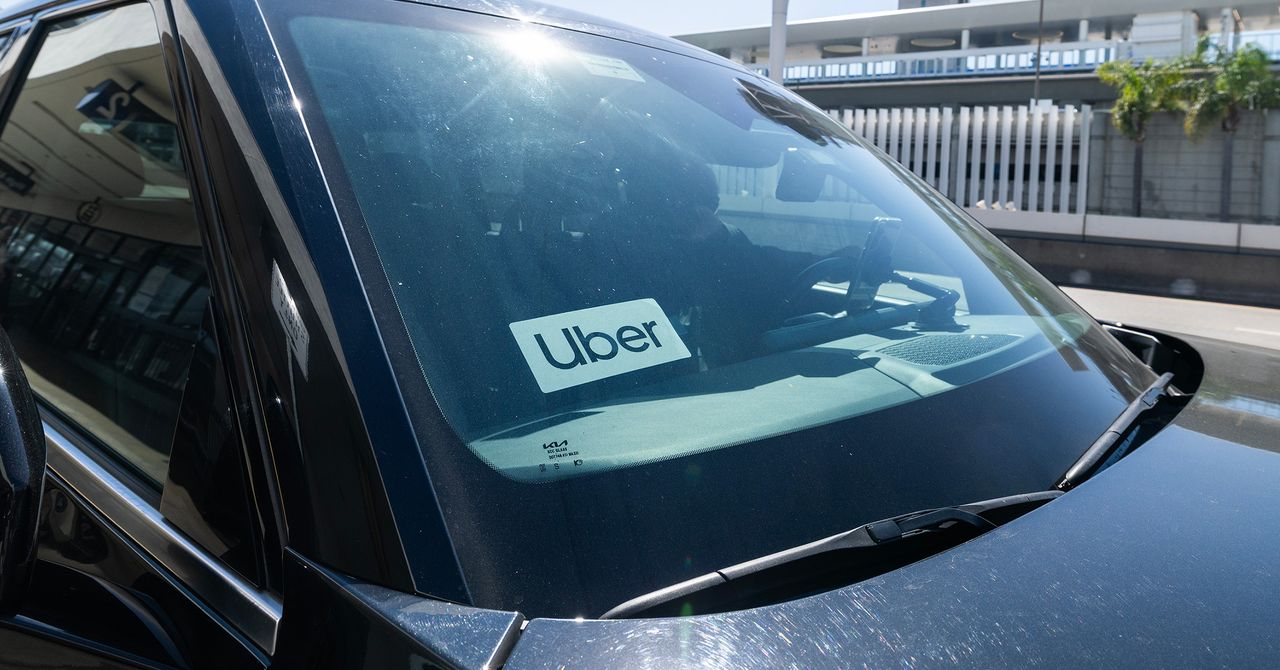
Uber is trying to turn its robotaxi business model into regulation, according to WIRED, with lobbyists pressing lawmakers to require autonomous ride-hailing services to operate through “hybrid networks” that mix human drivers and driverless vehicles.
The move would shape who gets to sell robotaxi rides, not just how the cars are tested. Uber no longer builds its own self-driving cars. CEO Dara Khosrowshahi told investors in 2024 that Uber wants to be the commercial platform for many autonomous vehicle operators. Since then, the company has signed deals with more than 25 robotaxi companies, with vehicles from Waymo, Nuro, Baidu and Volkswagen’s Moia available or planned through Uber in several cities, according to WIRED.
In New Jersey, WIRED reported that an Uber lobbyist circulated proposed language that would require any platform offering driverless ride-hailing to have human drivers handle 85 percent of rides for three years. That rule would likely make it difficult for companies such as Waymo, Zoox and Tesla to run their own robotaxi apps in the state. They could still offer rides, but the practical route would run through an existing ride-hailing platform. Uber, conveniently, is the dominant one.
Ayla Rios, chief of staff to New Jersey state senator Andrew Zwicker, told WIRED that an Uber representative pitched a version of the proposal to Zwicker. Zwicker sponsors a bill that would create New Jersey’s first statewide rules for autonomous vehicles on public roads. The 85 percent requirement is not currently in that bill, which could be voted on this fall, according to WIRED.
The New Jersey bill already contains provisions that would affect several robotaxi developers. It would require autonomous systems to use multiple sensor types, rather than a camera-only setup such as Tesla’s. It would also require vehicles to be operable in emergencies with steering wheels and brake pedals, a problem for purpose-built robotaxis such as Zoox’s vehicles, which lack those controls.
Uber has made a similar push in Washington, DC, where council member Charles Allen introduced legislation in April to allow driverless services under certain conditions. In an email obtained by WIRED through a public records request, Uber lobbyist LáVita Gardner thanked an Allen staffer for committing to let ride-hailing companies participate in the district’s autonomous vehicle program. Gardner wrote that hybrid networks would support both autonomous technology and human drivers.
Uber spokesperson Noah Edwardsen told WIRED the company supports autonomous vehicle expansion, but said AV industry proposals have been unworkable because they do not address worker issues or have tried to exclude competitors. He described the New Jersey language as a compromise intended to help pass legislation despite union opposition, and said Uber wants DC rules to let ride-hailing companies participate alongside AV firms that operate their own apps.
Waymo pushed back. Spokesperson Ethan Teicher told WIRED that Waymo does not support rules limiting autonomous vehicles to particular network types and would welcome language making clear that different business models can operate. Zoox did not respond to WIRED’s request for comment.
The politics are awkward because Uber and Waymo are also partners. Uber offers driverless Waymo rides exclusively through its app in Atlanta and Austin, according to WIRED. But the relationship has shown strain: Business Insider reported tensions, Uber CTO Praveen Neppalli posted a video on X in April describing a “scary Waymo moment,” and Waymo and Uber recently ended a smaller Phoenix pilot, according to TechCrunch.
Uber’s caution-first pitch also lands against its own history. WIRED notes that Uber resisted autonomous vehicle permitting when it ran its own self-driving program, moved testing cars from California to Arizona in 2016 after a permit dispute, and shut down that program in 2020 after a fatal 2018 crash and other fallout. In May, Uber president and COO Andrew Macdonald wrote on LinkedIn that the company’s new regulatory posture “might feel ironic,” acknowledging past failures to account for public trust and social consequences.
This story draws on original reporting from WIRED.


