WIRED’s updated 2026 testing of countertop food-waste machines lands on an awkward but useful point for apartment dwellers, gardeners and anyone tired of fruit flies: most electric “composters” are not composters in the garden-center sense. They mainly heat, grind and dehydrate scraps into a dry, low-odor material that still needs more processing before it belongs around plants.
That distinction matters because the marketing around these boxes often outruns the biology. Compost is decomposed, biologically stable organic matter. A banana peel that has been chopped and dried by a countertop appliance is less gross and much smaller, but it has not become finished compost by magic, or by app notification.
WIRED says the category still has value. The US Environmental Protection Agency says food accounts for about 24 percent of municipal solid waste. The US Department of Agriculture links landfilled food waste to methane emissions as it breaks down. A machine that makes scraps odor-free and easier to store before municipal pickup or backyard composting can help with that problem, even if calling the output “compost” deserves side-eye.
Reencle comes closest to actual composting
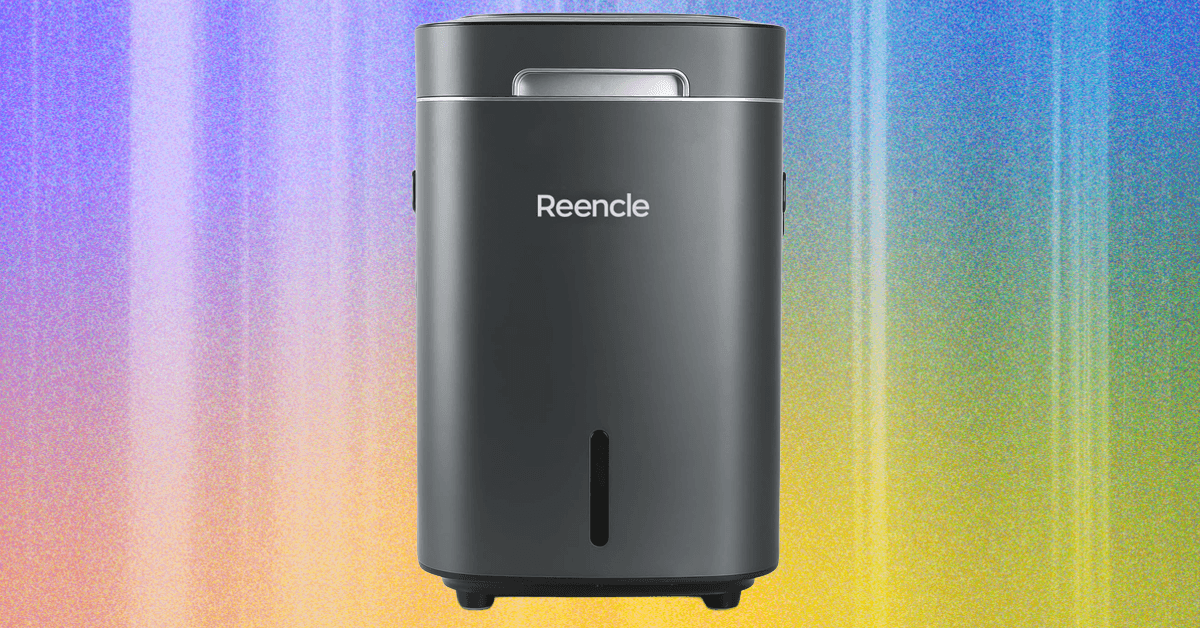
WIRED’s top pick is the Reencle Prime Electric Composter, listed at $499. Unlike the simpler grind-and-dry machines, Reencle uses a starter mix containing activated carbon, wood pellets, glucose and three patented thermophilic microbes. The idea is closer to managed decomposition than a tiny garbage oven.
The Prime works more like a heated organic-waste bin than a cycle-based appliance. Users add scraps, and the machine stirs and processes them over hours or days, depending on the material. WIRED says the result resembles a mix of soil and sawdust, and can be blended with potting soil at a 1:4 ratio, then cured for three weeks before use with plants. It can also feed a conventional compost pile.
The machine has limits. WIRED says large bones, shells and fruit pits are out. The Prime is rated for about 1.5 to 2.2 pounds of waste, and Reencle’s larger Gravity model, priced at $649, can take 3.3 pounds per day. WIRED found the Gravity quieter than the Prime, but more prone over time to going anaerobic and smelly, apparently because the larger volume held more moisture. Dry carbon-rich material such as bread or shredded paper helped restore balance.
There is also a durability caveat. After 18 months, WIRED reported that a stirring paddle broke in the Reencle Prime, matching complaints from some users online. Reencle told WIRED that customers under warranty can get a repair kit free. The warranty is two years for units bought on or after May 13, 2026, and one year for earlier purchases. Outside warranty, the kit costs $35.
Lomi 3 leads the grind-and-dry machines
For people who mainly want less smelly trash, WIRED names the Lomi 3 Countertop Food Recycler as the best grind-and-dry option. It is listed at $649, with WIRED showing a $449 sale price from Lomi.
The Lomi 3 has a 3-liter countertop bucket, a push-button lid and Grow and Express modes. WIRED says the older Lomi 2’s multiple modes and twist-off lid are gone, but so is its mode for approved bioplastics. Lomi confirmed to WIRED that the new model cannot process bioplastics.
Cycle times run from three to 16 hours depending on load size and moisture. WIRED says the output can be added to outdoor compost, used on a lawn, or mixed into soil at 1:10, or 1:15 if meat or dairy was included. The review also flags a lid problem: WIRED’s first lid warped after months, and a replacement lid also began warping after a couple of months. Lomi said the first batch used faulty plastic.
Other listed picks include the FoodCycler Eco 3 at $400, the Airthereal Revive R800 as a $300 budget option and the Mill Food Recycler as the largest-capacity choice at $999. WIRED discloses that its editors select products independently, though the publication may earn compensation from retailer links or purchases.
This story draws on original reporting from WIRED.


