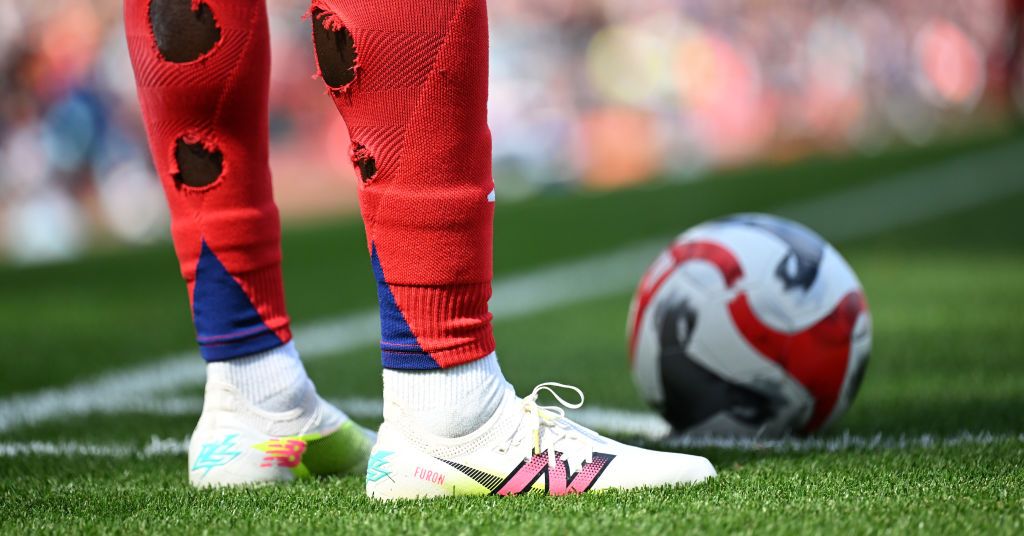
Some players at the 2026 World Cup are walking onto the pitch with neat rows of holes cut into the calf sections of their socks. The look has generated the usual social media physics, with fans assigning secret performance value to a pair of scissors. WIRED contributor Jorge Garay reports a more boring answer: players say the socks feel too tight, and the science has not shown that cutting them makes anyone faster, safer, or more durable.
The practice is not a new World Cup invention. According to WIRED, similar sock surgery has appeared at European Championships, the Olympic Games, and other international tournaments over roughly the past decade. It has spread because elite players are picky about comfort, which is fair. Their equipment is also doing several jobs at once.
Professional soccer socks are designed to fit closely. They help keep shin guards in place, support the ankle, arch, and calf, move moisture, and reduce sliding inside the boot. The current versions use synthetic fibers including polyester, nylon, and spandex, WIRED reports. Lighter and tougher materials have changed the feel over time, but the basic design brief remains: hold the lower leg and foot in a controlled, stable package.
That snug fit can collide with what the calf is doing during a match. During sprints and sharp changes of direction, the large calf muscle contracts and thickens to drive the athlete forward. That shape change happens again and again across 90 minutes. For some players, WIRED reports, the combination of repeated muscle expansion and steady fabric compression creates pressure, tingling, or numbness in the calf.
The player-side theory is straightforward: cut the fabric, reduce the squeeze, and let the muscle feel less trapped. Some players describe it as releasing tension so they can run more comfortably. That does not require a secret biomechanical hack. It requires a tight sock, a working pair of calves, and an athlete who would rather not spend a match thinking about their kit.
Sports medicine and recovery specialists cited by WIRED are less impressed by the performance claims. They say there are no studies showing that cutting holes in soccer socks improves performance. Research on compression garments, as summarized by WIRED, more often finds that properly designed and fitted compression gear can help limit muscle inflammation after hard exertion.
The injury argument is also unsupported. WIRED reports that there is no evidence so far that cut socks reduce injury risk or provide a competitive advantage. That does not make the discomfort fake. Pressure and restriction are felt differently depending on anatomy, sensitivity, and past experience, so two players can wear the same socks and report different sensations.
The rules leave room for the habit. According to WIRED, players are not barred from modifying socks as long as the equipment stays safe and shin guards remain properly covered. A torn jersey is a different matter and cannot be used in play.
For now, cut socks look less like sports science and more like a comfort ritual with a plausible physical trigger. If a player feels less restricted, that perception may help confidence when accelerating or changing direction, even if measured performance does not change. The scissors are doing something. The evidence says they are mostly working on the player’s head.
This story draws on original reporting from WIRED.