Developer Allen Pike has put a sharp point on a problem the AI labs would rather benchmark around: the model is only part of the product. In a Nov. 30 essay, Pike argued that OpenAI’s ChatGPT app for Mac has become a practical advantage for users, even as Anthropic, Google and others press OpenAI on raw model performance.
Pike’s case starts with distribution and interface, not leaderboard scores. He cited Ben Thompson of the Dithering podcast, who said Gemini 3 would need to be extraordinarily good to pull him away from ChatGPT because the Mac app is so useful. Pike’s broader claim is that AI systems are becoming more dependent on app surfaces as they add multimodal input and tool use.
On the Mac, Pike wrote, the field is thinner than the marketing suggests. He identified ChatGPT, Claude and Copilot as the major LLM products with Mac apps, while noting that Google’s Gemini does not have one. He also separated Microsoft’s plain Copilot app from Microsoft 365 Copilot, because Microsoft apparently enjoys making product names into a workplace endurance test.
Native app versus website in a trench coat
Pike described ChatGPT for Mac as a maintained native application that behaves like other Mac software: standard controls, normal text fields, expected menus and solid performance. He said OpenAI has shipped many new ChatGPT features to the Mac app alongside other platforms, and has also introduced Mac-only capabilities such as Work with Apps.
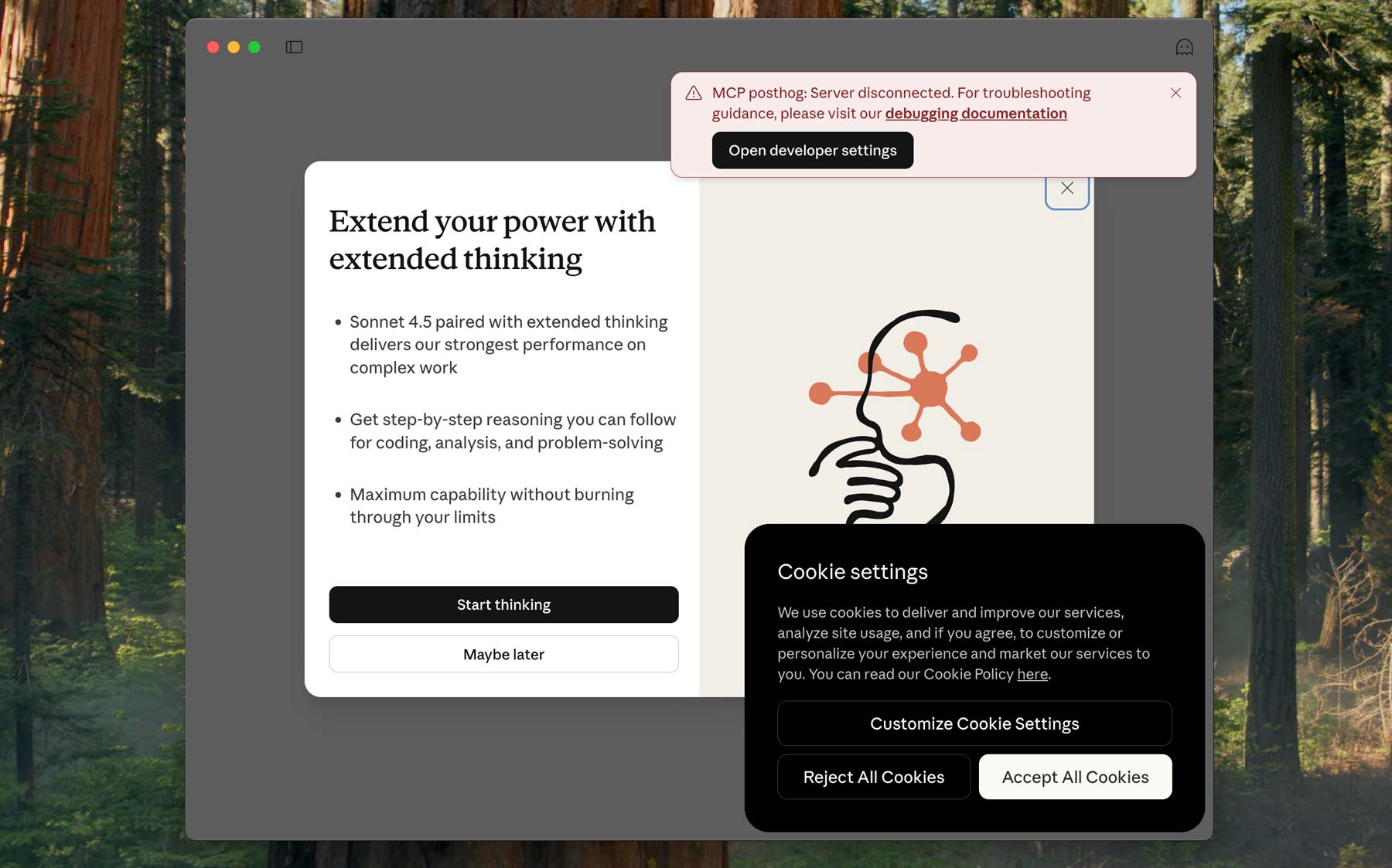
Claude and Microsoft 365 Copilot came off worse in Pike’s comparison. He wrote that Claude’s Mac app presents the web interface through Electron, the common framework for packaging web apps as desktop apps. Microsoft 365 Copilot, according to Pike, is effectively an Edge-based container pointed at m365.cloud.microsoft.
That implementation choice shows up in small failures. Pike highlighted a Claude window-dragging bug: the app can be moved from the top corner in some states, but not when a chat is open. He attributed the behavior to overuse of the CSS setting -webkit-app-region: no-drag, the sort of browser-shell papercut users notice long before they read the architecture diagram.
Microsoft’s situation is stranger. Pike said the separate Copilot app for Mac is a trimmed-down native-style Mac app that resembles ChatGPT and is better than expected, but lacks enough features to trail ChatGPT and Claude. He also wrote that it does not support work-account sign-in, pushing workplace users back to the less polished Microsoft 365 Copilot app.
Why the gap exists
Pike did not argue that Electron is doomed. He pointed to Superhuman, Figma, Cursor and Linear as examples of Electron apps that can feel polished when teams spend time fixing rough edges. His critique is aimed at execution and priorities: cross-platform apps help companies keep features coordinated, especially for enterprise products, but they often trade away platform feel unless the team treats polish as real work.
He also acknowledged that ChatGPT’s Mac app has defects, including a settings pane with duplicate back arrows. His conclusion was less that OpenAI has achieved perfection than that it has invested more seriously in the desktop experience.
Pike connected that investment to company strategy. He argued that ChatGPT’s consumer growth model rewards a strong standalone app, while Anthropic’s emphasis on enterprise sales helps explain why Claude’s desktop client feels less attended to. He also noted that OpenAI acquired Sky, a Mac-focused AI interface, as reported by TechCrunch, while Google has historically centered the browser.
For Anthropic, Pike saw room to improve without rewriting everything natively. His suggested path is better Electron work, plus native components where needed. He also pointed to Anthropic hiring Mike Krieger as chief product officer as a possible reason the company could invest more in tools. Until that happens, Pike’s verdict is plain: ChatGPT’s Mac app remains the desktop product to beat.
This story draws on original reporting from Allen Pike.