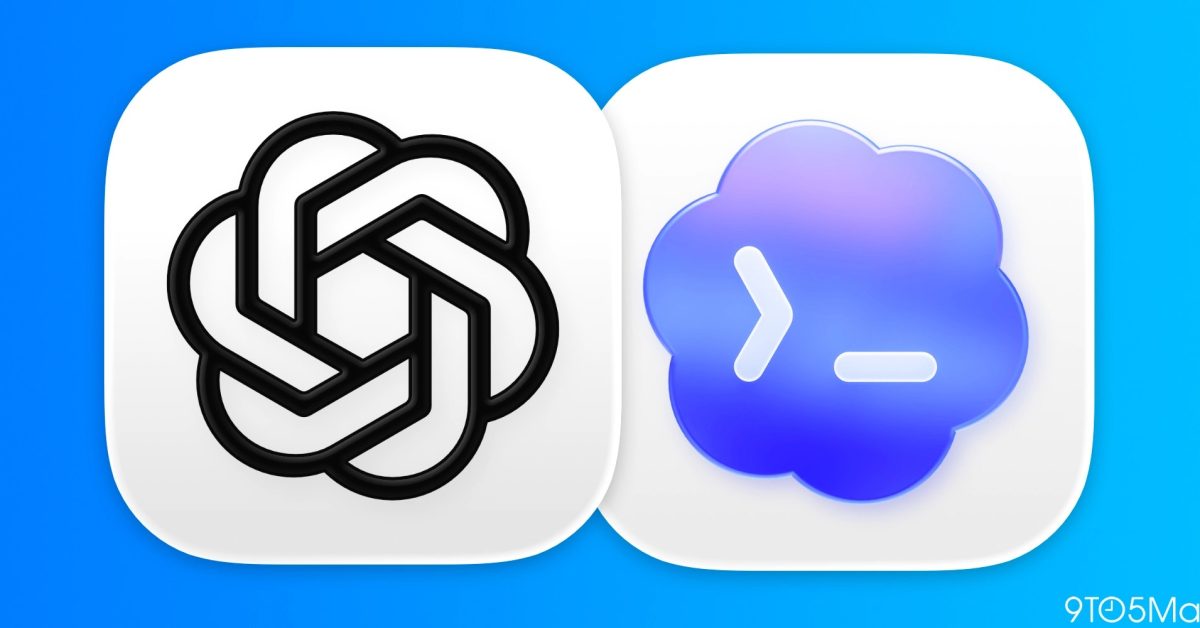
OpenAI used a Thursday livestream to push Codex into the main ChatGPT desktop app, launch a new ChatGPT Work agent and begin rolling out GPT-5.6. For Mac users, the practical result is less elegant than the keynote gloss: the old ChatGPT app, the Codex app and the new ChatGPT desktop app can now coexist in a way that looks primed to confuse anyone who does not read release notes for sport.
OpenAI said ChatGPT Work is available across web, mobile and desktop. The company is also adding a hosted sites feature for paid users and upgrading the ChatGPT desktop app so it includes Chat, Work and Codex in one place.
According to OpenAI’s Codex release notes, Codex is now part of the ChatGPT desktop app on macOS and Windows. Existing Codex users can update without losing projects, settings or workflows. They can also make Codex the default view and, on macOS, keep the Codex icon. The app name, however, becomes ChatGPT.
9to5Mac reported that the older ChatGPT desktop app is now called ChatGPT Classic, while Codex effectively becomes the new ChatGPT desktop app. The site said users may be able to keep ChatGPT Classic, ChatGPT and Codex installed at the same time, although the intended path appears to be moving to the new combined ChatGPT app. That is a very OpenAI sort of migration: one product, several names, and a UI taxonomy that needs its own onboarding flow.
What changed in the desktop app
OpenAI’s release notes say the merged desktop app now lets users edit Markdown and code directly, add inline annotations and ask Codex to revise selected text. It can also review GitHub pull requests in a sidebar with feedback next to the diff, and it can work across multiple repositories inside one project.
The company said GPT-5.6 improves Computer Use performance, makes Codex task progress easier to follow, moves plug-in management into Settings and fixes mobile connection and video rendering issues for SSH projects.
GPT-5.6 arrives in three tiers
OpenAI also said GPT-5.6 is rolling out over 24 hours in three named tiers: Sol, Terra and Luna. Sol is the flagship model, Terra is positioned for everyday work, and Luna is the faster, cheaper option. OpenAI said the naming scheme is meant to separate model generation from capability tier.
The company claims GPT-5.6 Sol improves coding, knowledge work, cybersecurity and science results while using fewer tokens than prior and competing frontier models. Those are OpenAI’s claims, not independent benchmark findings.
GPT-5.6 also adds an acceleration setting called ultra. OpenAI said ultra coordinates multiple agents across parallel workstreams for demanding tasks. In ChatGPT Work, ultra is available to Pro and Enterprise users. In Codex, it is available to Plus users and above. A separate max setting is available to users with GPT-5.6 access in ChatGPT Work and Codex.
- Chat users on Plus, Pro, Business and Enterprise can access GPT-5.6 Sol through medium and higher effort settings.
- Pro and Enterprise users can select GPT-5.6 Sol Pro for more complex work.
- Free and Go users get GPT-5.6 Terra in ChatGPT Work and Codex.
- Plus, Pro, Business and Enterprise users can choose Sol, Terra or Luna in ChatGPT Work and Codex.
Developers can access all three models through OpenAI’s API. OpenAI said GPT-5.6 pricing is per 1 million tokens: Sol costs $5 for input and $30 for output, Terra costs $2.50 for input and $15 for output, and Luna costs $1 for input and $6 for output.
OpenAI said GPT-5.4 will be retired on July 23 after the GPT-5.6 launch. GPT-5.5 models will remain available.
This story draws on original reporting from 9to5Mac.