The familiar beat of laughter, the spaced-out “ha ha ha” pattern, may be at least 15 million years old, according to a study in Communications Biology led by Chiara De Gregorio of the University of Warwick.
The researchers compared laughter recordings from humans and other great apes and argue that the timing pattern behind laughter was already present in the last common ancestor of the hominid family. That family includes living great apes as well as extinct relatives such as Neanderthals.
The work matters because laughter is not just a human social flourish. The study treats it as a vocal behavior shared across great apes, then asks what its rhythm can say about the evolution of vocal control. The answer, according to the team, is that human laughter sits on a broader hominid continuum rather than being a clean break from other apes.
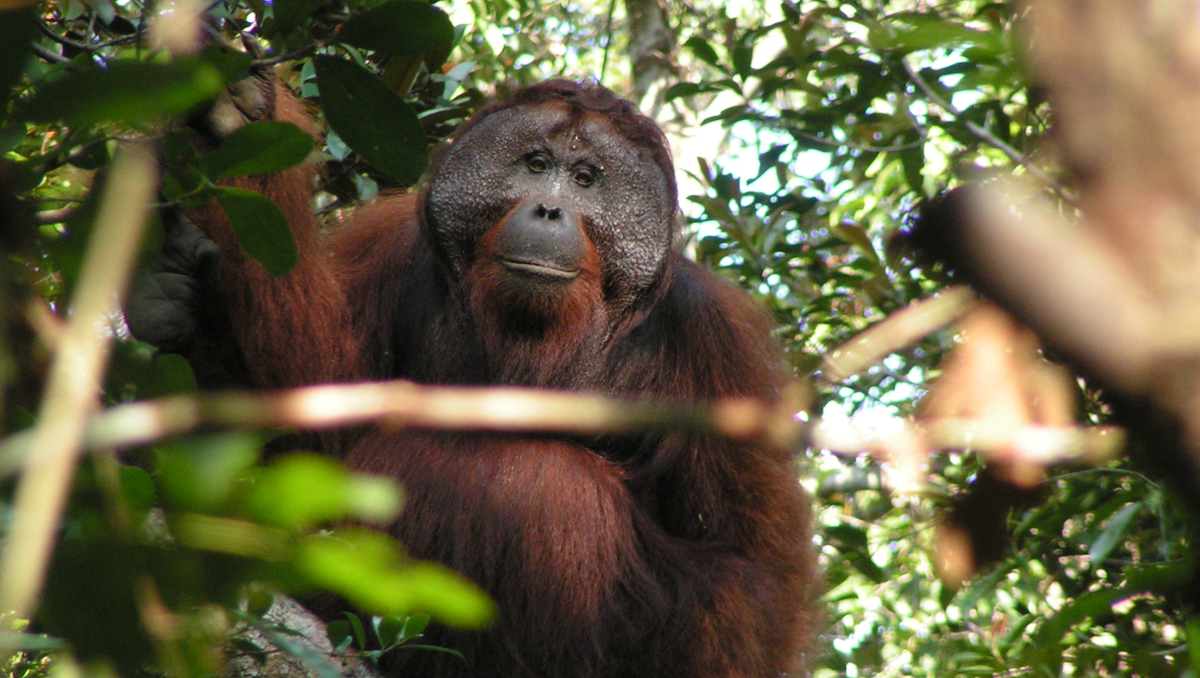
De Gregorio’s team analyzed recordings from four orangutans, two gorillas, three bonobos, four chimpanzees, and four human children. The sounds were captured during play, roughhousing, and tickling, which is about as close as primate acoustics gets to fieldwork with slapstick.
The researchers focused on timing. In acoustic terms, they looked at isochrony, meaning repeated sound units separated by clear intervals. In ordinary language, that is the rhythm that makes laughter sound like a sequence rather than one continuous noise.
The study found that this interval-based structure is shared broadly enough across great apes for the researchers to infer an old evolutionary origin. Their conclusion: recognizable laughter rhythm likely existed in the common ancestor of the major hominid branches, placing it at least 15 million years in the past.
“While all major branches of the Hominid family have evolved distinct call repertoires shaped by their species-specific socio-ecologies, one vocalization has been conserved across species and age-sex classes: laughter,” the researchers said.
The team also reported that apes more closely related to humans had more complex and variable laughter patterns. That tracks with the range of human laughs, from short bursts to irregular cackles, snorts, and drawn-out sequences.
The study does not claim that ancient apes laughed at jokes, or that human humor itself is 15 million years old. It is narrower and more interesting than that: the vocal machinery and timing pattern behind laughter appear to predate humans by a very long margin.
That distinction is useful. Culture decides what people find funny. Biology supplies the respiratory and vocal toolkit that lets a laugh come out in pulses. De Gregorio and colleagues are arguing that the pulsed part is old, shared, and conserved across the great ape line.
For humans, laughter carries a lot of social weight, from bonding to play to signaling that a rough interaction is still friendly. The study points to similar roots across our closest living relatives, suggesting the behavior’s social function was valuable enough to survive millions of years of primate divergence.
This story draws on original reporting from 404 Media.