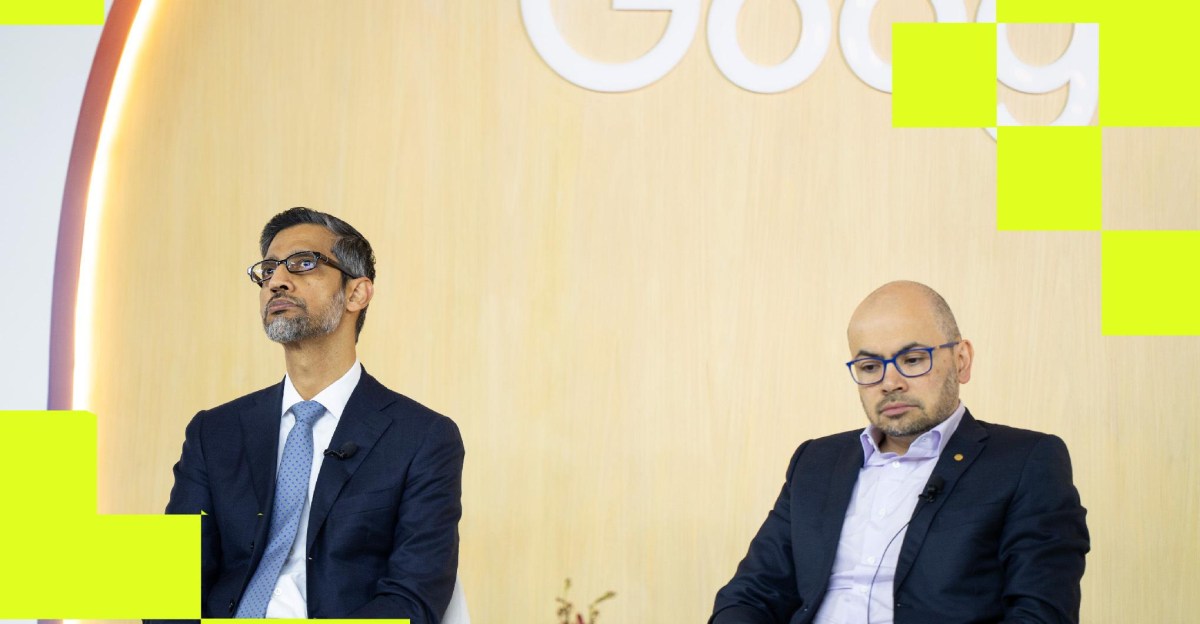
Google’s AI shake-up redraws who runs the company’s model business day to day. Demis Hassabis has handed operational control of Google DeepMind to its former chief technology officer, Koray Kavukcuoglu, while taking broader roles as chair of Google DeepMind and chief scientist of Alphabet. Separately, longtime Google scientist Jeff Dean is leaving after 27 years to start a new company with other senior researchers.
The changes put Kavukcuoglu in charge of the machinery closest to users and developers: Gemini model development, frontier-AI research, and the Gemini app and developer teams. He becomes senior vice president of Google DeepMind and reports directly to Google CEO Sundar Pichai, according to Google’s announcement.
Hassabis remains inside Alphabet. Alongside his DeepMind chair role and Alphabet chief scientist title, he will continue running Isomorphic Labs and advise the DeepMind teams on models and research. The structure separates operational responsibility for Gemini from Hassabis’s work on longer-term artificial-general-intelligence, or AGI, questions and science.
Why did Google change DeepMind leadership?
Pichai said Google needs to accelerate its AI work while staying focused on the frontier and on AGI and science. Hassabis gave a more personal explanation for his own move: handing off day-to-day management would give him time and space for the “big picture” and for helping shape what comes next in AGI. Those statements explain the new jobs, but Google has not identified one definitive cause for the wider reorganization.
The timing has drawn scrutiny because it comes with a notable departure. Google said Dean and Senior Fellow Sanjay Ghemawat are launching an independent public-benefit corporation focused on machine learning, science, and engineering. Google plans to be a founding investor and Cloud partner. Ars Technica reported that Quoc Le and Oriol Vinyals are also joining the venture, called Discovery Loop, whose aim is to automate scientific discovery with AI.
That is both a management overhaul and a loss of several researchers tied to Google’s AI history. Dean and Ghemawat helped build Google’s early search infrastructure and later contributed to neural-network work, Pichai said. Google’s announcement does not say their exits caused the leadership change.
What pressure is Google facing in AI?
Independent reporting provides context, not a confirmed explanation. The Wall Street Journal reported that the overhaul followed prominent personnel departures and delays in releasing a model intended to match leading Anthropic and OpenAI offerings. Ars Technica reported that Google had targeted a June release for Gemini 3.5 Pro, but had not released it by the time of its report. The Verge also reported that AI researchers have been moving frequently between labs.
Google’s counterargument is familiar corporate confidence, now delivered during a reshuffle. Pichai said the company has strong talent, computing capacity and products that reach more people with AI than any other company. He also claimed the Gemini app had surpassed 950 million monthly users and said Gemini models were seeing demand from developers and businesses. Those are Google’s claims, not independent measures of model quality or commercial performance.
For Gemini users, the immediate change is organizational: Kavukcuoglu now owns the teams responsible for its models and app, while Hassabis focuses on strategy, research and Isomorphic Labs. Whether that arrangement produces faster or better releases remains unproven.
This story draws on original reporting from The Verge.