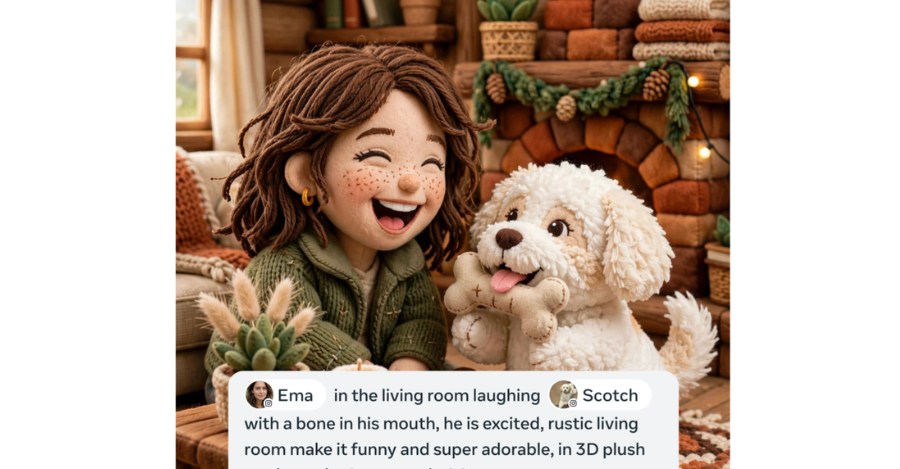
Meta has rolled out Muse Image, the first image-generation model from its Superintelligence Labs group, and the most awkward new feature is sitting inside Instagram prompts: users can tag another account and ask Meta AI to use that person’s likeness in a generated image.
According to Meta’s announcement on Tuesday, Muse Image now runs the image tools in the Meta AI app, Instagram and WhatsApp. The company says it will bring the model to Facebook and Messenger soon. Meta describes it as part of its newer Muse model family, which The Verge reported is taking the place of the company’s Llama lineup.
The Instagram integration is the part users will notice fastest. Meta says that when someone includes an Instagram username in a prompt, Meta AI can use public photos from that account to construct the visual output. The company also says users can control how other people reuse their content for AI, though the announcement described the control in broad terms rather than detailing every boundary in the feature itself.
How Meta says the model works
Alexandr Wang, whom Meta hired last year to lead Superintelligence Labs, said on Threads that Muse Image is “agentic.” In Wang’s description, that means Muse Image works with Meta’s Muse Spark large language model to interpret a prompt, search the web and plan before producing an image.
That is a more involved pipeline than a basic text-to-image box. The model is not only turning a sentence into pixels, according to Wang’s explanation. It can consult other information before generation, which gives Meta more room to make images that follow a user’s request and also more responsibility for what outside material gets pulled into the process.
Meta also plans to release a Muse Video model. Wang teased that system on Threads and claimed it is competitive on prompt following, image quality and temporal consistency. Those are company claims for now; Meta has not provided independent testing in the material described.
More than portraits
Muse Image is not limited to producing synthetic shots of people. Meta says users can alter existing images with suggested prompts, make designs such as invitations and postcards, and redesign rooms using an image from Facebook Marketplace or elsewhere on the web.
The company also says people can make edits by drawing directly on top of photos, then send the results to a feed, story or chat. In other words, Meta is tying the model to the places where its users already post, message and browse, rather than treating image generation as a separate toy.
The technical headline is that Meta’s image model can plan and pull from the web. The user-facing issue is plainer: public Instagram photos can become input for someone else’s AI prompt when an account is mentioned, subject to the reuse controls Meta says it provides.
This story draws on original reporting from The Verge.