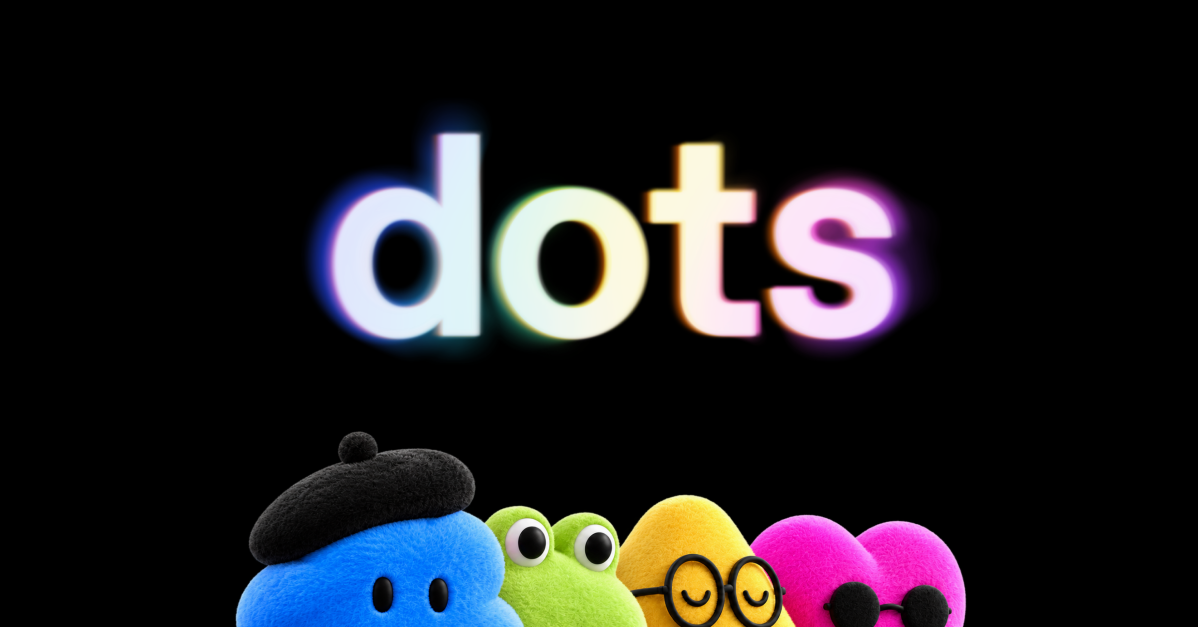
OpenAI Dots AI agents arrived at the company’s DevDay event on September 29, pitched as persistent assistants that can keep working across connected software instead of waiting for the next chatbot prompt. The product puts OpenAI into more direct competition with Meta’s Muse, another personalized agent designed to carry out work in the background.
OpenAI says each Dot runs on its own cloud computer, including a web browser, and can connect with more than 4,000 supported apps. Users can contact a Dot through ChatGPT, Slack and Microsoft Teams; text-message access is planned for later, according to reporting by The Verge and Semafor.
The distinction is operational, not cosmetic. A conventional chat session responds to a request in front of it. OpenAI is selling Dots as agents that retain context, take on ongoing or multistep assignments, report progress and ask for input when required. The company says they can learn a user’s preferences over time.
How do OpenAI Dots work?
A Dot works from a separate cloud machine rather than taking over a user’s device by default, according to The Decoder. That setup is meant to let it continue a task after the user leaves the chat. OpenAI says users can inspect the cloud computer while a Dot is working.
The company’s examples remain examples, not independent performance tests. OpenAI says a Dot could notice a software-bug report in Slack and begin investigating it, or use customer feedback to build and test updates to an app. In another example reported by Yahoo Finance, an early tester’s Dot prepared an overdue invoice and submitted it after the person approved it.
That level of access requires some guardrails, at least on paper. OpenAI says Dots must request approval for sensitive actions such as changing passwords, permanently deleting data or installing software. The Decoder reported that users can create rules allowing, blocking or requiring confirmation for particular actions. When a Dot is looking for useful work without an active assignment, its access is limited to read-only tools, the outlet reported.
Those controls do not turn an agent’s output into something safe to rubber-stamp. The Decoder said OpenAI advises people to check results that could have real-world consequences. A cloud computer with permissions to several work apps is a more consequential tool than a chat window, even if it comes with a friendly avatar.
Who can use OpenAI Dots at launch?
Users receive one customizable Dot initially, while OpenAI plans to support multiple agents later. Availability is not universal. Yahoo Finance reported a rollout for Pro, Business Premium and Enterprise customers in available markets. The Decoder reported that Pro subscribers in the European Economic Area, Switzerland and the UK cannot use Dots at launch; it said Business Premium access is available in supported regions, while Enterprise, Edu and Healthcare customers can use a beta if an administrator enables it.
The Muse comparison is narrow but obvious: both products are personalized, named agents with avatars, cloud-computer access and the ability to work beyond a single exchange. OpenAI’s claims establish what Dots is intended to do. They do not yet establish how reliably it will do that work in ordinary use.
This story draws on original reporting from The Verge.