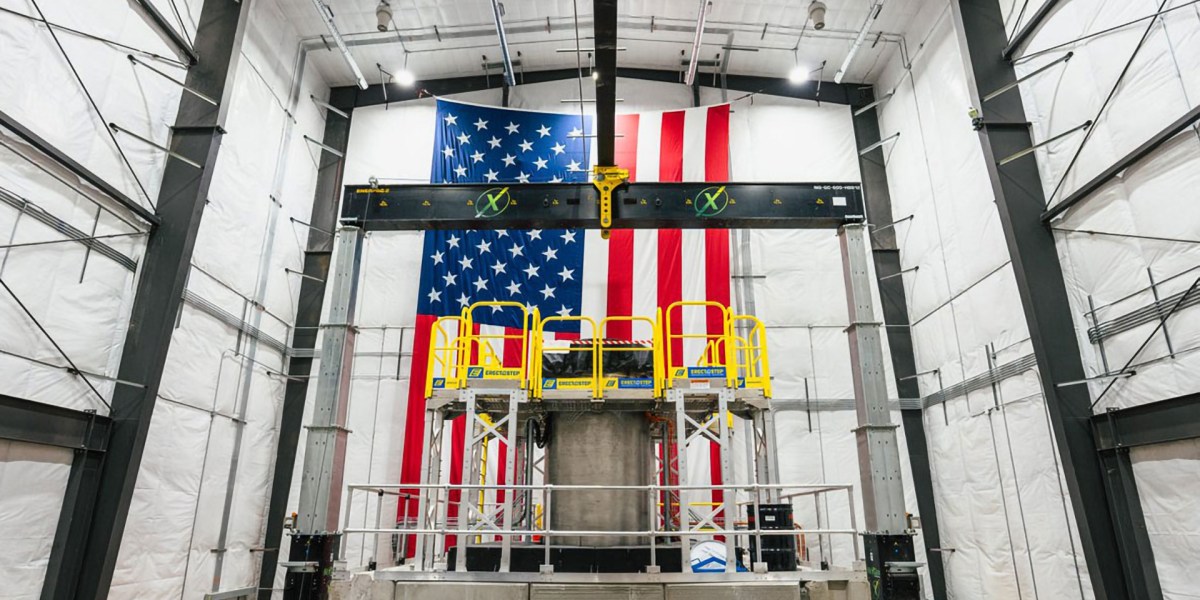
Four US microreactor developers have reached criticality under a Department of Energy pilot program, clearing a technical marker the Trump administration had tied to the country’s 250th birthday on July 4.
The milestone matters because it shows several new nuclear startups can assemble reactor cores capable of sustaining a nuclear chain reaction. It does not mean those reactors are ready to feed electricity to a data center, a factory, or the grid. In these cases, the achievement was zero-power criticality: a physics test, not a power plant.
The administration’s target was three new microreactors reaching criticality by July 4. Four did: Antares Nuclear, Valar Atomics, Deployable Energy, and Aalo Atomics.
What the pilot program did
The Department of Energy’s Reactor Pilot Program gave prototype projects a faster route through early development. In August, DOE selected 11 reactor projects and offered access to federal land and support from the national laboratory system.
All 11 selected projects are microreactors. That puts them in a different class from the large light-water reactors that supply most US nuclear electricity today, which are tens or hundreds of times bigger.
Antares was first across the line, according to DOE, reaching criticality in June with its Mark-0 test reactor. Valar, Deployable Energy, and Aalo followed. Aalo said it reached criticality in the early hours of July 4, which is about as literal as deadline compliance gets.
The pace is unusual for nuclear power, an industry better known for long schedules and swollen budgets. Valar, Antares, and Aalo were founded in 2023, while Deployable Energy began in 2025.
Criticality is not electricity
Criticality means a reactor can maintain a self-sustaining chain reaction. Zero-power criticality means it does so without producing meaningful usable power.
Kathryn Huff, a former assistant secretary for nuclear energy and chair of the Department of Nuclear Engineering and Engineering Physics at the University of Wisconsin-Madison, warned earlier this year on the Catalyst podcast that “a zero-power-criticality test can be achieved without making real engineering progress on fuel or design.”
The next step is harder: building systems that can run at power and move heat out of the reactor core. Some projects will need major additional equipment, including cooling systems, before they can generate electricity.
The companies are still selling aggressive schedules. Aalo says it has started work on a second reactor and plans to generate 10 megawatts of electricity for an on-site data center in 2027. Deployable Energy says it plans to deploy commercial reactors by 2028.
Regulators and skeptics still get a vote
The Nuclear Regulatory Commission oversees civilian and commercial nuclear use in the United States, and reactor approval has historically been slow. The NRC proposed a new microreactor approval framework earlier this year intended to speed the process, though how fast approvals will move remains untested.
Some nuclear experts have also questioned whether the Trump administration is relaxing nuclear rules too much. That debate will matter more as these prototypes try to become commercial machines.
Third Way, a public policy think tank, has argued that federal attention on the microreactor pilot is an “unhelpful diversion” from increasing nuclear capacity at meaningful scale. Its memo said, “Artificially accelerating project timelines is a short-term solution, not a long-term fix.”
The pilot program delivered its headline target. The harder test is whether any of these small reactors can safely, legally, and economically produce power outside a milestone chart.
This story draws on original reporting from MIT Technology Review.