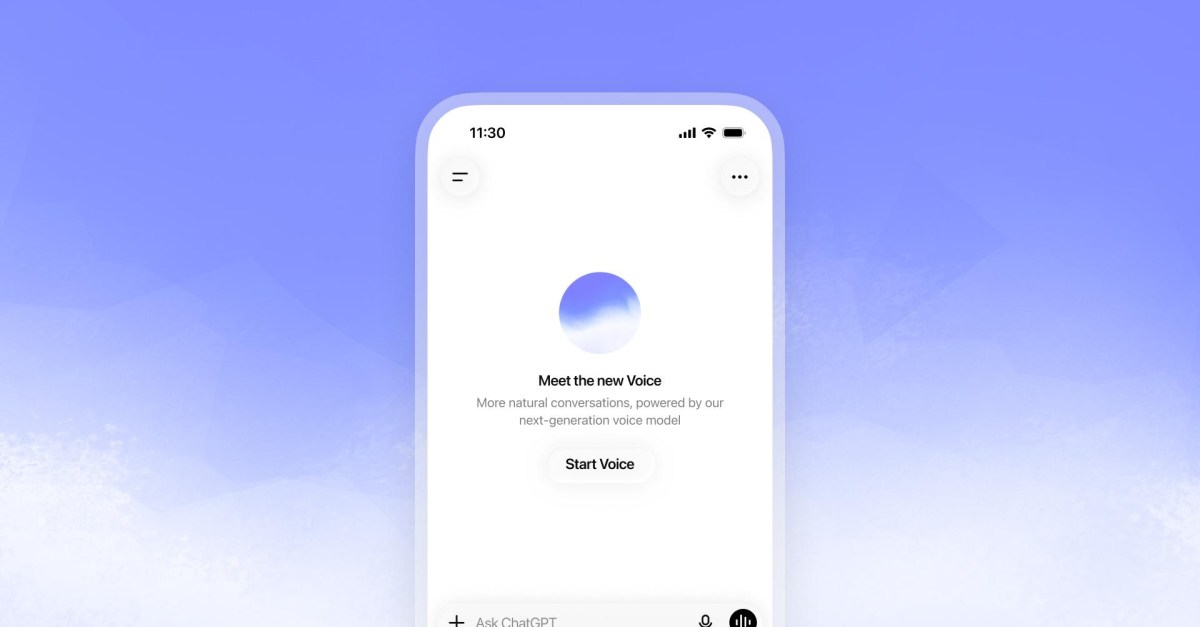
OpenAI is replacing ChatGPT’s voice system with GPT-Live-1, a new audio model the company says can listen and speak at the same time. For users, the practical promise is less of the familiar chatbot phone-call weirdness: fewer accidental interruptions, better handling of pauses, and a voice assistant that can keep up when a conversation stops being neatly turn-based.
OpenAI researcher lead Kundan Kumar described GPT-Live-1 during a press briefing as the company’s “smartest voice model” so far. Product lead Atty Eleti said the model is “full duplex,” meaning it can process incoming audio and generate outgoing speech continuously and simultaneously.
That is the mechanical change behind most of the upgrade. ChatGPT’s previous voice mode depended on an older turn-based model, according to OpenAI. In that setup, the system was worse at maintaining a natural rhythm and did not always answer accurately. A turn-based assistant has to infer when the user is done, then respond. Humans, annoyingly for software, pause mid-thought, restart sentences, talk over each other, and use little verbal acknowledgments to show they are still listening.
GPT-Live-1 is built to handle more of that mess. OpenAI says it should wait when a user pauses instead of jumping in, and users can tell ChatGPT Voice to stay quiet until addressed. The assistant may still acknowledge that it is listening with short responses such as “mhmm,” “yeah,” or “got it,” according to the company.
Translation and visual answers
The new model also changes how voice translation works. OpenAI says ChatGPT Voice can now translate in real time while someone is still speaking, rather than waiting for the end of an utterance before producing a translation. That is a real usability difference if it works reliably, though OpenAI’s claims come from its own briefing, not independent testing.
GPT-Live-1 will also route some requests to OpenAI’s stronger text models, including GPT-5.5, when a query requires reasoning or web search. OpenAI says this handoff should make it faster for ChatGPT to move from researching a topic to speaking an answer back to the user.
The voice mode will also add AI-generated visuals for some information-heavy topics. OpenAI says conversations about weather, stocks, and sports may include cards or images with data such as forecasts or scores. The company did not describe those visuals as manually produced, so users should treat them like other AI-generated output: useful when correct, irritating when not.
Safety controls arrive with the upgrade
OpenAI says GPT-Live-1 includes built-in safeguards intended to steer the model away from harmful responses or end conversations in higher-risk situations. The company also says the model has been trained to offer expert-vetted crisis helpline support in self-harm conversations and to give age-appropriate answers to teens.
Those safety claims land while OpenAI is facing multiple lawsuits alleging ChatGPT worsened delusions or harmed users’ mental health. The existence of new guardrails does not settle whether they work under pressure, but it does show OpenAI knows voice conversations create a different risk profile than typed prompts. A spoken chatbot that can respond instantly, keep listening, and sound socially present is harder to treat as a search box with better manners.
GPT-Live-1 is rolling out on iOS, Android, and the web. OpenAI says it will power ChatGPT Voice for Go, Plus, and Pro subscribers. Free users will get GPT-Live-mini-1, a smaller and more efficient version, as the default voice model.
This story draws on original reporting from The Verge.