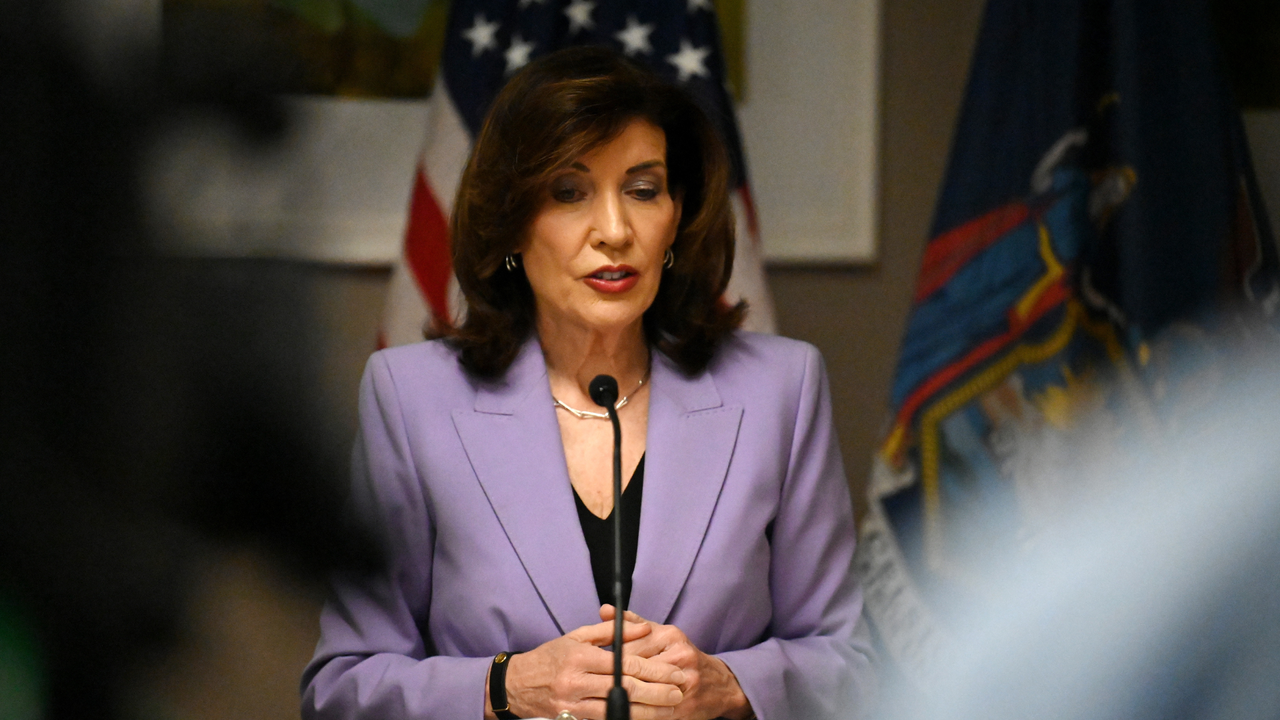
New York Gov. Kathy Hochul has signed Senate Bill S10642, the Responsible Data Center Development Act, pausing large data center development across the state for up to one year. Reuters reported that New York is the first U.S. state to put a statewide temporary data center ban into force.
The law applies to data center projects with capacity of 50 megawatts or more. Under the measure, the New York Department of Environmental Conservation will stop issuing permits for qualifying projects that have not yet been completed. That is the operational bite of the bill: if a large project still needs state environmental approval, it now sits in the queue while Albany writes the rulebook.
Hochul said in a statement that data center growth threatens to raise utility bills, consume natural resources and create uncertainty for New Yorkers. She also said she is seeking legislation to remove tax exemptions for large data centers, which would hit the subsidy side of the buildout rather than only the permitting side.
New York wants one environmental standard
The governor’s office said the state will prepare a Generic Environmental Impact Statement, or GEIS, for data center construction and operation. That document is meant to set consistent standards for future projects and examine their environmental effects.
The moratorium is written as a one-year pause, but Hochul’s office said it can end earlier once the GEIS is complete. In other words, the freeze is tied to an environmental review process, not just a calendar date.
Maine lawmakers had passed a statewide moratorium before New York, but Gov. Janet Mills vetoed it. Mills objected after the bill did not carve out a particular data center project that she said had strong local and regional backing. That left New York as the first state where such a ban actually became law, according to Reuters.
AI buildouts keep running into the grid
The New York law lands while the Trump administration is pushing faster AI infrastructure construction through the White House AI Action Plan. That federal posture favors more data centers, because large AI systems need large amounts of compute, power, cooling, networking and storage.
The local politics have been less friendly. Monitoring Analytics, which oversees the largest U.S. power grid operator, has attributed a 76% electricity price increase to rising data center demand. A Virginia county has asked government offices, including schools, to conserve power because of AI-linked electricity cost pressure. Data center projects have also drawn objections over water use, air pollution and noise.
That resistance is spreading beyond New York. More than 75 data center projects worth $130 billion were delayed in the first half of the year, according to figures cited by Tom’s Hardware. Seattle approved a one-year moratorium last month, even as the city hosts the headquarters of Amazon and Microsoft.
The industry is responding with promises and prototypes. Startups have shown small modular reactor concepts aimed at supplying data centers without leaning as hard on local grids. Microsoft and Nvidia have promoted cooling and efficiency work intended to reduce water and electricity demand. Oregon, meanwhile, has taken a pricing route: its POWER Act raised data center bills by 30% while cutting residential costs by 1.3%.
New York’s move does not settle the AI infrastructure fight. It forces large projects to wait while the state decides what they must prove before they plug in.
This story draws on original reporting from Tom's Hardware.