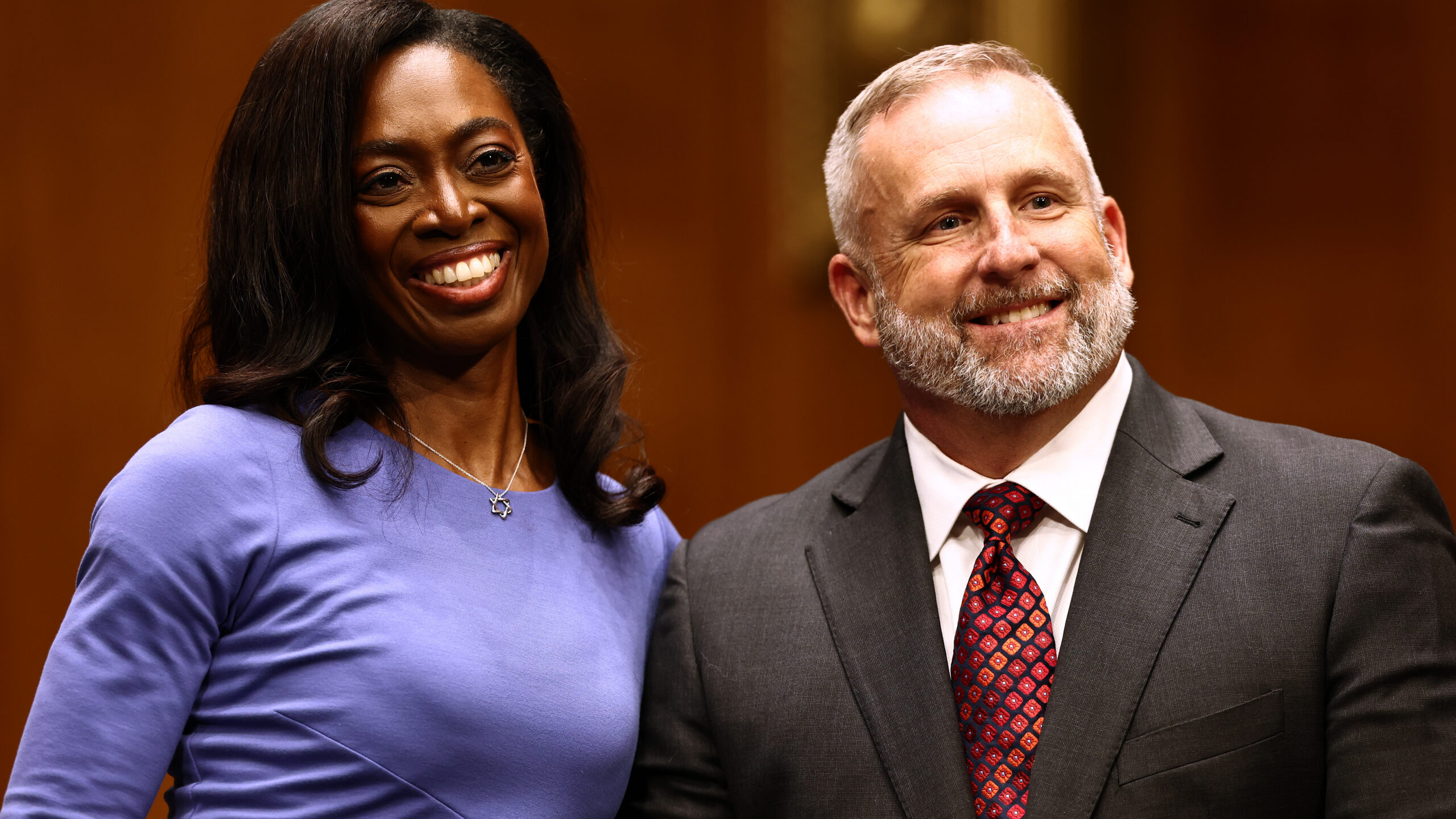
Two Trump administration nominees for senior health jobs ran into a wall of Senate skepticism Wednesday as lawmakers pressed them on vaccine science, political interference at the Centers for Disease Control and Prevention, and whether the government would be ready for another pandemic.
The Senate Health, Education, Labor and Pensions Committee questioned Erica Schwartz, President Donald Trump’s pick to lead the CDC, and Sean Kaufman, nominated to run the Administration for Strategic Preparedness and Response. The jobs are not decorative. The CDC director oversees the federal agency that tracks disease and guides public health policy. ASPR is supposed to make sure the country can respond to pandemics, bioterror threats and other emergencies with vaccines, tests and treatments.
Schwartz arrived with credentials that had made some public health experts cautiously hopeful: a medical degree, a public health master’s degree, a law degree, a Navy career, and prior service as chief medical officer for the Coast Guard and deputy surgeon general during Trump’s first term. She also supports vaccination, a notable point because Health Secretary Robert F. Kennedy Jr. has a long anti-vaccine record.
Her problem was independence. Committee members repeatedly asked whether she would resist Kennedy or the White House if they pushed policies she considered scientifically wrong or dangerous.
Sen. Bill Cassidy, the Louisiana Republican who chairs the committee and is a physician, asked Schwartz whether she would show the same integrity as former CDC director Susan Monarez, who was fired after refusing to approve vaccine recommendations from an advisory panel Kennedy had filled with anti-vaccine allies. Schwartz did not answer directly, saying she had led with integrity and had taken the Hippocratic oath.
Cassidy then asked whether she would have authority as CDC director to reassign agency staff if Kennedy directed employees toward counterproductive work, including inquiries aimed at showing vaccines cause harm. Schwartz again avoided a yes-or-no answer, eventually saying Kennedy would allow her to be CDC director. Cassidy told her he felt forced to push harder than he should have.
Sen. Bernie Sanders, the Vermont independent and ranking member, asked Schwartz whether she accepted the evidence that vaccines do not cause autism. Schwartz first said the cause of autism is not known. After Sanders pressed her, she said she accepted the evidence. Asked whether she would remove a CDC webpage published under Kennedy that falsely links vaccines and autism, Schwartz said she was not aware of the page and would not commit to taking it down.
Schwartz also told senators she did not know about several recent CDC issues they raised, including cuts that nearly eliminated the National Institute for Occupational Safety and Health, a rollback of food safety surveillance, and blocked tobacco-control work. She said she supported Trump’s withdrawal from the World Health Organization. On military flu vaccine mandates, she said she was fully supportive “in certain circumstances.”
Kaufman faced a different problem: his own public statements. He has a public health master’s degree, leadership experience at the CDC and Emory University, and three decades of work in outbreak preparedness, biosafety and emergency response. But senators focused on past comments reported by Stat News in which he raised the debunked claim that vaccines cause autism, praised natural immunity, opposed vaccine mandates, attacked supporters of the hepatitis B birth dose, and wrote that he would rather die than have any of his children receive a COVID-19 vaccine.
Sanders asked about that COVID-19 vaccine statement. Kaufman confirmed he had written it, while adding that he once recommended the vaccine to his wife’s mother. When pressed about his hepatitis B comments, he said his three children had received the birth dose.
Cassidy, a hepatologist who said he has treated patients with severe hepatitis B liver damage, reacted angrily and asked why Kaufman had repeated those claims. Kaufman said he had deleted the LinkedIn post and argued that his wording had been ambiguous.
Lawmakers also questioned Kaufman about mRNA vaccine research. Kennedy has criticized mRNA technology and canceled federal grants for mRNA vaccine development, including work tied to pandemic preparedness. Kaufman said he supported Kennedy’s cancellation of that funding while also saying the United States should support more mRNA research. His explanation was that he wanted more study of the platform used for COVID-19 vaccines before funding future uses.
Sen. John Hickenlooper, Democrat of Colorado, said that argument suggested the government could not do two things at once. Sen. Patty Murray, Democrat of Washington, said she did not understand how Kaufman could want more research while endorsing its cancellation. Cassidy said he was flummoxed that Kaufman supported cutting mRNA research because, in Kaufman’s view, there was not enough mRNA research.
This story draws on original reporting from Ars Technica.