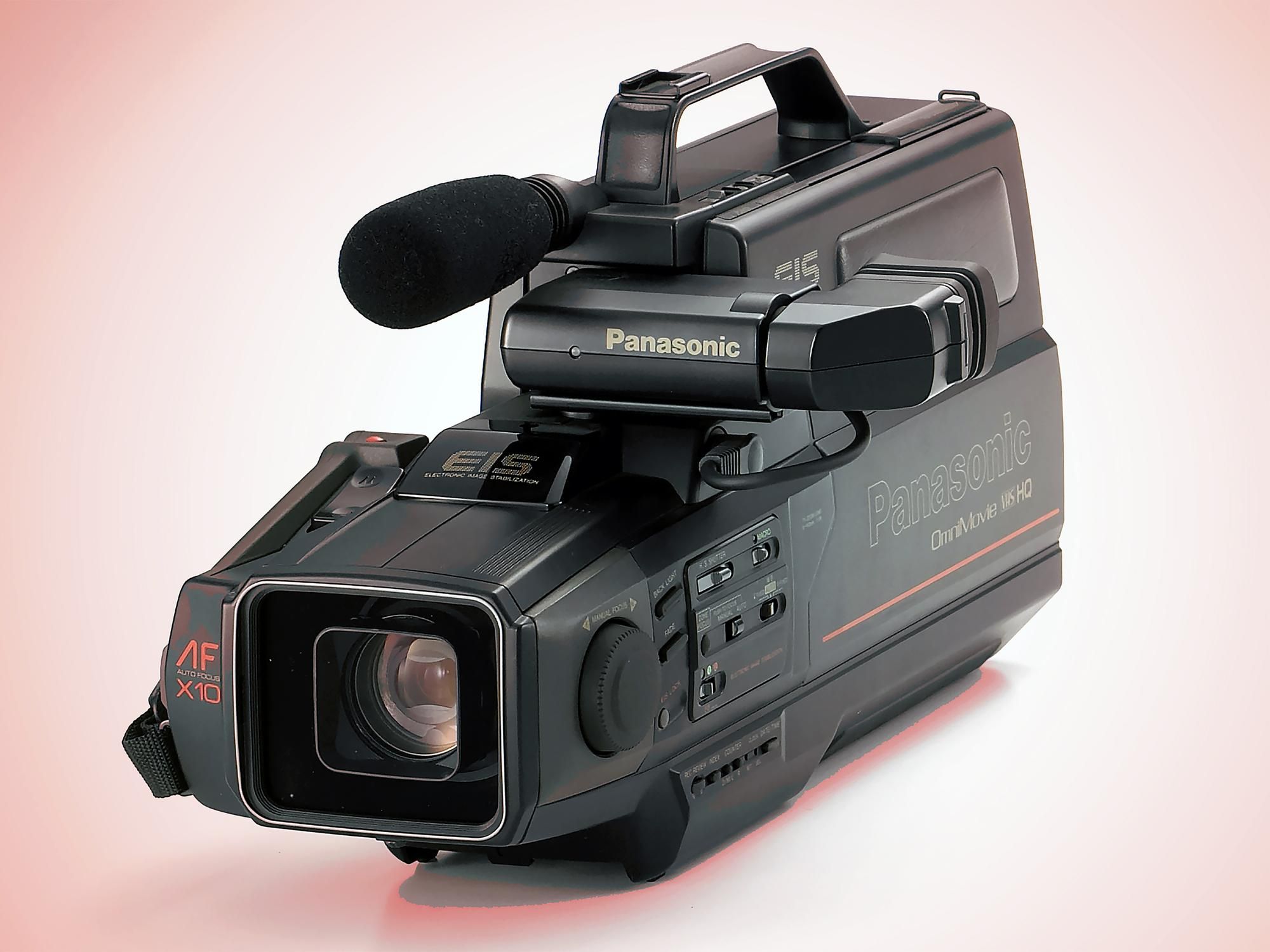
IEEE has recognized Panasonic’s 1988 PV-460 VHS camcorder as a Milestone, marking the consumer camera that first put optical image stabilization into a video camera and made shaky home movies less of a mandatory aesthetic.
The dedication took place July 9 at the Panasonic Museum in Kadoma, Japan, according to IEEE. The IEEE Kansai Section sponsored the nomination, and the plaque is set to be displayed on the museum’s ground floor, near the former Panasonic research lab where the stabilization system was developed.
The honor is not for nostalgia alone. The PV-460’s basic idea, measure camera motion and counteract it optically, is now routine in cameras, smartphones, drones and other imaging devices. That does not make the 1988 implementation obvious. At the time, the sensors needed to detect small angular movements were too large and expensive for a consumer camcorder, according to the IEEE Milestone proposal.
What Panasonic fixed
Before camcorders became common, people recording video in the 1970s and early 1980s often carried two boxes: a video camera and a separate cassette recorder, linked by a multipin cable. The camcorder combined those pieces into one battery-powered unit with a tape slot, lens and shoulder strap. It was easier to carry, but still easy to shake.
A tripod or a motorized gimbal could steady a shot, assuming the person filming a birthday party or vacation wanted to haul extra hardware. Most did not. Hand motion, walking, breathing and shoulder movement turned ordinary footage into jitter.
Panasonic assigned a team led by researcher Mitsuaki Oshima to the problem, according to the IEEE Milestone proposal. Oshima, now an honorary Fellow at Panasonic and an IEEE life senior member, focused on detecting rotational motion: pitch, yaw and roll. That mattered most when users zoomed in, where small rotations become more obvious in the image.
The team built a compact, low-cost vibration-type gyroscope, also described as an angular velocity sensor. In plain English, it measured how quickly the camcorder’s orientation was changing. Panasonic paired that sensor with an optical-axis correction mechanism, which shifted the optical path to compensate for hand movement before the shake ruined the recorded image.
The Milestone plaque says the PV-460 combined “a miniaturized vibrating-structure gyroscope sensor with an optical-axis correction mechanism” and that broad international licensing helped make the patented approach common in later imaging devices.
How it fits into camera history
The IEEE nomination places the PV-460 in a longer line of automation that made cameras less hostile to amateurs. It points to Durst’s 1956 Automatica as an early automatic-exposure camera, using a light meter and internal mechanics to adjust to changing light. It also cites Norman Stauffer of Honeywell, who invented autofocus technology in 1973 using a sensor, control system and motor. Stauffer later received the 1990 IEEE Masaru Ibuka Consumer Technology Award.
MIT credits U.S. inventor Jerome Lemelson with technologies that helped underpin camcorders, including patents related to portable video camera systems. JVC and Sony used such technologies in 1982 for camera-recorder products, according to the IEEE account. Sony followed in 1983 with the Betamovie BMC-100P, a shoulder-carried Betamax camcorder that could record but could not rewind or play tapes.
Panasonic introduced the PV-460 in June 1988. The IEEE Kansai Section wrote in its nomination that the product changed personal videography by improving recordings of travel, events and family life. That is a sponsor’s claim, but the technical inheritance is easier to verify: stabilization spread widely after Panasonic patented and licensed the approach.
Panasonic received an R&D World 100 Award in 1989 for developing a VHS camcorder with an anti-shake mechanism. Oshima’s paper, “VHS Camcorder With Electronic Image Stabilizer,” is available through the IEEE Xplore Digital Library.
IEEE Milestones are selected by the IEEE History Committee and endorsed by the IEEE Board of Directors. The program recognizes technical developments that are at least 25 years old. The PV-460 clears that bar with room to spare, and with fewer nausea-inducing home videos left in its wake.
This story draws on original reporting from IEEE Spectrum.