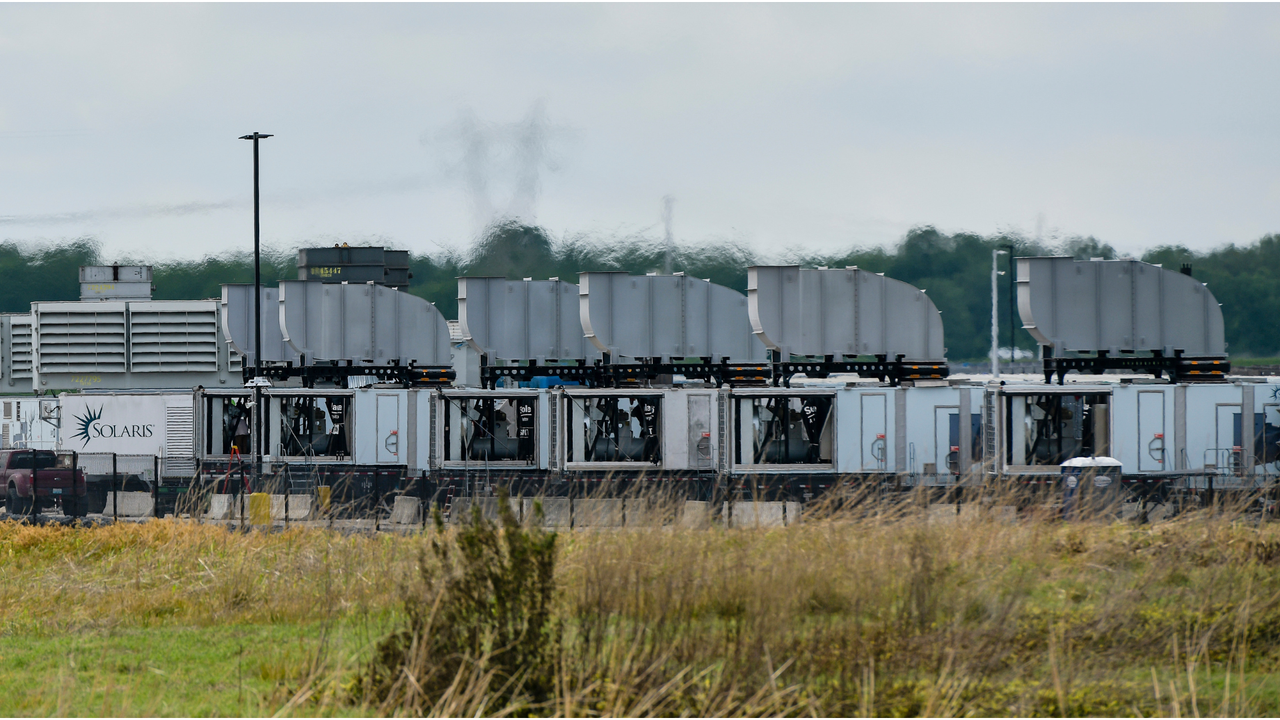
Elon Musk’s xAI has installed 59 mobile natural gas turbines for its Colossus 2 data center project near the Tennessee-Mississippi line, most of them without air permits, according to a Reuters investigation. The reporting puts hard numbers on a familiar AI infrastructure dodge: if the grid cannot deliver enough power fast enough, bring generators and deal with the air rules later.
Reuters reported that the turbines run the site outside the regular power grid and can release thousands of tons of pollutants each year. xAI has said 27 of the turbines do not need permits because they are temporary units. The company’s position, according to Reuters, is that the generators are not permanent installations and can be moved within 364 days.
The Environmental Protection Agency has already pushed back on that theory. Earlier this year, the agency issued a ruling removing exemptions for these kinds of portable units, according to Reuters. The EPA also told Reuters it is considering changes that would allow some regulatory flexibility for portable equipment while still protecting public health.
The permitting fight is about where the power comes from
Colossus and Colossus 2 were built quickly, and that pace created a power problem. A grid connection large enough for xAI’s stated 1-gigawatt capacity target could take years, especially if utilities need to upgrade transmission or local infrastructure. Natural gas turbines solve the timing problem by generating electricity on site, but they also produce nitrogen oxides, carbon monoxide, fine particulate pollution and formaldehyde.
Reuters reported that at least 57 of the 59 turbines are just over the state line in Mississippi, even though the data center project is tied to the Memphis area in Tennessee. Mississippi issued a permit in March for 41 permanent turbines. Reuters reported that xAI and Mississippi environmental regulators say the mobile turbines are exempt from permitting, while the mobile units are also not covered by the permit for permanent turbines.
The Clean Air Act threshold cited by Reuters is 100 tons of nitrogen oxide a year for turbines operating without a permit. The Reuters analysis found that 30 of the 59 listed turbines could emit about 2,500 tons of nitrogen oxide, 4,000 tons of carbon monoxide and 22 tons of formaldehyde annually.
Residents and the NAACP point to local health risks
The NAACP has sued over the turbine operation, alleging that the unpermitted generators caused a 111% rise in nitrogen oxide exhaust, an 83% increase in PM2.5 particles and an 88% increase in formaldehyde emissions. Those are allegations in litigation, not findings by a court.
Reuters reported that communities within five miles of the project are predominantly Black and already have elevated lung disease rates. The affected area spans DeSoto County, Mississippi, and Shelby County, Tennessee. Reuters cited census data showing that about 46% of the population in the relevant DeSoto County area and 94% in the relevant Shelby County area is Black, compared with 33% and 52% in the rest of those counties.
The Reuters investigation did not say xAI deliberately targeted Black communities. It did cite a 2022 study finding that areas historically redlined by banks still see higher air pollution emissions today.
SpaceXAI, described in the reporting as the company formed after xAI’s merger with SpaceX, recently offered residents near Colossus 1 and Colossus 2 a 50% Starlink discount and free hardware rental. Michael Nicolls, SpaceX vice president for Starlink, said on X that the data centers’ capabilities depended on support from the Memphis community. Critics quoted in coverage have described the offer as public relations while residents fight noise and air pollution from the sites.
This story draws on original reporting from Tom's Hardware.