Manufacturers across parts of the Rust Belt are paying sharply higher electricity bills as AI data centers add new demand to the country’s largest grid operator, PJM Interconnection. That is a direct problem for President Donald Trump’s manufacturing agenda: the same region being pitched as a home for more domestic production is also becoming more expensive to run.
Reuters reported that factory power costs in many PJM cities and towns are rising faster than bills for other commercial customers and households. One example is Belden Brick Company, a 141-year-old Ohio brick maker, where monthly electricity bills rose from $1,600 to $12,000 because of a higher capacity charge in PJM’s 13-state region, according to Reuters.
Capacity charges are not a mysterious AI tax, though they can feel like one on an invoice. PJM pays power generators for being available to meet forecast demand. When expected demand rises and supply looks tight, those prices climb. Reuters reported that PJM capacity prices increased from $28.92 per megawatt-day in 2024 to $329.17 per megawatt-day in 2026.
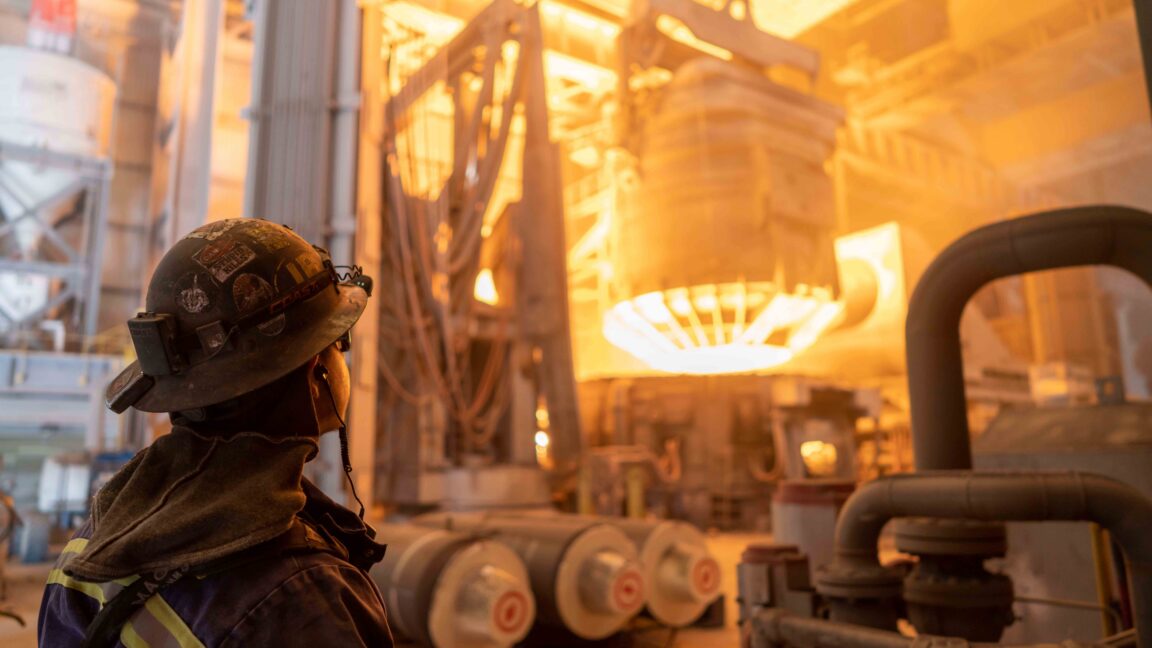
The Steel Manufacturers Association has warned that steel companies clustered in PJM territory are paying tens of millions of dollars more each year for electricity. The group said electricity makes up 20 to 40 percent of the cost of producing steel. Each electric arc furnace used in steelmaking draws between 40 and 200 megawatts while operating, and the US steel sector can draw up to 11 gigawatts at peak production across all facilities, according to the association.
The data center boom cuts both ways for steelmakers. The Wall Street Journal reported that data center construction requires an estimated 1 million tons of steel per year, creating demand for the industry’s product. The same buildout is also raising operating costs. Metallus, an Ohio-based steelmaker, said its power costs have increased 70 percent since 2024, adding $15 million a year in energy expenses, according to the Journal.
PJM has forecast that demand in its service territory will exceed available supply by 6.6 gigawatts beginning in 2027, the Wall Street Journal reported. The Journal described that gap as equivalent to more than six nuclear power plants.
Policy fixes are thin so far
Reuters reported that some manufacturers have raised customer prices to absorb part of the increase, while others are considering moving. The Wall Street Journal also reported that steel executives have warned production outages could become more likely if local grids are overloaded.
The White House has pointed to a Ratepayer Protection Pledge under which large technology companies would pay for new power generation and transmission infrastructure. The pledge, however, lacks a meaningful enforcement mechanism. The Trump administration and state governors have also pushed PJM to hold a one-time backstop auction to buy new supply capacity.
The harder issue is building enough power and wires fast enough. New generation, transmission lines, data centers, factories, other businesses, and households are all competing for the same grid headroom. Trump administration efforts to halt some wind and solar projects have added another constraint to an already tight system.
Cleanview CEO Michael Thomas said the United States saw cancellations of power projects totaling 266 gigawatts of generation capacity in 2025. Cleanview, which tracks renewable energy and data center projects, said that amount equals 25 percent of current US electricity generation capacity and exceeds Texas’ total generation. Clean energy projects accounted for 93 percent of the canceled capacity, according to Thomas.
Thomas said Trump administration cancellations of wind projects were one factor. He also cited local opposition to renewable projects in states including Ohio and Indiana, which have courted data centers, and a lack of new transmission lines that raises interconnection costs for clean energy projects. For manufacturers, the mechanism is blunt: more demand without enough supply means higher power costs, and higher power costs make the “Made in America” pitch harder to price.
This story draws on original reporting from Ars Technica.


