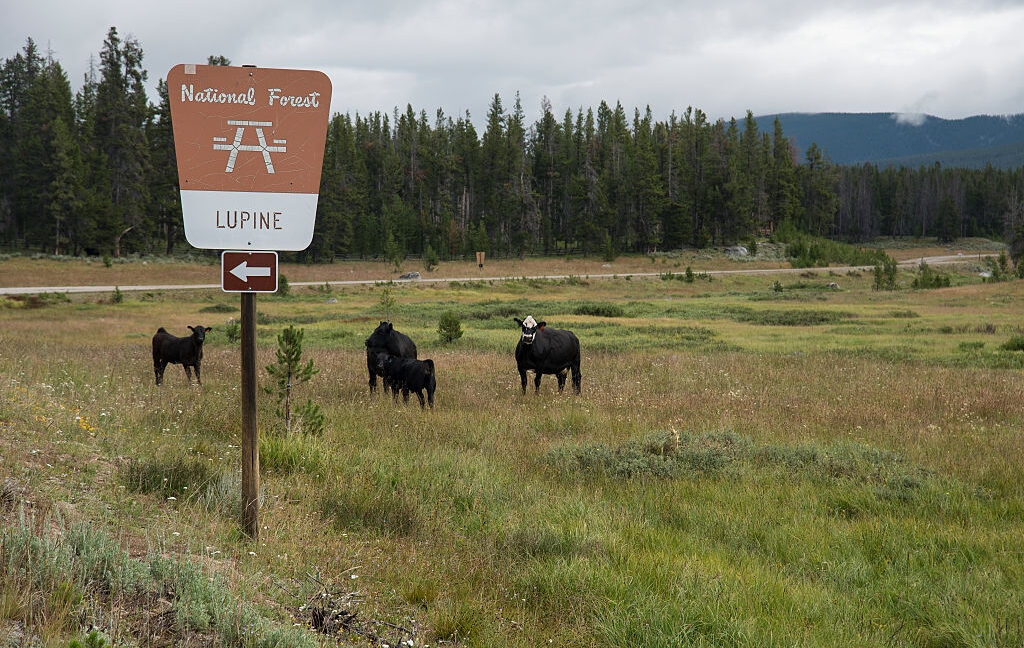
The Interior Department’s Bureau of Land Management is proposing the first broad rewrite of federal public-lands grazing rules since 1995, with changes that would make it easier to keep cattle, sheep and other livestock on 155 million acres in the West while cutting back public involvement in permit decisions.
The proposal, published in May and headed back to the agency for further review after a public-comment period in mid-July, would revise the rules for ranching on federal land outside Alaska. The BLM said in a June announcement that the changes reflect the Trump administration’s push to reduce regulatory burdens, support working lands and strengthen local economies. The agency did not answer questions from ProPublica and High Country News about the draft regulations.
The grazing system is a cheap one for ranchers. ProPublica and High Country News reported last year that federal public-lands grazing heavily subsidizes some affluent permit holders and that, in 2024, ranchers paid $284 million less than market rate to use public land. Rangeland specialists have also said overgrazing has damaged federal lands, with BLM reviews identifying tens of millions of acres affected.
The proposed rewrite is not all one-way code for ranchers. Current and former BLM employees told ProPublica and High Country News that the draft would require the agency to review ecological effects from all public-land uses, including mining, oil drilling, recreation and timber, rather than focusing such reviews on livestock. They also said the rules could let staff resolve minor grazing violations informally and give local managers more room to adjust grazing in response to ecological conditions.
Who gets to object
The sharper fight is over participation. The proposal would change who counts as “interested public,” a category that determines who gets notice and a chance to weigh in on grazing decisions. The new language would require a “cognizable” interest in the grazing at issue. The BLM did not define the term when asked by ProPublica and High Country News. A former senior BLM official said the wording would likely raise the bar for advance notice and public comments.
The draft also would remove a requirement that BLM include the public in “consultation, cooperation and coordination,” the agency process used before actions such as authorizing grazing. Current and former staff said that would narrow the set of people and groups with a formal role before decisions are made.
Mark Squillace, a University of Colorado Law School professor who studies natural resources law, pointed to another mechanism: if a rancher appeals an agency decision limiting grazing, the decision is automatically paused. That lets the challenged grazing continue while the appeal plays out. Squillace told ProPublica and High Country News the structure would encourage appeals by ranchers seeking to avoid restrictions.
Nada Culver, who served as BLM deputy director during the Biden administration, said some provisions would make it harder for agency staff to order animals off damaged land and easier to renew grazing permits.
Industry access, tribal concerns
Livestock trade groups had direct access as the rewrite took shape. The National Cattlemen’s Beef Association and the Public Lands Council publicized spring meetings with Interior and Agriculture department leaders. A memorandum of understanding allowed the groups to advise the departments on a grazing action plan that included regulatory changes. The groups did not respond to ProPublica and High Country News requests for comment.
Tim Canterbury, president of the Public Lands Council, called the proposal “a massive step forward” in a group news release, saying the current rules reflected 1990s hostility to public-lands ranching and constrained newer management practices.
Conservation groups and tribal representatives said they were not given a comparable chance to shape the draft before publication. OJ Semans Sr., a Rosebud Sioux Tribe member and executive director of the Coalition of Large Tribes, said tribal nations are worried that language requiring livestock operations to be “production-oriented” could threaten bison herds used for cultural preservation or land restoration.
Karen Budd-Falen, a senior Interior official and longtime grazing advocate whose family is in ranching, received an ethics waiver allowing her to work on grazing policy after previously being barred from the subject during the first Trump administration. In a December discussion with Sen. Cynthia Lummis, Budd-Falen said the department had gone “back to the Ronald Reagan years” in drafting the regulations and said vacant allotments would be filled by ranchers by the end of next year.
This story draws on original reporting from Ars Technica.