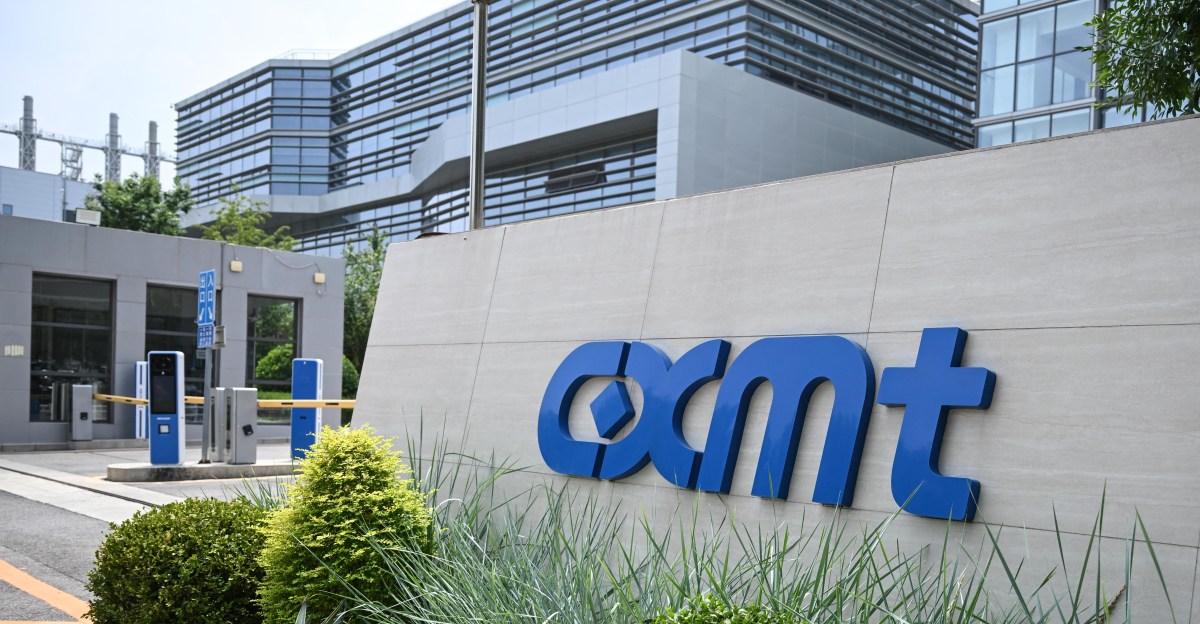
The CXMT stock debut turned ChangXin Memory Technologies into a $484 billion company after its shares rose 466 percent on their first day of trading on the Shanghai stock exchange, according to reports from The Wall Street Journal and CNBC. That valuation made CXMT the most valuable Chinese company listed on the exchange.
The timing is not subtle. Memory chips have become a pressure point for the tech industry as AI companies consume more high-bandwidth and conventional memory, tightening supply for PC, phone, and server makers. When supply gets tight, buyers start looking past the usual vendors. That is where CXMT, founded in 2016 and based in China, is trying to force its way into a market still led by Samsung, Micron, and SK Hynix.
What is CXMT and why did its stock jump?
CXMT makes dynamic random-access memory, the working memory used by computers, phones, and servers to hold data while processors are actively using it. Its stock jump reflects investor confidence that China’s most prominent RAM maker could benefit from a global shortage, although share-price excitement is not the same thing as proven technical parity with the incumbents.
The company disclosed its first DDR5 RAM products last year. The South China Morning Post has reported that CXMT’s chips are still about one generation behind leading products from Samsung, SK Hynix, and Micron. That gap matters because DRAM is brutally sensitive to process technology, yields, power use, and validation across hardware platforms. Cheap or available memory is useful only if system makers trust it in shipping products.
Counterpoint Research said CXMT held 8 percent of the global RAM market as of June 2026. That is still a minority position, but it is large enough to get attention when big buyers are trying to reduce exposure to a squeezed supplier base.
Some of that attention is already visible. The Financial Times recently reported that Apple asked the Trump administration for permission to buy CXMT memory, despite the company being blacklisted by the Pentagon. Gigabyte has said it is adding support for CXMT RAM on some motherboards. Other reports have said Dell, HP, Lenovo, and Asus are evaluating or using CXMT products in some form.
The company’s rise also lands in a market where the winners are not only memory designers, but suppliers that can pass qualification tests, ship at volume, and survive export-control politics. CXMT’s Shanghai debut shows investors are willing to price in a much larger role for Chinese DRAM. The harder test is whether device makers can use its chips widely enough to relieve the RAM crunch without trading one supply problem for another.
SK Hynix also had a large U.S. stock-market debut earlier this month, underscoring how much public-market attention has shifted toward memory suppliers as AI demand keeps pulling capacity toward data-center hardware.
This story draws on original reporting from The Verge.