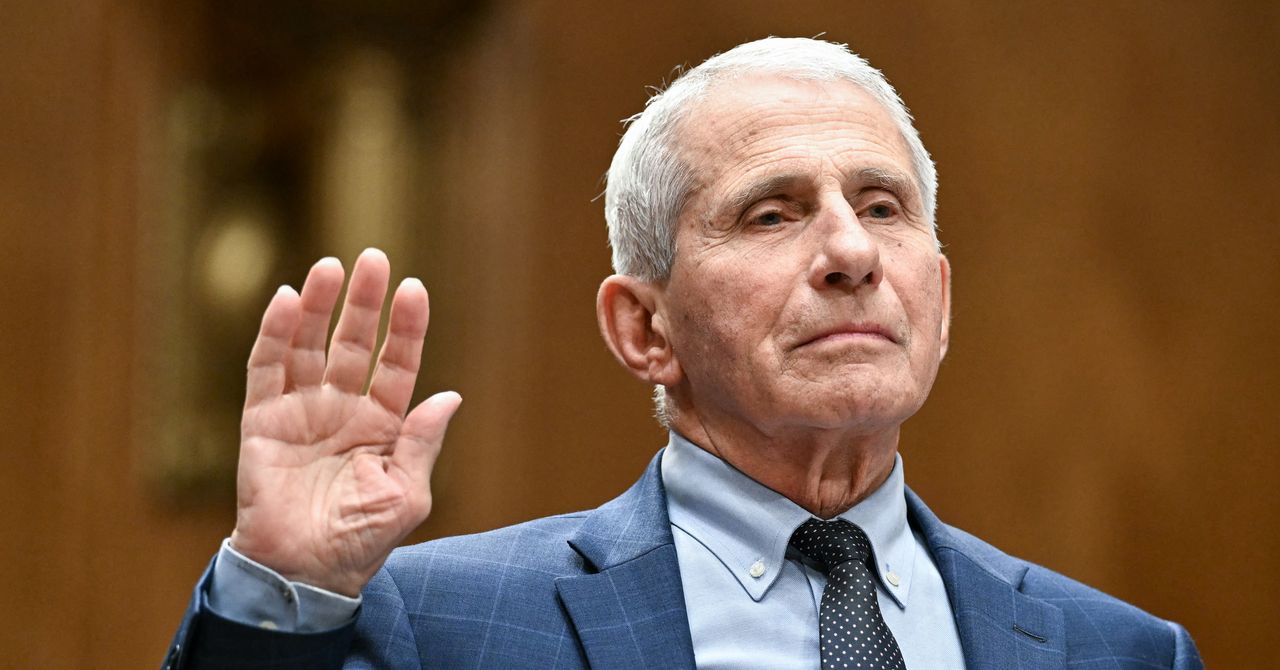
A Fauci contempt of Congress fight is now the vehicle for Republican anger after Anthony Fauci invoked the Fifth Amendment more than 100 times at a Senate hearing on his handling of the Covid-19 pandemic. Senator Rand Paul, who chaired the hearing, said afterward that his committee will vote next week on whether to hold the former White House chief medical adviser in contempt.
The political appetite is not subtle. Former Trump adviser Steve Bannon asked on his War Room podcast why Fauci was not “cuffed” after the hearing and said he “should die in prison.” Far-right podcaster Matt Walsh wrote on X that Fauci should be under arrest and facing consequences.
The legal path is much narrower than the podcast version. According to the Congressional Research Service material cited by WIRED, contempt of Congress can carry up to one year in jail and a fine of as much as $100,000. Paul’s committee can vote to advance a contempt referral, but it would then go to the Senate floor, where it would need 60 votes. That would require Democrats to join Republicans, which WIRED described as highly unlikely.
Can Republicans send Anthony Fauci to jail?
Barbara McQuade, the former US attorney for the Eastern District of Michigan, told WIRED the answer is no. She said a person keeps the constitutional right against self-incrimination as long as there is a reasonable fear of criminal prosecution.
Fauci’s position is that his silence was about the risk of being pushed into statements at the hearing that could later be treated as criminal, rather than about conduct covered by his pardon. In his opening statement, Fauci accused Paul of an “unhinged obsession” and said Paul appeared to be seeking any statement that could support his public promises that Fauci should end up “behind bars.”
The Fifth Amendment protects people from being forced to give testimony that could incriminate them. A pardon can remove exposure for past federal crimes it covers, but it does not immunize a witness against possible new crimes, such as perjury or material omissions in testimony given after the pardon.
That distinction matters because former President Joe Biden gave Fauci a preemptive pardon covering federal crimes from 2014 through 2025. The pardon does not cover anything Fauci said or did after that period, and it does not block state prosecutions.
Paul has argued that a person who has accepted a presidential pardon may lose the ability to invoke the Fifth Amendment, pointing to an 1896 Supreme Court case. He told CBS News that a court would ultimately have to decide whether the privilege applies to someone who already has a pardon.
Aziz Huq, a constitutional law scholar, told WIRED that pardons cannot cover future conduct. If Fauci feared prosecution for perjury or omissions arising from his congressional testimony, Huq said those possible offenses could support a Fifth Amendment invocation and would not be a sound basis for contempt. Huq also cautioned that he could not assess every invocation without knowing the specific basis for each one.
McQuade told WIRED that if senators were setting what she called a “perjury trap,” Fauci’s decision to invoke the Fifth Amendment was justified. She also pointed to Supreme Court language saying even innocent people may stay silent when they fear being caught in ambiguous circumstances.
What could Congress do next?
Congress does have a way to force testimony, according to McQuade: grant immunity so the testimony cannot be used against Fauci. She told WIRED that such immunity would also bind the Justice Department.
Outside Congress, Florida Attorney General James Uthmeier wrote on X after the hearing that his office is opening an investigation into Fauci. Uthmeier did not provide details on what the inquiry would examine, and WIRED reported that his office did not respond to a request for comment.
Fauci’s lawyer, David Schertler, was escorted out of the hearing by security at Paul’s direction, according to CNN. Schertler did not respond to WIRED, but told CBS News that Fauci had a valid Fifth Amendment privilege and was on solid legal ground.
This story draws on original reporting from WIRED.


