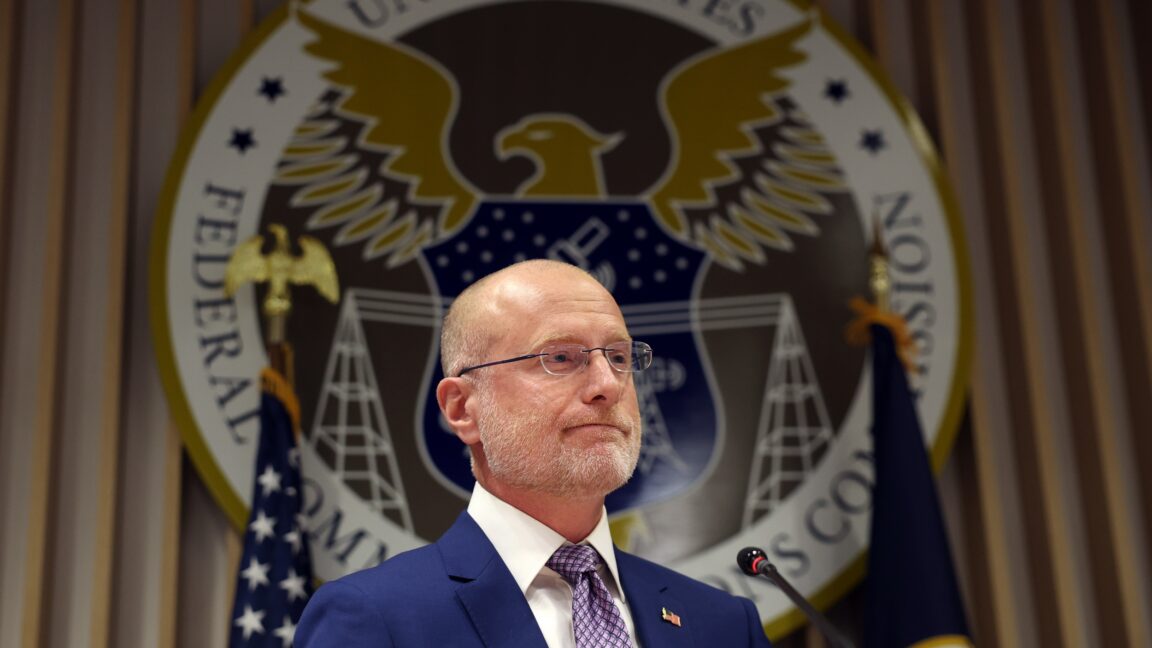
The FCC TV ownership cap repeal proposed by Chairman Brendan Carr has drawn an unusual objection from Tom DeLay, the former House majority leader who says he helped negotiate the 39% limit now at issue. The Federal Communications Commission announced July 15 that it will vote August 6 on replacing the national ceiling with transaction-by-transaction review. DeLay says the agency lacks authority to do that without Congress.
The distinction is not decorative. Under the current rule, a station owner whose reach would exceed 39% of U.S. television households generally faces a bright-line bar. Under Carr's proposal, an over-the-limit deal would instead go through the FCC's usual public-interest review, where the agency could approve or deny it. The commission says this approach would let it assess localism, competition and viewpoint diversity in the circumstances of each deal.
That is a proposal, not a completed repeal. The FCC's announcement says it plans to vote on an order August 6, and the supplied material contains no court ruling resolving whether the commission can make the change. The disagreement could trigger a legal challenge.
Can the FCC repeal the 39% TV ownership cap?
DeLay's answer is no. In an op-ed published by The Daily Wire, he wrote that Congress set the 39% limit in the fiscal 2004 Consolidated Appropriations Act. He argued that a federal agency cannot alter a limit Congress placed in statute and that Carr should seek legislation if he wants to lift or remove it.
The FCC takes the opposite legal position. Its July 15 release says Congress has directed the commission to change ownership rules at points, but has not stripped the agency of its Communications Act authority to regulate or revise ownership limits. The agency argues that its planned case-by-case system would not automatically bless transactions above 39%; it says deals that fail the public-interest standard could still be rejected.
Congress and the FCC have both shaped the cap over time. According to Ars Technica, the FCC initially adopted a 25% national reach limit in 1985. The 1996 Telecommunications Act directed the agency to raise it to 35%. After the FCC voted in 2003 to increase it to 45%, Congress required enforcement of a 39% cap in 2004 and excluded rules concerning that limit from the statute's quadrennial media-ownership review provision.
Why did Congress choose 39%?
DeLay describes the number as a legislative compromise with the late Sen. Ted Stevens, an Alaska Republican. His account is first-person history, not an independent finding: he says Stevens sought to write a 35% cap into law after the Bush-era FCC's 45% move, while DeLay backed deregulation but wanted to avoid forcing CBS and Fox to sell stations they had already bought. They agreed on 39%, DeLay wrote, with limits on the FCC's ability to change it through its periodic ownership review.
The immediate stakes include Nexstar Media Group's proposed purchase of Tegna. Deadline reported in February that the $6.2 billion deal would give Nexstar 265 stations across 44 states and Washington, D.C., reaching 80% of U.S. TV households. Under the existing limit, Nexstar needs FCC relief. A new review framework would not decide that transaction by itself, but it would replace the current national-cap treatment with an individualized agency review.
Supporters and critics are already making familiar claims about competition and consolidation. Those outcomes remain arguments, not findings embedded in Carr's proposed order. The narrower issue before the FCC is whether it can turn a statutory-era ceiling into a discretionary review process without another act of Congress.
This story draws on original reporting from Ars Technica.