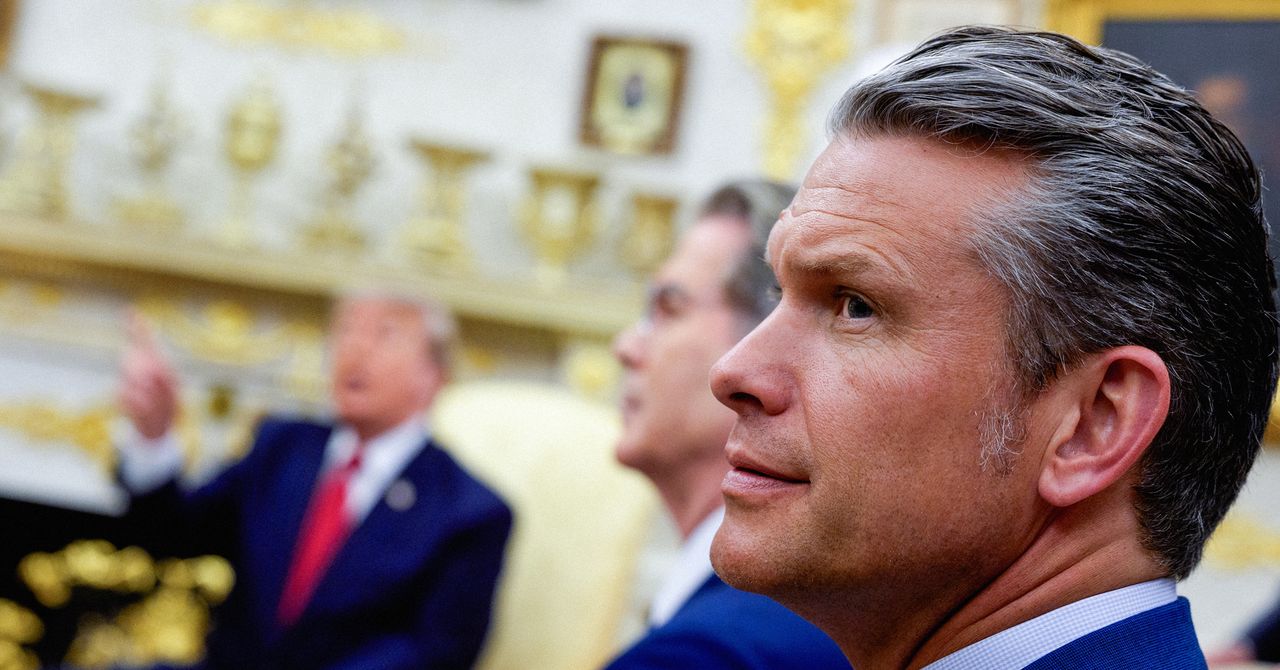
Defense Secretary Pete Hegseth said service members aged 30 and older will receive annual testosterone testing as part of their periodic health assessments, with younger troops allowed to opt in. If military clinicians recommend testosterone replacement therapy, Hegseth said treatment will be voluntary.
In a video posted Wednesday to his official X account, Hegseth told service members the program could improve performance, resilience and long-term health. He said the point was not “artificial enhancement,” but restoring and optimizing what he described as natural capability.
The Pentagon declined to comment beyond Hegseth’s description of the testing and treatment process. That leaves basic implementation questions unanswered, including what threshold the department would use to define low testosterone, what outcomes it expects, and whether women in the armed forces would also be assessed.
Adrian Dobs, a Johns Hopkins University researcher who studies endocrine gonadal function, said diagnosing male hypogonadism, the medical term for insufficient testosterone production by the testicles, is more complicated than Hegseth’s announcement suggests.
Dobs said testosterone readings can vary depending on the assay used and the time of day the blood draw occurs. Circadian rhythm matters: levels are generally higher in the morning and lower later on. The military setting adds another problem. A desk worker and a service member returning from basic training or deployment may not be comparable test subjects, because weight loss and sustained physical stress can suppress testosterone production.
Dobs also rejected the broader performance claims attached to the policy. She said testosterone is essential for puberty and masculinization, but there is no evidence that it makes people smarter or extends life. Proving a longevity benefit would be difficult, she said.
Standard medical practice, Dobs said, would look for the cause of low testosterone before prescribing hormones. Kidney disease, liver disease, diabetes, trauma, infection, genetic conditions and pituitary tumors can all be relevant. Treating the underlying condition comes before reaching for testosterone as a catchall fix.
The risks are not theoretical. Dobs said testosterone use can cause the testes to reduce their own production and shrink. It can also lower sperm counts, a particular concern for troops in their twenties and thirties. Those counts do not necessarily recover after a person stops taking testosterone, she said. Testosterone can also thicken blood, increasing cardiac workload.
The proposal lands amid a broader political fixation on testosterone replacement therapy. Podcast host Joe Rogan has publicly discussed his own regimen and recommended it for men over 40. Health Secretary Robert F. Kennedy Jr. is seeking through the Food and Drug Administration to remove some warning-label language from testosterone products, including language about possible cardiovascular risks, according to Bloomberg.
Hegseth has framed his tenure around a more aggressive “warrior” culture and has repeatedly argued that the armed forces weakened standards to include women. Under his leadership, the Pentagon has pursued restrictions on transgender service members, imposed male-standard fitness tests and, according to published reports, blocked some promotions involving women and people of color.
Dobs said the department has not identified a clear measure of success for the hormone program. Without that, the policy reads less like precision medicine than ideology wearing a lab coat, which is a poor uniform for treating actual patients.
This story draws on original reporting from WIRED.