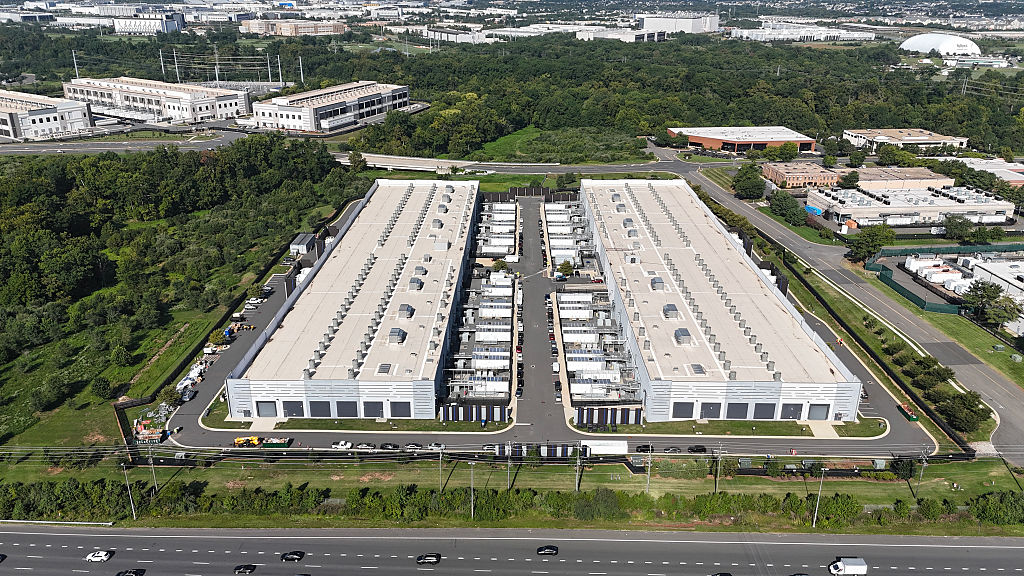
LinkedIn ai data centers are getting an unusual order from management: do more AI work without a bigger footprint. Executives at the Microsoft-owned professional network told WIRED that LinkedIn plans to keep GPU investment steady this fiscal year, while holding its compute and storage capacity roughly flat.
The freeze covers the fiscal year that began last month and runs through next June, according to WIRED. Erran Berger, LinkedIn’s chief technology officer for engineering, and Raghu Hiremagalur, its chief technology officer for infrastructure, said the company doubled the efficiency of its existing GPUs over the past six months, giving it room to ship more generative AI features without another round of aggressive data center expansion.
That is a sharp turn away from the current AI buildout mood. OpenAI, Meta and Google are spending heavily on data centers and chips, while shortages of labor and components have slowed projects and forced some companies to cap customer use of AI tools, WIRED reported. LinkedIn, which WIRED says has more than 1.3 billion users, is one of the larger tech platforms to publicly say it is resisting the expansion reflex, at least for now.
Why is LinkedIn freezing data center growth?
LinkedIn’s answer is cost discipline, with a lot of engineering plumbing underneath. Hiremagalur told WIRED that the company built tools to measure how much compute and storage each internal team used, then changed how jobs were assigned across its data centers so expensive machines spent less time idle.
On AI training, Hiremagalur said LinkedIn is running GPUs at above 95 percent utilization. The company also used distillation, a technique that trains a smaller model from larger ones, to cut operating costs. For job recommendations, WIRED reported that LinkedIn trained one smaller model from two bigger systems, combining relevance ranking with a prediction of which jobs users were likely to click.
Generative AI features rely on models that burn compute during both training and inference, the moment a system answers a user request. If you want the plain version of that machinery, this explainer covers how LLMs work.
Berger told WIRED that LinkedIn also reduced the cost of the model that chooses posts for users’ feeds. The fixes included more efficient model training, reuse of signals from earlier recommendations, and moving some workloads between CPUs and GPUs more carefully.
LinkedIn also modified software for Nvidia processors so they could handle larger jobs, and shifted other work away from Nvidia GPUs to CPUs where possible, according to WIRED. GPUs remain harder to buy, more expensive and more power-hungry than CPUs. LinkedIn estimates the work saved about $24 million over the past 12 months, equal to around 1,100 GPUs running continuously for a year.
LinkedIn still owns the hardware problem
The company’s ability to make this move comes partly from owning more of its infrastructure. Microsoft bought LinkedIn in 2016, and LinkedIn later explored moving onto Azure. Hiremagalur told WIRED that the economics did not work for a social network of LinkedIn’s size while both Azure demand and LinkedIn usage were growing fast.
In 2022, LinkedIn committed to its own data centers in Oregon, Texas and Virginia, WIRED reported. That control now lets the company tune software, scheduling and hardware allocation in ways a renter of generic cloud capacity could struggle to match.
The plan is not a vow of permanent austerity. LinkedIn has committed to buying new servers to replace or upgrade aging machines, and WIRED reported that the company bought some hardware ahead of time to limit exposure to rising prices. Hiremagalur said some server prices have tripled in recent months, and executives said they have already accounted for higher memory-chip costs.
Outside analysts are split between admiration and caution. Songyee Yoon, managing partner of Principal Venture Partners and an HP board member, told WIRED that LinkedIn’s move suggests AI is shifting from experimentation toward production discipline. Gartner consultant Chirag Dekate said smaller companies are also cutting AI costs through cheaper providers, unused software cleanup and lower-cost models, but warned that strict spending limits can collide with growing compute and storage needs.
Berger and Hiremagalur did not claim the freeze is guaranteed to hold. The hardware demands of AI are still moving fast, which is consultant-speak for the part where the bill may return with teeth.
This story draws on original reporting from WIRED.