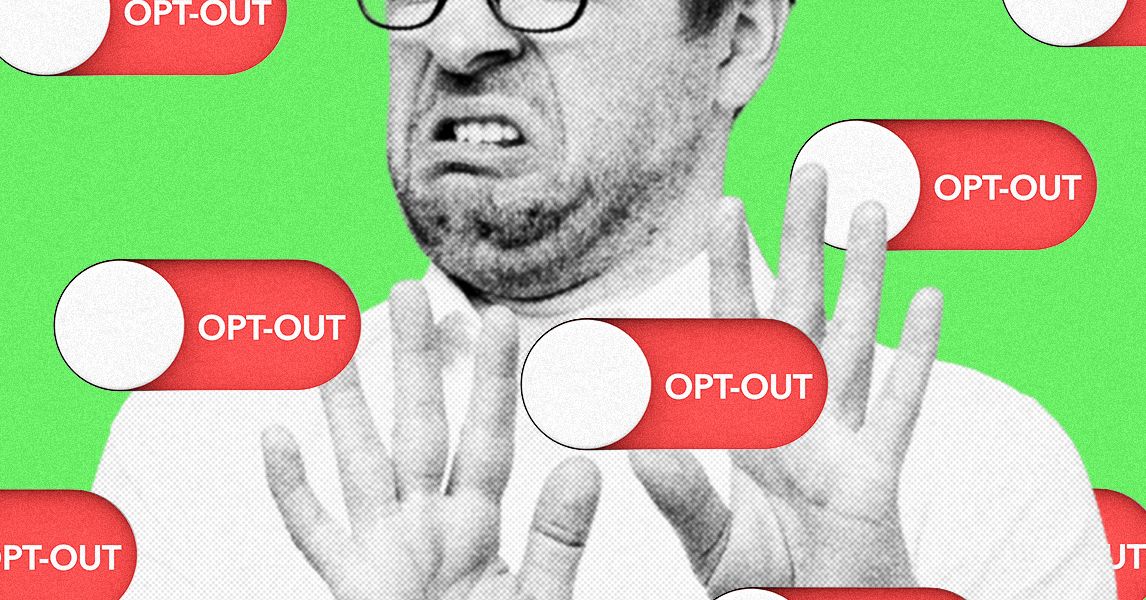
Meta backed off a new AI image feature after Instagram users objected to being enrolled by default, a quick retreat that privacy advocates say shows how much power companies pack into a single settings toggle.
In early July, Meta enabled a feature in its AI app that let people tag public Instagram accounts and create images using those accounts’ likenesses. Because Meta switched the feature on by default, public Instagram users had to find the relevant control and opt out if they did not want to be included.
The rollout drew immediate criticism from creators on Instagram, including videos explaining how to disable the feature. Creator Sam Sooin Yang said in a video viewed more than 3 million times that Meta should have required users to opt in before their likenesses could be used, rather than making them opt out after the fact.
Three days after the backlash began, Meta said the feature had “missed the mark” and removed Instagram tagging from its AI chatbot.
Thorin Klosowski, a senior security and privacy activist at the Electronic Frontier Foundation, described the response as unusually fast and clear. The speed is the point: when a platform with Meta’s reach changes a default, the affected population is not a test group in any meaningful everyday sense. It is a lot of people suddenly drafted into a product decision.
Defaults do the quiet work
Privacy experts quoted by Wired said the Instagram fight is part of a wider pattern in which companies ship AI features and related data settings as defaults, then place the burden on users to hunt through menus. The cited examples include Google’s “Ask Gemini” bar in Google Docs, as well as AI or privacy controls on services such as Dropbox and LinkedIn.
Ben Winters, director of AI and privacy at the Consumer Federation of America, said Meta has helped normalize the opt-out model in the absence of broad federal privacy rules in the United States. He also pointed to Facebook’s “Enhanced Browsing” setting, which tracks websites visited inside the mobile app, as another Meta control users may want to review.
Meta spokesperson Daniel Roberts told Wired that the company has built many controls intended to let people make privacy choices and shape their experience across its platforms. Roberts said Meta also funds and conducts research into usable privacy controls and data practices, including through TTC Labs.
The dispute is less about whether a settings page exists than about who bears the cost of finding it. Woodrow Hartzog, a Boston University law professor, said people usually remain with whatever option is preselected. If enrollment is the default, many users will stay enrolled.
Regulators have a model, but the US lacks a national rule
Hartzog pointed to Article 25 of the European Union’s General Data Protection Regulation as a stronger approach. He said the rule reflects a design principle: systems should collect only what they need, and the more privacy-protective option should be selected by default when choices are offered.
Some privacy experts have criticized how the GDPR works in practice, but the default-setting idea remains central to the debate. California and Maryland have passed state-level privacy laws that experts described as useful steps, according to Wired. Winters said a federal standard would better protect consumers from being overwhelmed by privacy-impacting defaults across many services.
Winters argued that federal intervention is suited to situations where individuals cannot realistically protect themselves against company practices deployed at scale. Previous attempts at national privacy legislation have failed, but he said public concern about generative AI may make federal rules more likely than they were a decade ago.
Hartzog said design choices make some uses of technology more likely than others. In Meta’s case, automatically enrolling public Instagram users in a likeness-based image tool created a predictable path to more synthetic images of real people. Meta turned that path off after three days. The next version of this fight will probably start in another settings menu.
This story draws on original reporting from WIRED.