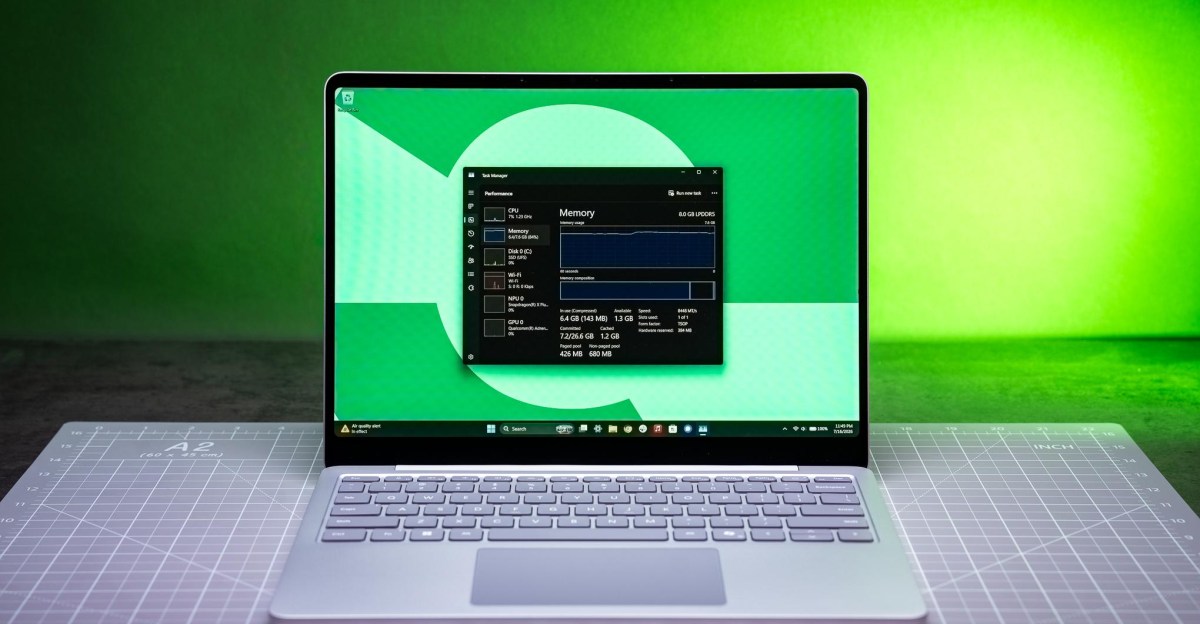
Microsoft’s new entry-level 13-inch Surface Laptop is a worse deal than last year’s model, according to a review by Antonio G. Di Benedetto at The Verge: it costs $950, ships with 8GB of RAM, and runs Windows 11 poorly enough that the publication scored it 6 out of 10.
That is awkward because Microsoft controls both sides of this product. The company builds the Surface laptop and also makes Windows 11. If there were a best-case version of an 8GB Windows notebook in 2026, this should be the lab specimen. The Verge’s verdict was that the amount of memory is still not enough.
The 2026 entry model keeps much of what made the earlier 13-inch Surface Laptop appealing. Di Benedetto wrote that the hardware remains strong, citing the keyboard, trackpad, webcam and battery life. The review said the battery can last 10 hours, and described the overall build as essentially the same outside as last year’s model.
The problem is the configuration Microsoft chose for the base price. The Verge said last year’s 13-inch Surface Laptop cost $900 and came with twice as much RAM. This year’s version is $50 more expensive and has 8GB. The model listed in the review includes a Snapdragon X Plus 8-core processor, 256GB of storage and a 2K touchscreen, and is sold through Microsoft and Best Buy for $950.
A base model shaped by memory prices
The Verge linked the downgrade to the broader rise in memory prices, which it has been covering as part of the global RAM shortage. That context matters, but it does not make the buyer’s laptop faster. The review’s complaint is blunt: Windows 11 on 8GB of memory is too constrained for a machine in this price range.
Microsoft’s tradeoff is also visible in the storage spec. The review listed 256GB as another weak point, saying that amount feels more restrictive while SSD prices are elevated. Between the smaller RAM allocation and the modest storage, the entry Surface looks less like a careful budget configuration and more like a parts-cost compromise wearing last year’s nice case.
The review still credited Microsoft for the pieces that did not change. Di Benedetto said the keyboard feels tactile, the trackpad is strong, the webcam is clear and the battery remains a highlight. Those are not small things in a thin Windows laptop. They also make the memory cut harder to excuse: the machine is not cheap enough to make the compromise feel harmless.
The takeaway for buyers is narrow but useful. The 13-inch Surface Laptop’s design may still be good, according to The Verge, but the 8GB version is the one to be wary of. Microsoft has shown that even its own Windows laptop can run into the same old ceiling when it tries to sell a modern PC with yesterday’s memory floor.
This story draws on original reporting from The Verge.