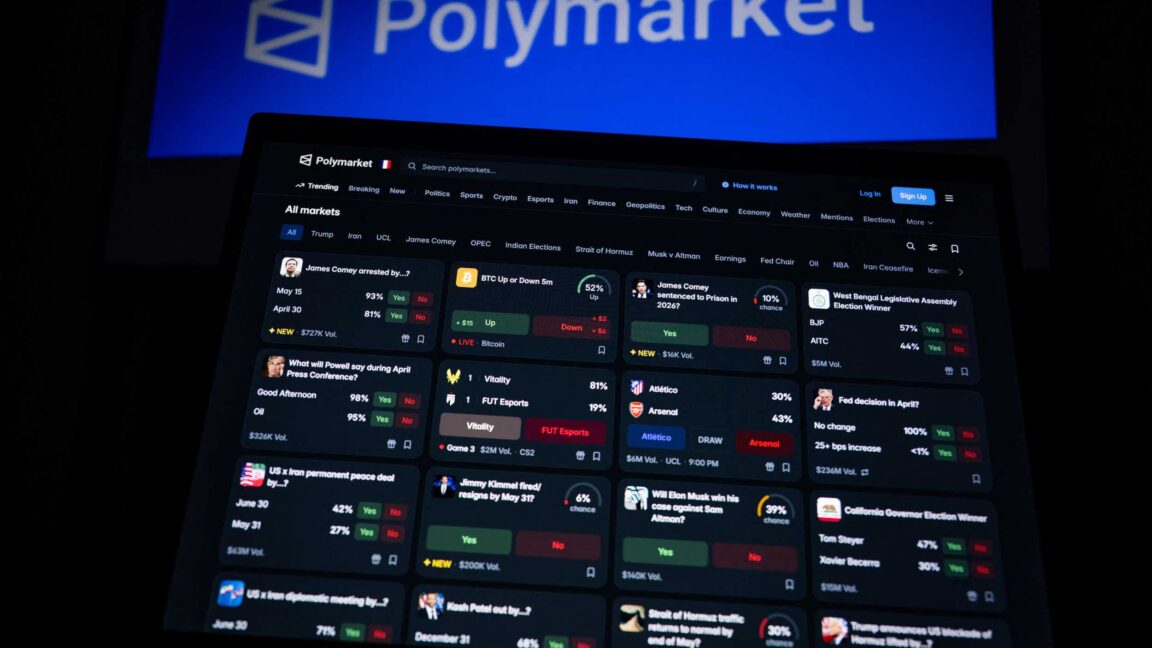
A federal judge blocked the Minnesota prediction market ban days before it was set to take effect, giving Kalshi, Polymarket and the US Commodity Futures Trading Commission an early win in a fight over who gets to police event-based trading.
US District Judge Katherine Menendez issued a preliminary injunction against Minnesota’s law, which lawmakers enacted in May and scheduled to begin on August 1. Minnesota was the first state to pass a full prohibition on prediction markets, treating the products as gambling. The Trump administration, Kalshi and Polymarket sued, and the cases were consolidated in federal court.
The order does not end the case. Menendez said the plaintiffs had shown they were likely to succeed on at least part of their argument: some event contracts listed by Kalshi and Polymarket appear to qualify as “swaps” under the Commodity Exchange Act, which would put them under the CFTC’s exclusive jurisdiction when traded on designated contract markets.
Can Minnesota ban prediction markets?
For now, Minnesota cannot enforce its total ban. Menendez wrote that the state’s law likely runs into federal preemption where it reaches event contracts that count as swaps, because Congress gave the CFTC authority over those transactions on designated contract markets.
That does not mean every prediction market contract is safe from state regulation. Menendez said the record suggests Kalshi and Polymarket list some contracts that fall outside the federal swap definition, which could leave room for Minnesota to restrict them under state law after further litigation.
Under federal law, swaps include contracts where payment depends on whether an event happens, does not happen, or happens to a certain extent, when that event is tied to a potential financial, economic or commercial consequence. Menendez rejected Minnesota’s narrower argument that swaps must be connected to a commodity, writing that the statutory definition does not contain that limitation.
Which contracts did the judge say look like swaps?
Menendez pointed to several examples that, in her view, plausibly carry financial, economic or commercial consequences. Those included contracts tied to the winner of a US Senate race, which NBA team would sign LeBron James, which team would win the World Cup and when traffic through the Strait of Hormuz would return to normal.
Other products looked different to the court. Menendez said contracts about which couple would win season eight of Love Island USA or what announcers would say during World Cup broadcasts did not appear to have the kind of economic consequence needed to fit the swap definition. The HTML tags allowed here do not include italics, so read that television title with the usual reality-show sigh.
Menendez criticized both sides for treating the case as an all-or-nothing fight. Her order said the court may eventually draw a narrower line, blocking Minnesota only where its law reaches federally regulated swaps while allowing the state to prohibit other kinds of event contracts.
What did Minnesota say after the ruling?
Minnesota Attorney General Keith Ellison said in a statement that he disagreed with the court’s view of the status quo, describing prediction market apps as predatory gambling. He also acknowledged that the court faced complex legal questions on a fast schedule and said the state would continue defending the law.
Ellison did not say whether Minnesota would ask an appeals court to reverse the preliminary injunction. The state can keep fighting in district court, where Menendez said a final ruling could look different after a fuller record.
The Minnesota case lands in a broader legal split over prediction markets. Other states have tried to apply gambling rules to these platforms, and courts have not reached one uniform answer. Menendez’s ruling keeps Minnesota’s full ban off the books for now, while leaving the harder question intact: which event contracts are federally regulated financial products, and which are just gambling with a cleaner interface?
This story draws on original reporting from Ars Technica.