Wildfire smoke is again the public health problem that does not respect fire lines. The flames threaten homes and lives near the burn zone, but the smoke can put millions of people hundreds of miles away into air they should not be breathing.
The threat is the fine particulate matter, especially particles smaller than 2.5 microns, known as PM2.5. Research cited by WIRED says those particles can inflame tissue and are small enough to pass through the lungs into the bloodstream, where they may persist for weeks. Studies linked wildfire smoke exposure with higher risks across the body, including stroke, heart disease, lung cancer, fertility problems, mental health effects and harm to developing lungs.
The American Lung Association says cardiac deaths rise after wildfires, as do visits to lung doctors. Heidi Huber-Stearns, director of the Center for Wildfire Smoke Research and Practice at the University of Oregon, told WIRED that asthma patients and immunocompromised people face particular concern. She also said healthy children are not off the hook, because developing lungs can be affected even when a child is not visibly wheezing.
Check the number before you argue with the sky
Federal agencies run AirNow.gov, which pulls readings from thousands of air-quality monitors and provides local forecasts. The useful number is the air quality index, or AQI, plus the pollutant driving it.
WIRED reports that when AQI rises above 150, sensitive groups should avoid extended outdoor time and consider N95 respirators. That group includes children, older adults, people with lung conditions and immunocompromised people. When AQI tops 200, the same guidance applies broadly: use masks, stay in cleaner indoor air when possible and avoid outdoor exertion.
N95s matter because they are built to filter fine particles when they seal properly against the face. A loose cloth covering is not the same instrument. Still, masks are the portable layer, not the whole plan. The better defense is reducing the amount of smoke in the air people breathe for hours at home.
Make one room less terrible
Huber-Stearns told WIRED that many households may not be able to filter an entire home, so the practical target is a single clean air space. A dedicated room with a good purifier can become the place where a family spends the worst hours of a smoke event, including overnight when needed.
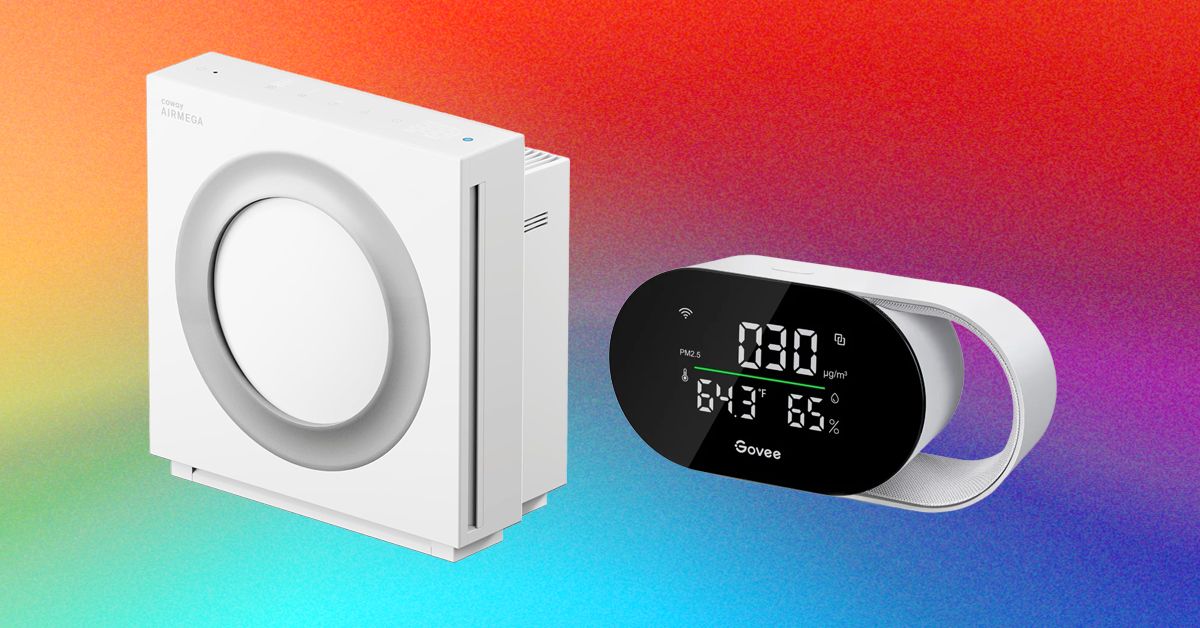
WIRED identifies high-quality air purifiers as the best home tool for removing particulate matter. It cited Rabbit Air’s $370 BioGS 2.0 as an option rated to clean a 550-square-foot space about four times an hour, and also noted Coway models among its recommendations. Those are product claims and buying-guide judgments, not magic shields.
For people priced out of a commercial purifier, Huber-Stearns said a box fan filter can work in a pinch. The Environmental Protection Agency gives instructions for do-it-yourself air cleaners, often called Corsi-Rosenthal boxes. The basic version uses a box fan and MERV 13 filters taped into place. WIRED notes that studies have found basic fan-and-filter setups can perform comparably to store-bought purifiers, provided the filters are replaced when dirty.
That last bit is not decorative fine print. During a smoke event, filters can load up fast. WIRED also warned that filters may sell out or become overpriced during major wildfire episodes. Stocking them before the sky turns orange is the boring, correct move.
Indoor air monitors can add another layer by showing whether the clean room is actually cleaner. The larger point is blunt: N95 masks help when people must be outside, but smoke safety starts with knowing the AQI and building a filtered space indoors before the particulate soup arrives.
This story draws on original reporting from WIRED.