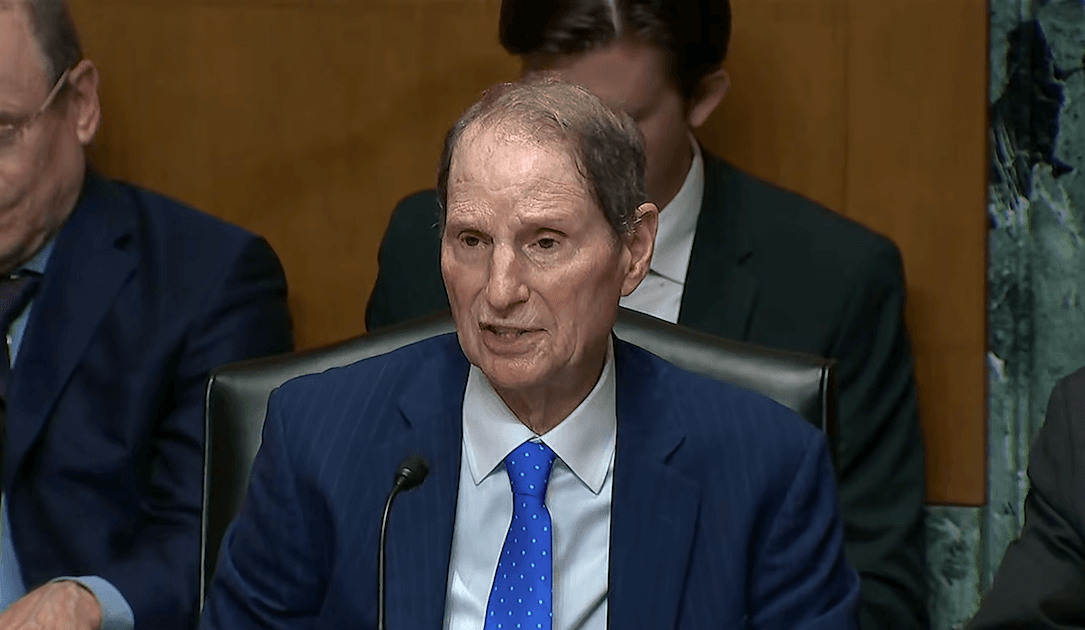
Sen. Ron Wyden is pressing two senior Trump administration officials to confront a Canadian surveillance bill that he says could put U.S. users, companies and government officials within reach of foreign intelligence demands.
In a Thursday letter to acting Attorney General Todd Blanche and Secretary of State Marco Rubio, who is also serving as acting national security adviser, Wyden said Canada’s proposed Lawful Access Act would let Canadian authorities compel American technology companies to secretly assist surveillance of U.S. citizens. Wyden, a Democrat from Oregon, framed the bill as both a privacy threat and a national security problem.
The bill has cleared Canada’s House of Commons and still needs approval from the Canadian Senate, according to Canada’s parliamentary record.
Wyden said the proposal could require service providers to retain user metadata, including location history, for as long as a year. He also said it would give Canadian officials power to order providers to build surveillance access or tracking capabilities. The legislation would also require electronic service providers to alter their systems so they can more readily provide information to law enforcement when officers have a warrant.
That last part is doing a lot of work. A system designed to disclose data on demand is not just a policy preference written into software. It is an engineering mandate, and Wyden’s complaint is that Canada could use it against companies such as Apple and Google even when the people affected are Americans.
Wyden asked Blanche and Rubio to evaluate whether the Canadian measure would allow authorities there to pressure U.S. companies into handing over data or modifying products in ways that reduce security. In the letter, he said the bill threatens to turn U.S. technology infrastructure into a tool for Canadian surveillance while weakening the security of the products those companies sell.
The fight echoes a recent dispute with another U.S. ally. In February 2025, reports said the U.K. government had secretly pushed Apple to weaken encrypted iCloud backups to aid surveillance. British officials later dropped the effort after public backlash. Former Director of National Intelligence Tulsi Gabbard told Congress at the time that foreign requirements forcing U.S. companies to help create backdoors violate Americans’ privacy and introduce serious cybersecurity risks.
Wyden argued that U.S. law has a hole large enough to drive a foreign surveillance order through. His letter said American law does not expressly bar U.S. companies from secretly helping another country spy on U.S. citizens, even if the target is the president or another senior federal official. He called that a “glaring statutory vacuum.”
The senator also urged the administration to use negotiations over a U.S.-Canada CLOUD Act agreement to write explicit bans on foreign technical mandates that would force companies to build prospective surveillance capabilities or make extraterritorial engineering changes.
Canada’s proposal has drawn criticism at home as well. The Citizen Lab, a digital rights research group based in Toronto, has said parts of the plan are likely unconstitutional under Canadian law.
Wyden’s request now puts the issue in front of the Justice Department and State Department before Canada’s Senate finishes its work. The question for U.S. officials is whether they treat the bill as a Canadian domestic policing measure or as a cross-border demand on American infrastructure.
This story draws on original reporting from The Record.