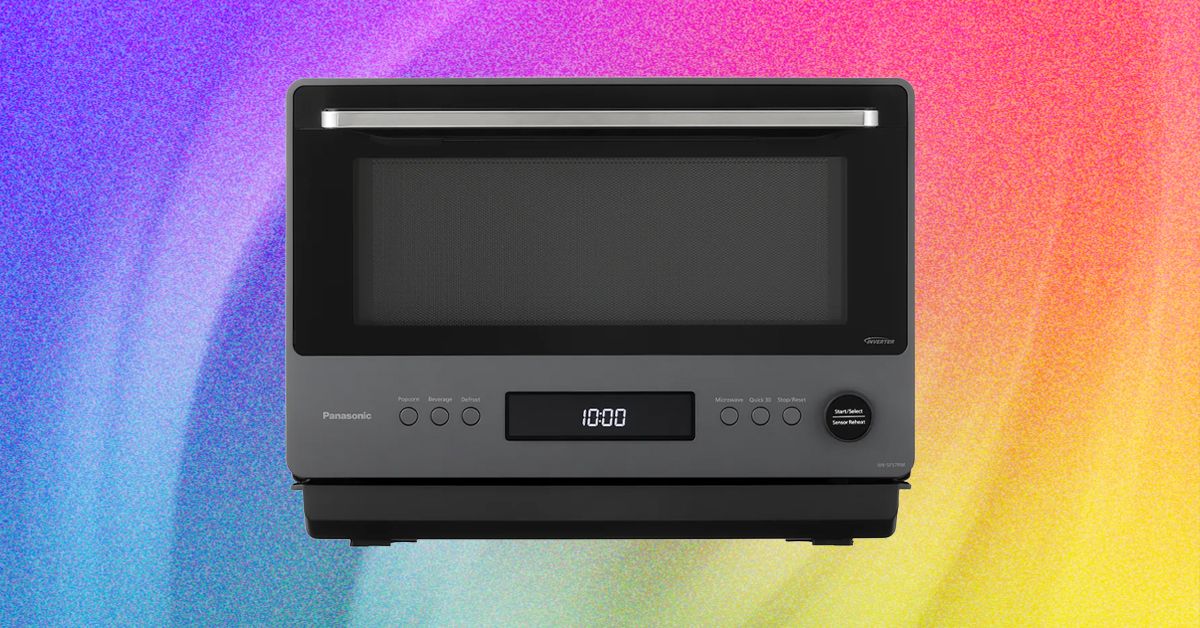
Panasonic’s month-old NN-SF57RM countertop microwave is trying to solve a familiar kitchen problem: users guessing cook times, then babysitting leftovers anyway. In a review published by WIRED, Matthew Korfhage said the $430, 1-cubic-foot oven largely succeeds by measuring food temperature directly instead of relying on a turntable or app-connected theatrics.
The mechanism is the useful part. According to Panasonic, its Genius 2.0 system uses an infrared temperature sensor mounted inside the oven to scan 64 points across the cooking area every tenth of a second. A moving antenna below the cooking chamber then directs microwave energy where Panasonic says it is needed. That lets the oven skip the rotating glass plate found in most microwaves.
For users, the main effect is fewer decisions. Korfhage wrote that most common reheating jobs require pressing the Sensor Reheat dial, after which the display shows progress rather than a countdown timer. In WIRED’s testing, frozen meals, rice, soup, curry leftovers and a single dumpling generally heated to about 180 degrees Fahrenheit.
That is a more direct approach than the humidity sensing used in many previous microwaves, including earlier Panasonic Genius models and ovens from brands such as Breville and Maytag. Those systems infer doneness from steam. Korfhage noted that steam sensing can struggle with small portions and does not directly tell the oven whether one part of a plate is hotter than another. Panasonic’s infrared design is built to read the food surface instead.
Good center heating, weaker edges
WIRED tested Panasonic’s even-heating claims with marshmallows, an infrared thermometer and damp thermal paper. Korfhage reported that after cooks longer than one minute, temperatures in the central cooking area settled within about 5 degrees Fahrenheit. The cooler spots were near the front door and within roughly an inch of the side walls, where readings were about 20 degrees lower.
The sensor has a blunt limitation: it needs line of sight. Covered food can interfere with the temperature reading, according to WIRED’s testing. Layered dishes also pose a problem. Korfhage reported that a Korean rice bowl with meat over cabbage and rice did not heat evenly until it was mixed and reheated. That is not some exotic failure mode. It is exactly the kind of bowl people put in microwaves because they are hungry and impatient.
The absence of a turntable still helps with usable space. The oven measures 15.3 by 18.5 by 13.7 inches, weighs 27 pounds and runs at 1,200 watts, according to WIRED’s spec table. Panasonic lists a one-year parts-and-labor warranty and five years of coverage for the magnetron.
Useful basics, questionable recipes
WIRED said the beverage mode heated a mug to about 170 degrees Fahrenheit. Defrost handled a frozen chicken breast in 10 minutes, with a five-minute rest recommended by Panasonic’s instructions. The popcorn mode does not use infrared sensing because the sensor cannot see through the bag, so it works by bag weight and timer; Korfhage reported acceptable results with no burned popcorn and some unpopped kernels.
The oven also includes 11 programmed recipes, including butter and chocolate melting. WIRED found the butter program useful because it stopped before the butter erupted across the interior, though some stirring was still needed. The more ambitious scratch-cooking modes fared worse. Korfhage described mac and cheese and chicken noodle soup as acceptable, while the spaghetti Bolognese program produced poor results and was not easier than using a stovetop.
WIRED gave the NN-SF57RM a 9 out of 10 rating, praising its one-button reheating, lack of a turntable and generally even results. The unresolved question is durability, which a short review period cannot prove. The confirmed story is narrower and more practical: Panasonic built a microwave that can often stop when the food is hot, and that is more useful than another appliance asking for Wi-Fi.
This story draws on original reporting from WIRED.


