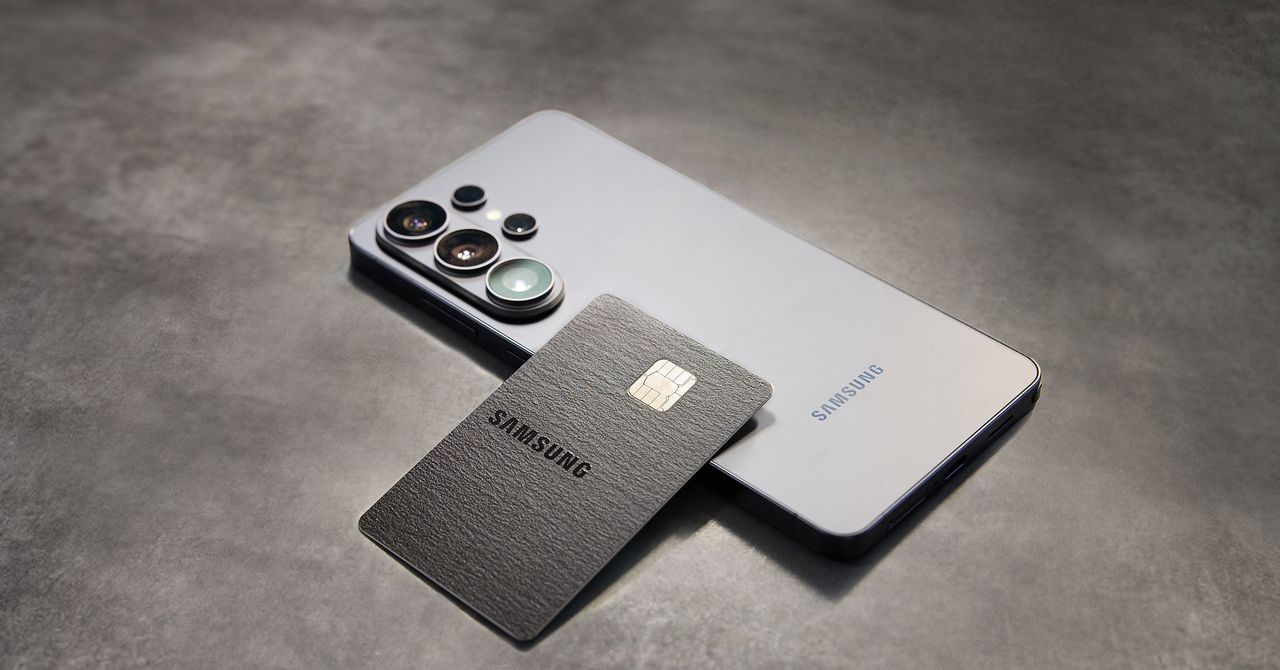
Samsung is putting a credit card inside its hardware orbit. The company announced the Galaxy Card, a Visa card issued by Barclays, with rewards aimed at people who already buy Samsung gear or pay through Samsung Wallet.
The timing is not subtle. Samsung announced the card two days before its second Galaxy Unpacked event of the year, where the company is expected to show new smartwatches and folding phones. The pitch is familiar: use the company’s phone, use the company’s wallet, buy the company’s devices, and get a better rewards rate for staying in the pen.
The Galaxy Card has no annual fee, according to Samsung. Barclays issues it on Visa’s network. A physical version exists, made from recycled steel rather than the titanium Apple used for its Apple Card. The virtual card is added to Samsung Wallet.
How the rewards work
Samsung says cardholders can earn 5 percent cash rewards on purchases made directly from Samsung in the United States, whether in stores or online. Purchases made with the Galaxy Card through Samsung Wallet earn 3 percent. Streaming service subscriptions earn 2 percent. Purchases made with the physical card outside those buckets earn 1 percent.
Samsung says rewards can be used as a statement credit or moved to a checking or savings account. The annual percentage rate varies by cardholder. The card has no foreign transaction fees.
Samsung is also attaching a few sign-up and ecosystem perks. The company says cardholders can get 20 percent off its VIP Advantage membership, which includes extended device protection, dedicated support, and special offers. Samsung is also offering $200 in cash rewards after a cardholder spends $2,000 in the first 90 days. Applications open July 22.
The phone lock-in is the point
Samsung says the Galaxy Card is not restricted to Samsung device owners. That claim has a large asterisk. Samsung Wallet is available only on Samsung phones and watches, so the 3 percent Wallet rewards tier depends on staying on Samsung hardware. If a user switches phone brands, Samsung says the physical card still works and the account can be managed through BarclaysUS.com.
Apple’s card has a similar platform trap. The Apple Card, launched nearly seven years ago, was originally issued by Goldman Sachs and is now transitioning to Chase, according to Apple. It runs on Mastercard. If an iPhone user moves to Android, the physical Apple Card still works, but the user loses Apple Wallet access and the 3 percent daily cash rate on Apple purchases. Apple also provides a web portal for account management.
Brian Riley, director of Credit Advisory Services at Javelin Strategy & Research, told Wired that Samsung’s move is about brand visibility and loyalty. He said credit cards are mostly interchangeable, so issuers try to stand out through how and where people use them.
Riley also warned that rewards math breaks when cardholders carry a balance. Interest charges can erase the value of points or cash back. He said Apple’s card was polished but did not become a broad credit-card industry challenger, partly because many households already use several cards for different purposes.
Sara Rathner, a credit card expert at NerdWallet, told Wired that Apple Card is ultimately a cash-back card, not an iPhone-level reinvention. She said cards tied to brands are designed to pull customers back toward that brand, much like hotel points can influence where someone books a stay.
Rathner said Samsung’s 3 percent rate for Samsung Wallet purchases is strong. She pointed to tap-to-pay transit, such as using Samsung Wallet at a New York City subway turnstile, as the kind of ordinary purchase where that rate could add up.
She also credited Apple with pushing some consumer-friendly card features, including showing applicants the interest rate and credit line they may qualify for before a credit pull, fast physical-card activation through an iPhone tap, and daily posting of rewards. Samsung’s card now has to prove whether those phone-bound perks are enough to matter beyond the most loyal Galaxy users.
This story draws on original reporting from WIRED.


