Skyroot Aerospace plans to attempt the first orbital launch of an Indian-developed commercial rocket on July 18, the company said in a news release cited by Ars Technica. The Vikram-1 test flight is scheduled for 11:30 a.m. local time from India, with the rocket aiming for a 450-kilometer low-Earth orbit at 60 degrees inclination.
Vikram-1 is built for small satellites up to 350 kilograms. For this first flight, Skyroot says it will carry technology demonstration payloads from Grahaa Space, Cosmoserve, DCubed, and Skyroot’s own SCOPE payload, plus artwork from Cosmos Diamonds and a micro-art piece. Pawan Kumar Chandana, Skyroot’s co-founder and chief executive, said in the company release that ground testing is complete and that the company expects flight data from what remains a test mission.
The launch attempt would put India’s private launch sector into a club that is still small for a reason: getting a new orbital rocket through first flight is where spreadsheet optimism meets combustion instability, guidance errors, and staging hardware that does not care about pitch decks.
AST wants more routes to orbit
AST SpaceMobile said Wednesday it plans to offer $1 billion in convertible senior notes, according to a company announcement. Ars Technica reported that the company’s share price fell more than 10 percent after the market closed announcement, with investors apparently weighing the risk of dilution.
The company framed the raise around launch access for its BlueBird direct-to-cell satellites. AST said it wants to “secure additional access to orbit” for its space-based cellular broadband network, including partnerships or acquisitions that could help it integrate more of the launch chain and reduce reliance on outside providers.
That language matters because AST’s launch plan has already hit hardware reality. Ars reported that a BlueBird satellite had been slated to fly on Blue Origin’s New Glenn, but that plan is on hold after a failed New Glenn static-fire test in April. Static fires are supposed to find problems on the ground. They also tend to rearrange customer schedules.
Reusable rockets keep spreading
Japan’s space agency, JAXA, flew its experimental RV-X reusable rocket in northern Japan, NHK reported. The vehicle rose to about 11 meters, shifted 16 meters sideways, and landed after a roughly 40-second flight. JAXA plans to use the data for CALLISTO, a reusable rocket project with French and German research organizations.
China also reported a larger recovery milestone. According to Ars Technica, the state-owned developer of the Long March rocket family launched a Long March 10B from Wenchang on Hainan Island and recovered its orbital-class booster in the South China Sea. The booster came down about 10 minutes after launch into a four-legged capture frame mounted on a ship. A grid of tensioned cables caught the vehicle after engine shutdown, leaving it suspended rather than sitting on a deck.
That differs from the landing systems used by SpaceX and Blue Origin, which land boosters propulsively on pads or ships. It also differs from SpaceX’s Starship tower catch, where mechanical arms grab the booster at the launch site.
Other launch notes
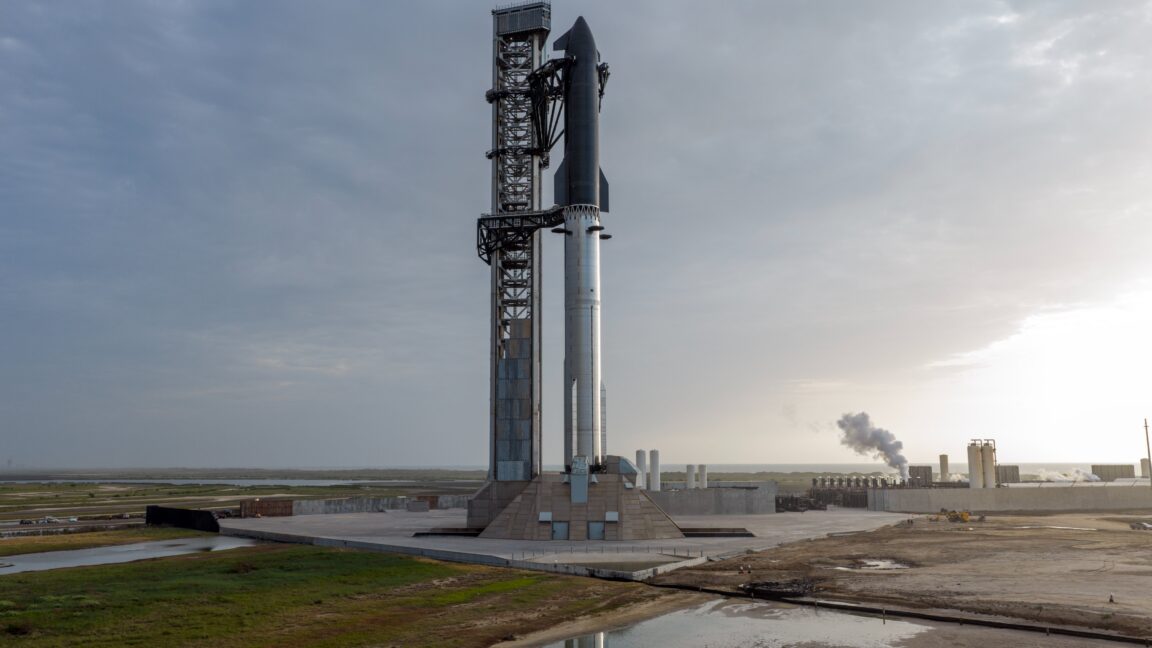
SpaceX’s latest Starship test attempt in South Texas stopped at ignition when several of the Super Heavy booster’s 33 Raptor engines did not start, Ars reported. Elon Musk said the company would “hopefully” try again in a few days. The test vehicle carries 20 Starlink V3 satellites for deployment and brief laser-link checks, but not for operational service.
In Europe, the European Space Agency selected Ariane 6 to launch its Henon solar storm-monitoring CubeSat in early 2027 as a secondary payload with the PLATO telescope, European Spaceflight reported. ESA’s Roger Walker said the studied launch setup could fit up to four 16U CubeSats.
NASA said its SunRISE heliophysics mission will now launch on SpaceX’s Falcon Heavy from Kennedy Space Center, rather than United Launch Alliance’s Vulcan. The mission consists of six small satellites that will work together above geosynchronous orbit as a distributed radio telescope for studying solar radio bursts.
This story draws on original reporting from Ars Technica.


