Loss of smell used to be the kind of symptom many patients were told to tolerate. Then Covid-19 broke a lot of noses at once, medically speaking, and the research community had to stop treating olfaction as a biological side quest.
Researchers estimate that as much as 22 percent of people have some form of smell impairment, including partial loss, known as hyposmia, or complete loss, known as anosmia. Other disorders can scramble perception: phantosmia produces odors that are not present, while parosmia can turn normally pleasant smells into something foul.
The World Health Organization has counted 780 million reported Covid-19 cases since December 2019, with many more likely unreported. In a 2023 survey in Laryngoscope, 60 percent of people with Covid reported smell loss. Most recovered, but some did not, creating a large and unwilling study population for a sense medicine had long underrated.
Chrissi Kelly lost her sense of smell about 14 years ago after a viral illness during a trip to the Czech Republic. After months without improvement, she saw doctors and was diagnosed with anosmia. She later founded two nonprofit patient groups and has co-authored more than 30 academic papers with researchers.
How smell talks to the brain
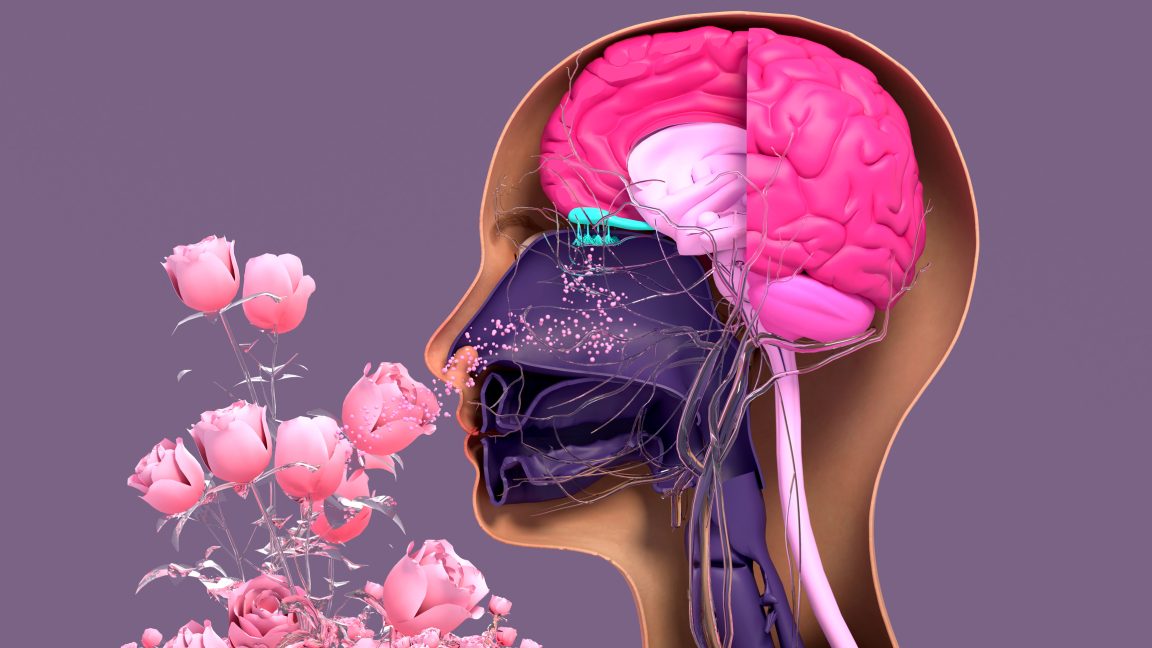
Smell begins when airborne molecules bind to receptors high in the nasal cavity. Olfactory neurons send signals through the olfactory bulbs, which help build a brain map for recognizing and remembering odors. Unlike vision and hearing, olfactory signals initially reach brain regions tied to emotion and memory, including the amygdala and hippocampus, without first being routed through the thalamus.
That wiring helps explain why odor can hit memory with such rude efficiency. Jonas Olofsson, a Swedish psychologist and author of The Forgotten Sense, said humans are better at smell than the old scientific stereotype allowed. Nineteenth-century brain researcher Paul Broca had cast olfaction as primitive; modern work has spent decades cleaning up that intellectual spill.
The olfactory bulbs are also unusual. Researchers now consider them among the brain areas that can generate new neurons in adulthood. They are also exposed: viruses, bacteria, toxins and possibly microplastics may enter or affect the nervous system through this route.
Loss can be temporary, or a warning
Smell can disappear after viruses damage support cells around olfactory neurons. When those cells recover, often after roughly four to six weeks on average, smell may return. Head injury, allergies, sinus infection and inflammation can also interfere. In some cases, olfactory nerves are damaged for the long term.
Smell loss can also show up before neurological disease becomes obvious. A Midwestern wine enthusiast identified as Dave, with his last name withheld for privacy, lost smell about 20 years before Parkinson’s symptoms including slowed movement and tremors led to a diagnosis.
Ethan G. Brown, a neurologist at the University of California, San Francisco’s Movement Disorders Clinic, said researchers still do not know when Parkinson’s neurodegeneration begins. Scientists suspect proteins involved in Parkinson’s may affect the olfactory bulbs early, before the disease causes major loss of dopamine-producing cells in the substantia nigra.
Zara M. Patel, director of the Stanford Initiative to Cure Smell and Taste Loss, said smell loss can also appear early in Alzheimer’s disease and Lewy body dementia. She said altered smell has been observed in depression, schizophrenia and autism as well. A 2024 review associated smell disorders with 139 neurological, physical and congenital or hereditary conditions, though association is not mechanism.
Training the nose
The main low-tech intervention is olfactory training: smelling familiar scents such as lemon, rose, clove and eucalyptus twice a day while trying to recall and identify them. The idea is to push receptor regrowth and brain plasticity, less spa ritual than rehab drill.
Patel ran the first randomized controlled US trial of olfactory training. In that six-month study, six of 19 trained patients had significant improvement, compared with two of 16 controls. Patel said about 30 percent of patients improve after months of training across causes her team has studied, and other work from her group found improvement in up to 50 percent when training was paired with a steroid sinus rinse.
A 2024 meta-analysis of 36 studies found statistically significant gains across smell-function measures, though individual results varied widely. UK researchers reviewing studies in people 55 and older also found links between olfactory training and better smell, cognition and depressive symptoms, while calling for stronger evidence.
The science is still incomplete. The old dismissal of smell loss as an annoyance is harder to defend now that researchers keep finding its connections to safety, memory, mood and disease.
This story draws on original reporting from Ars Technica.