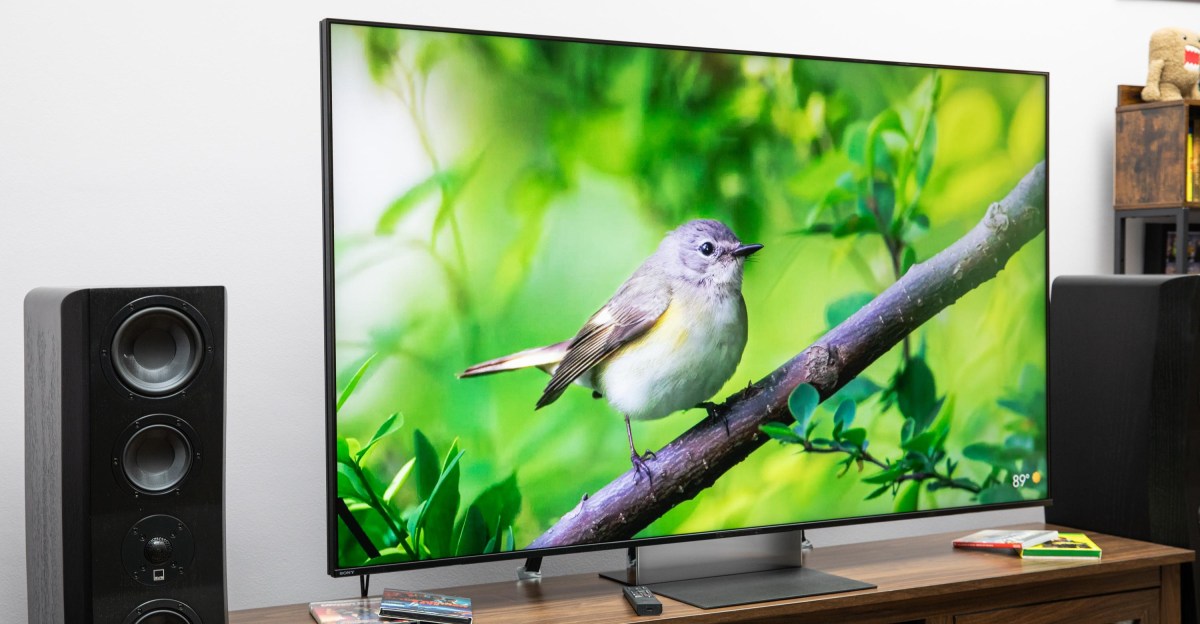
Sony’s Bravia 9 II has landed as the company’s flagship RGB LED television, and The Verge reviewer John Higgins says it is the strongest RGB LED set he has evaluated this year. That is useful news for buyers trying to decide whether Sony’s newer backlight approach is worth paying flagship money for, rather than buying an OLED and calling it a day.
The 65-inch Bravia 9 II is listed at $3,600 through Sony and Best Buy, according to The Verge’s review page. Higgins gave the set a Verge score of 9, citing color accuracy, high brightness, a matte anti-reflective screen, and the same lenticular stand design used on Sony’s Bravia 7 II.
The catch is the predictable one: this is still an LED television. Higgins says blooming remains visible, particularly when viewed off axis. In plain English, blooming is the glow that appears when a backlight zone has to illuminate a bright object while nearby pixels are meant to stay dark. More zones can reduce the problem, but they do not make an LED backlight behave like per-pixel OLED lighting.
What Sony changed from the Bravia 7 II
Higgins compared the Bravia 9 II with Sony’s Bravia 7 II, which he reviewed in May. The newer flagship has more dimming zones, a brighter image, and an anti-reflective screen. Those are the kinds of upgrades that matter in a living room with windows, lamps, and other enemies of black levels.
They also cost real money. The 65-inch Bravia 9 II is $1,000 more than the 65-inch Bravia 7 II, according to Higgins, and the price difference grows at larger screen sizes. That is the part of the spec sheet Sony would probably prefer shoppers not stare at for too long.
The RGB LED backlight is the technical hook. Sony showed an early version of the technology at its Tokyo headquarters in early 2025, The Verge reported. The review identifies the Bravia 9 II as a production set using that approach, with Higgins describing the result as bright, colorful, and unusually strong for the category.
The review’s verdict
Higgins’s viewing notes focused on HDR impact and color handling. He said fantasy landscapes in Dungeons & Dragons: Honor Among Thieves looked natural, while magical effects appeared vivid. He also pointed to bright highlights in Mad Max: Fury Road and The Meg as examples of the set’s HDR performance.
The praise is not the same as a blanket recommendation. The Verge’s subheadline says Higgins would still buy an OLED, despite calling the Bravia 9 II the best RGB LED TV available. That distinction matters. Sony appears to have built a very good LED TV for people who want brightness, glare control, and strong color. Buyers who care most about perfect blacks and avoiding blooming still have a reason to look at OLED models, especially because Higgins notes the Bravia 9 II costs more than some flagship OLEDs.
The useful summary, stripped of TV-review incense smoke: Sony made its brighter, more expensive RGB LED flagship visibly better than the Bravia 7 II, according to The Verge. It did not repeal the physics of LED backlights.
This story draws on original reporting from The Verge.


