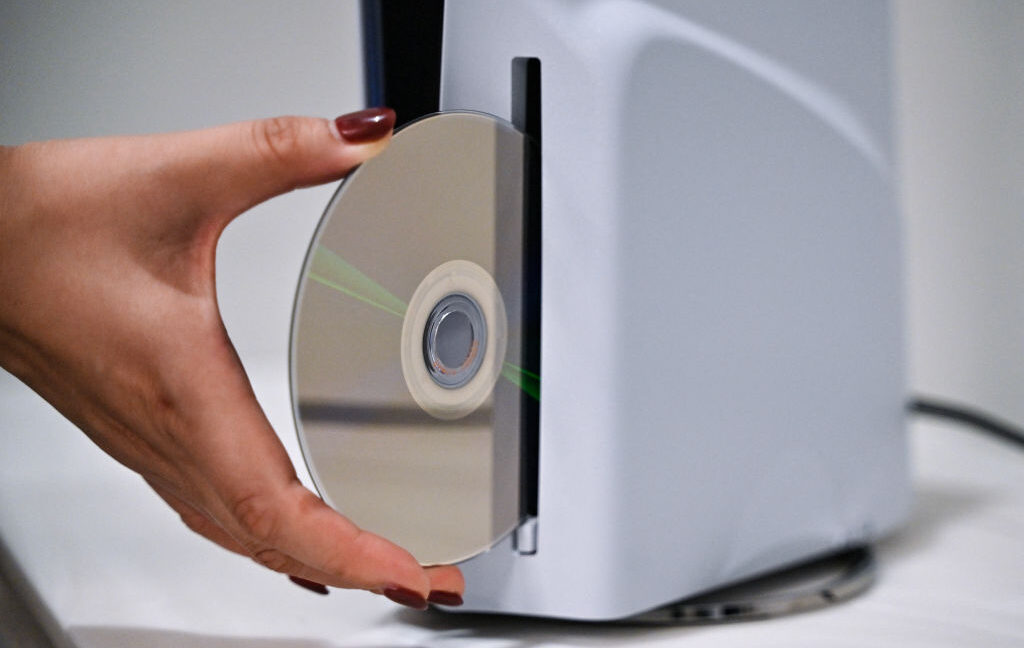
Sony’s physical discs 2028 plan lands after more than a decade of US buyers moving away from boxed games, according to figures shared by Circana analyst Mat Piscatella. Sony has said it will stop selling physical PlayStation game discs in 2028, a decision that frustrates collectors and preservation-minded players but looks less surprising when the sales curve is put on the table.
Piscatella said Circana’s US physical game sales data, which goes back to 2003, shows the market peaked in the 12 months ending June 2009. Across the US, physical game sales reached 297 million units during that period. In the most recent 12-month span cited by Piscatella, that figure was 37 million units.
The PlayStation-specific numbers are even more blunt. Piscatella previously said only seven PlayStation games had sold more than 100,000 physical units in the US so far in 2026. He later added that 100 PlayStation games cleared that same physical-sales mark in 2008. The best-selling physical PlayStation game in the US this year has sold 275,000 units, according to Piscatella.
Why is Sony ending physical PlayStation discs?
The short answer is that the disc business has become much smaller. Digital distribution lets publishers sell games directly through console storefronts, while players can buy, download and switch games without visiting a store or handling media. That convenience has steadily eaten into the practical reasons for a retail disc, even though discs still matter for ownership, resale and preservation.
The longer answer is visible in spending data. Piscatella said US spending on physical video games is up 4 percent year-to-date compared with the prior year. That sounds healthier than it is. He also said the category had already suffered 16 straight years of substantial declines, falling from $11.5 billion in 2009 to $1.6 billion for the 12 months ending in May.
Piscatella attributed the recent spending bump to Switch 2 and stronger physical sales on Nintendo platforms. Other platforms, including PlayStation, were still seeing declines in physical-game spending ranging from the teens to the mid-30 percent range, he said.
Digital games took over before Sony made the call
The shift did not start with Sony’s 2028 cutoff. By the late 2000s, console services including Xbox Live Arcade, PlayStation Network and WiiWare had already trained players to buy downloadable games. Download versions later spread to larger releases such as Infamous and LittleBigPlanet, according to the historical examples cited in the reporting.
By the 2012 launch of the PlayStation Vita, Sony required publishers that released physical cartridges to offer downloadable versions as well. Later systems including Wii U, PlayStation 4 and Xbox One kept pushing the same model. By the end of the 2010s, physical-only console releases had become rare.
Recent retail boxes have also become less meaningful as physical products. Some major games have skipped retail discs, while other releases use boxed download codes or game-key-style cards rather than putting the full game on a disc or cartridge.
Hardware sales show the same preference. Piscatella said 27 percent of all PlayStation 5 hardware sold in the US so far has been digital-only. For Xbox Series hardware, the digital-only share is 52 percent. For players who still want a shelf, a lendable copy or a used-game market, Sony’s move is a loss. For Sony, Circana’s numbers suggest the remaining disc audience is no longer large enough to steer the platform strategy.
This story draws on original reporting from Ars Technica.