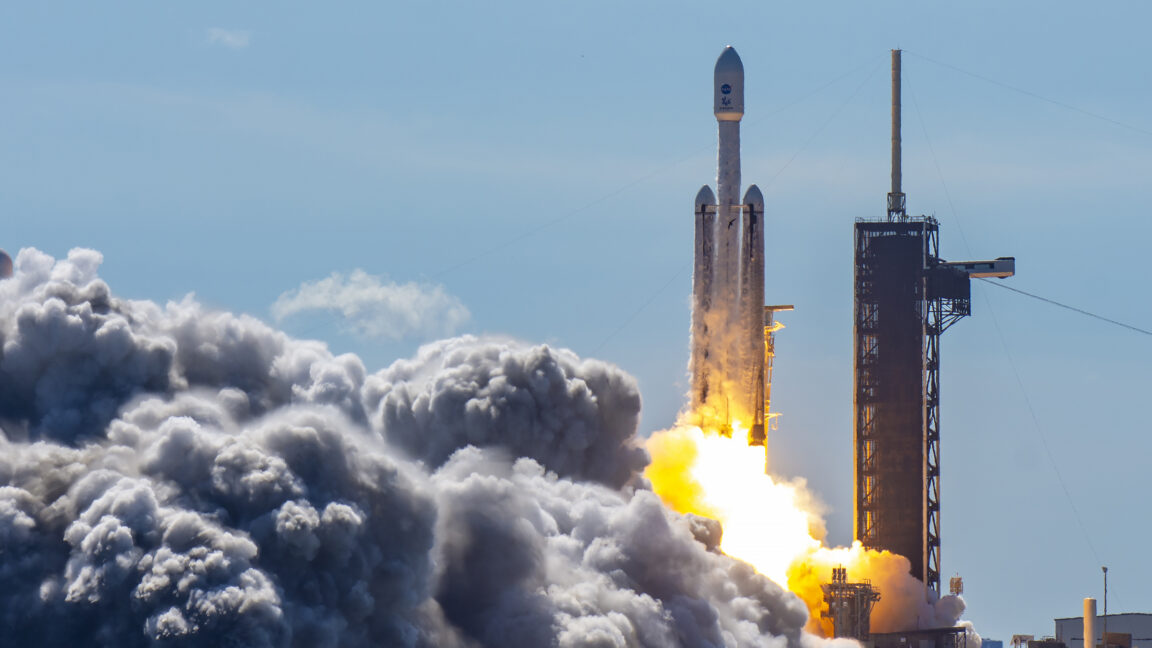
The US Space Force has lifted the spending cap on one of its main rocket-buying contracts to $17 billion, a threefold increase that points to a much busier military launch manifest than officials planned for last year.
Space Systems Command announced Friday that it had expanded the ceiling for Lane 1 of the National Security Space Launch Phase 3 program. That lane is the Space Force’s less restrictive route for buying launches, used for missions the service treats as more tolerant of risk, including medium-lift flights, experimental payloads and rideshare launches for Pentagon satellite networks.
The change matters because the military is trying to put more spacecraft into orbit, and the old $5.6 billion Lane 1 cap was built around an earlier estimate of at least 30 launch task orders over five years. The Space Force has not said how many additional Lane 1 missions it now expects to buy.
NSSL Phase 3 is the Pentagon’s current mechanism for assigning national security launch work. Space Systems Command keeps a group of approved launch providers, then asks them to bid on batches of missions and awards fixed-price task orders for individual launches. It is procurement plumbing, which means it is boring right up until the ceiling jumps by $11.4 billion.
Two lanes, different levels of scrutiny
The program is split into two categories. Lane 1 is open to more commercial providers and does not require the same level of Space Force certification and oversight. Space Systems Command selected SpaceX, United Launch Alliance and Blue Origin for Lane 1 in 2024, then added Rocket Lab, Stoke Space, Relativity Space and Impulse Space, according to the command’s earlier awards.
SpaceX has received most Lane 1 task orders so far, according to Ars Technica’s prior reporting on the awards. Blue Origin won its first Lane 1 order earlier this year.
Lane 2 is reserved for the government’s most sensitive and expensive national security payloads. Those include large intelligence satellites and hardened communications satellites intended to keep working in a nuclear-war environment. Only rockets that clear the Space Force’s certification process can fly those missions. The certified Lane 2 vehicles are SpaceX’s Falcon 9 and Falcon Heavy and United Launch Alliance’s Vulcan, according to the program status described by Space Systems Command.
The Space Force set the Lane 2 ceiling at $13.7 billion last year, covering an expected 54 launches through 2029. In April, Space Systems Command said it had identified 25 more Lane 2 missions beyond that earlier projection, according to SpaceNews.
More satellites mean more launch orders
With the Lane 1 increase, the combined maximum value of the two NSSL Phase 3 lanes now exceeds $30 billion. Space Force officials have not publicly listed the missions driving the added demand.
Some likely pressure points are visible from recent Pentagon space awards. The Space Force has given SpaceX multibillion-dollar contracts tied to the Space Data Network and Airborne Moving Target Indicator programs, satellite constellations intended to provide global connectivity and targeting data for US forces, according to Ars Technica’s reporting. Another possible driver is Golden Dome, the Trump administration’s proposed missile defense system, which is expected to require space-based warning sensors and interceptors if it is built.
The budget fight is still open. The Trump administration asked Congress for $71.1 billion for the Space Force in fiscal 2027, compared with roughly $40 billion in fiscal 2026. The House Appropriations Committee’s draft Pentagon budget provides $55.5 billion for the service. The Senate has not yet released its version of the Pentagon spending bill.
The contract ceiling does not mean the Space Force has spent $30 billion. It means officials have created room to order that much launch capacity if Congress provides the money and the missions materialize. For launch companies, that is still a very large invitation to bid.
This story draws on original reporting from Ars Technica.