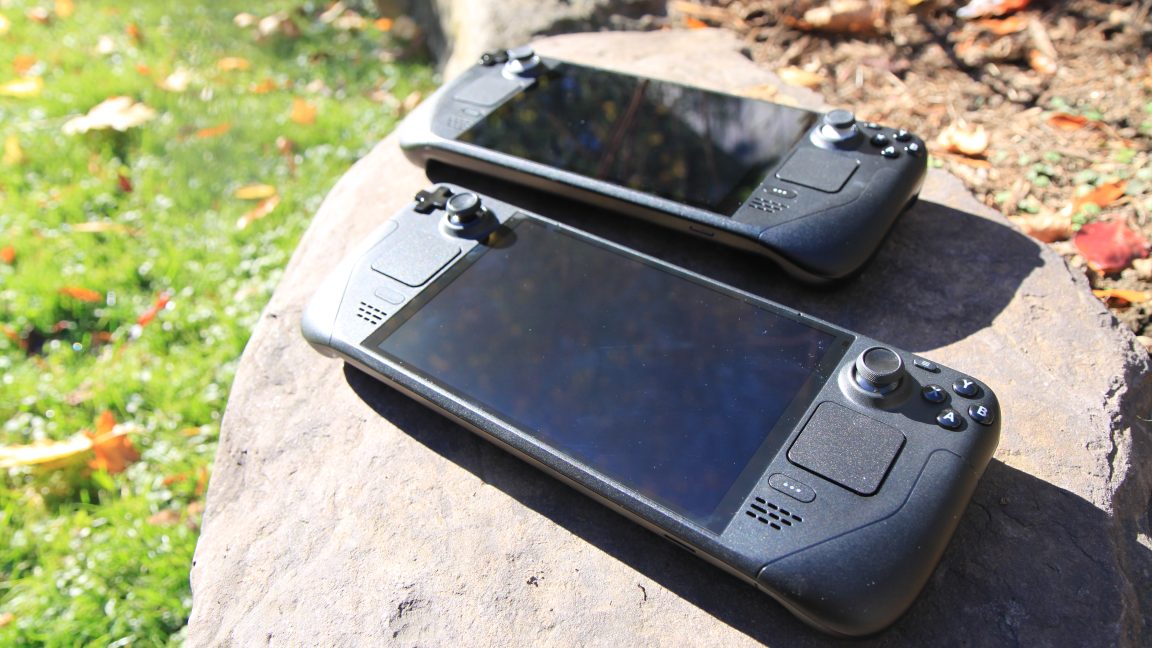
Valve’s Steam Deck is no longer sitting near the top of Steam’s own bestseller chart, a drop that lines up with the handheld PC’s return to sale in May at much higher prices.
The Steam chart ranks products by revenue, not unit volume, so it cannot say directly how many Decks Valve sold. Still, its movement is useful signal. The Steam Deck had spent much of its life since 2022 near the top of Valve’s “top selling products by revenue” list, according to historical chart tracking cited by Ars Technica. Brief exits from the top 10 were treated as notable because the device had become such a persistent presence.
That pattern has changed. Boiling Steam, a Linux gaming site that reviewed Steam’s historical chart data, found that the Deck was in fifth place when orders resumed in late May. By early July, it had fallen to 14th for two consecutive weeks. Valve’s current global chart lists the hardware in 12th place.
Chart rank is revenue, not units
Boiling Steam tried to estimate what that chart decline could mean in hardware volume. Its model uses assumptions about average selling price across Steam Deck models, before and after the increase, and estimates of weekly revenue for games near the Deck on the Steam chart.
That rough math points to a steep decline: from a 2025 baseline of about 11,000 to 18,000 units per week to an estimated 1,400 to 3,000 units per week now, according to Boiling Steam. Those figures depend on several assumptions, and Valve has not released official weekly unit sales. Treat the estimate as a range, not a receipt.
The direction is harder to wave away. Boiling Steam’s review says the Deck did not fall below seventh place on Steam’s bestseller charts during 2025 and was rarely outside the top five. The current placement is a marked change for hardware that IDC estimated had shipped about 4 million units in its first three years, according to The Verge.
Price and supply both muddy the read
Boiling Steam argues the new pricing has sharply reduced demand. The old Steam Deck range ran from $400 to $649. After the May relaunch, Ars Technica reported that current pricing moved to $789 to $949, with RAM and storage shortages cited as part of the pressure.
That changes the comparison shoppers are making. At roughly $800 to $950, buyers are no longer choosing between a budget-friendly SteamOS handheld and pricier Windows-based machines. They are also looking at competing handheld PCs from Asus’s ROG Ally line, Lenovo’s Legion Go, and MSI’s Claw family, which sit closer to the Deck’s new price band.
Supply is the other unglamorous explanation. Valve warned in February of intermittent Steam Deck shortages, and the company has continued to say availability may still be affected in some regions. Some third-party stock trackers have shown steady U.S. availability since late May, but Ars Technica reported that the handheld briefly sold out in North America soon after its higher-priced relaunch.
That means the lower chart rank could reflect weaker demand, limited supply, or some combination of both. The chart alone cannot separate those causes, because a revenue ranking collapses price, stock, and buyer interest into one number.
The result is still awkward for Valve. The company is selling into a handheld PC market with more competition and uglier component costs than the one the Steam Deck entered in 2022. If Valve is also waiting for better chips before releasing a Steam Deck successor, as it has previously said, the current pricing problem suggests a faster Steam Deck 2 would not automatically fix the math.
This story draws on original reporting from Ars Technica.