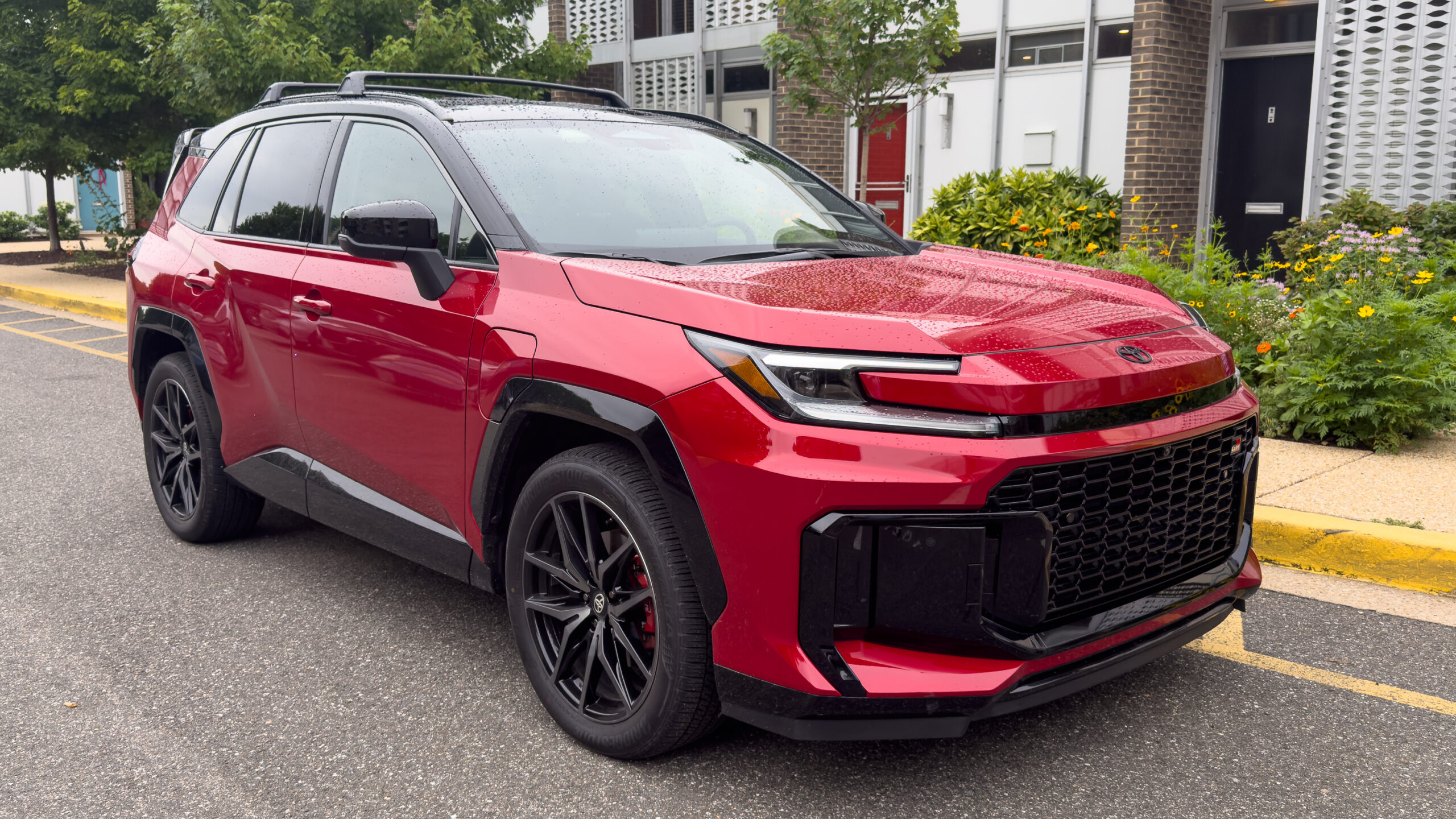
Toyota’s sixth-generation RAV4 has gone all-electrified, and the plug-in hybrid version is the one aimed at drivers who want a gasoline safety net without burning fuel on most local trips. According to Ars Technica automotive editor Jonathan M. Gitlin, the 2026 RAV4 plug-in hybrid pairs a much larger battery with Toyota’s familiar hybrid logic, giving the most efficient trims up to 52 miles of electric-only range.
That matters because the RAV4 is not a niche gadget on wheels. Gitlin notes that Americans have bought more RAV4s than any non-pickup for years, so Toyota’s decision to make every version electrified puts hybrid hardware into one of the country’s default family vehicles.
The plug-in model uses a naturally aspirated 2.5-liter Atkinson-cycle four-cylinder engine with variable valve timing. Toyota rates the engine alone at 186 horsepower and 172 pound-feet of torque. It works with an electronically controlled variable-ratio transmission, but this is not the belt-and-cone CVT many drivers have learned to distrust. Gitlin describes Toyota’s eCVT as a planetary-gear system that can route engine power to an electric motor to charge the traction battery.
The battery is a 22.7 kWh lithium-ion pack mounted under the cabin, rather than stuffed into the cargo area. Most front-wheel propulsion comes from a permanent-magnet synchronous motor rated at 203 horsepower and 201 pound-feet. A rear motor adds 55 horsepower and 91 pound-feet, giving the all-wheel-drive plug-in a combined 324 horsepower and 315 pound-feet.
Efficiency depends on trim
Toyota will sell the 2026 RAV4 plug-in hybrid in four trims, and the numbers get worse as the styling and hardware get more performative. The SE starts at $41,500 and the XSE at $47,200. Both are rated at 40 mpg combined and 52 miles of electric range, according to the figures cited by Ars.
The Woodland trim, priced at $45,300, adds protective cladding, tow hitches, all-terrain tires and a taller ride height. Those changes cut the rating to 37 mpg combined and 49 electric miles. The new GR Sport sits at the top of the plug-in lineup at $48,500, but it has the shortest range: 48 miles, with a 36 mpg combined rating.
The GR Sport keeps the same powertrain but adds 20-inch wheels with performance tires, revised springs, new front dampers, reinforced rear suspension, a 0.6-inch lower ride height and model-specific bodywork. Gitlin’s verdict on that package was blunt: despite the badges, he found it did not feel especially sporty, and he criticized the seats for lacking lateral support and long-drive comfort.
Charging is useful, fast charging is questionable
A regular Level 2 charge takes 3.5 hours using the onboard 7 kW charger. A standard 120-volt outlet takes nine to 12 hours, according to the review. Toyota also fits the XSE and Woodland with an 11 kW onboard charger, cutting Level 2 charging to 2.5 hours, and those trims can DC fast-charge through a CCS port.
Toyota says DC charging can take the battery from 10 percent to 80 percent in 35 minutes under ideal conditions. Gitlin was skeptical of the use case, given that the vehicle still has a gasoline engine and a battery far smaller than a battery-electric vehicle’s pack.
Gitlin found plenty to like outside the GR Sport cosplay: quiet city driving, competent highway cruising, standard driver-assistance features, and a Toyota infotainment system that he described as legible and easy to use, with wireless Android Auto and Apple CarPlay standard. His main complaint, besides the seats, was Toyota’s apparent climate-control behavior, which he said did not restore air conditioning quickly enough in hot weather during his test.
The less dramatic read is the useful one: the 2026 RAV4 plug-in hybrid looks strongest in trims that preserve the electric range and skip the performance costume. For buyers who plug in regularly, Toyota’s mainstream SUV can cover ordinary daily driving on battery power, then burn gasoline when the trip gets longer.
This story draws on original reporting from Ars Technica.


