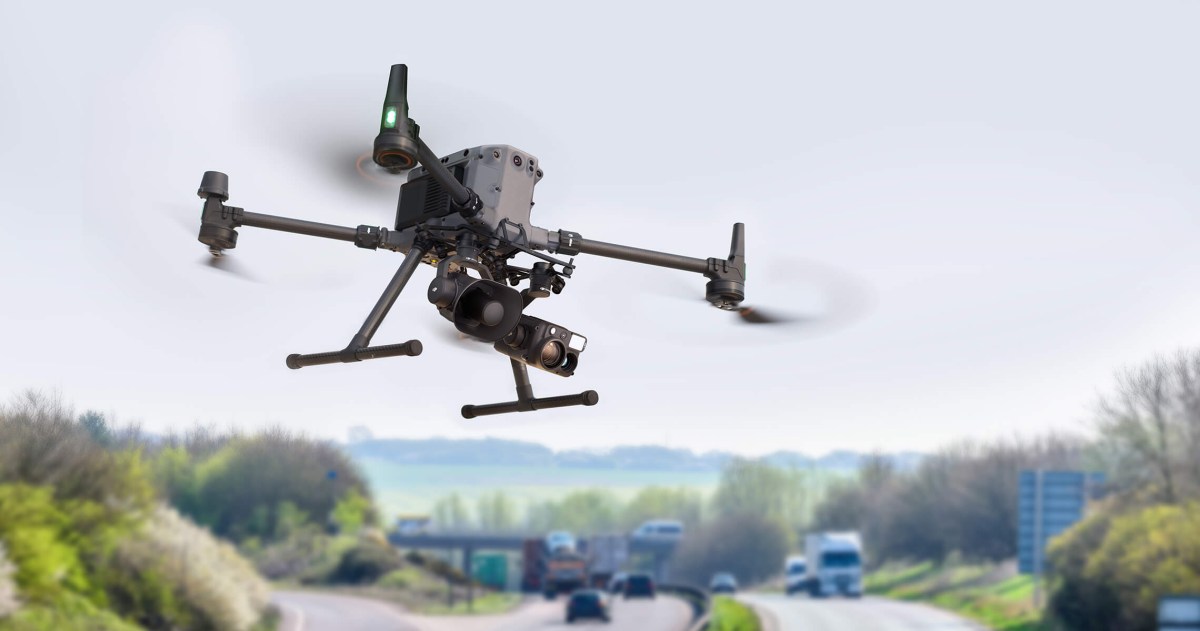
President Donald Trump’s new Trump drone tariffs impose a 100% import duty on specified unmanned aircraft systems and their components, not on every part used in conventional aircraft. The distinction matters: the August 13 proclamation targets drones, their docking stations and listed drone components under a national-security trade investigation.
The White House action followed a Commerce Department investigation under Section 232 of the Trade Expansion Act of 1962. Trump said Commerce Secretary Howard Lutnick found that imports of unmanned aircraft systems, or UAS, and their components threaten U.S. national security. That is the administration’s finding, not an independent verdict on the state of the supply chain.
Which drones and components face the 100% tariff?
The 100% ad valorem duty applies to four categories: drones with a maximum takeoff weight above 25 kilograms, or about 55 pounds; drones with integrated thermal imagers; drone docking stations; and certain UAS components identified in Annex I of the proclamation, according to the White House.
“Ad valorem” means the tariff is calculated as a percentage of the imported product’s value. The order does not say that all drone parts receive that rate, and it does not establish a tariff on all parts for piloted aircraft or other conventional aviation equipment.
UAS weighing 25 kilograms or less generally receive a 25% duty, subject to the order’s exceptions and product-specific rules. UPI reported that the lower rate covers smaller drones outside the specified sensitive categories.
When do the Trump drone tariffs take effect?
The general effective date is 21 days after the proclamation was signed, according to France 24 and UPI. Most of the measures therefore take effect in early September.
There are delays for some goods. Drone components deemed not particularly sensitive have a 180-day lead time, France 24 and UPI reported. The same delay applies to products and components for which the Defense Department approves an exemption from the Federal Communications Commission’s Covered List within 20 days of the signing.
Do allied countries receive lower rates?
France 24 reported a 15% rate for qualifying drones and components from the European Union, Japan, Liechtenstein, South Korea, Switzerland and Taiwan. It reported a 10% rate for drones from the United Kingdom.
UPI reported an additional condition: to receive those country-specific rates, substantially all of the hardware, software and technology must originate in the named country or countries and the United States. That qualification limits the lower-rate treatment; it is not a blanket exemption for all imports from those places.
The proclamation says the administration is responding to foreign dependence and potential security risks. It cites U.S. manufacturers’ reliance on foreign-made motors, electronic speed controllers, lithium-ion batteries and docking stations, as well as concerns that software in some foreign products can transmit data to manufacturers abroad. It also says domestic production is insufficient for anticipated national-security needs.
Those claims explain the policy’s stated rationale. The proclamation’s immediate legal effect is more concrete: a tiered set of import duties focused on unmanned aircraft systems, with the highest rate reserved for the specified drone categories and listed components.
This story draws on original reporting from The Verge.


