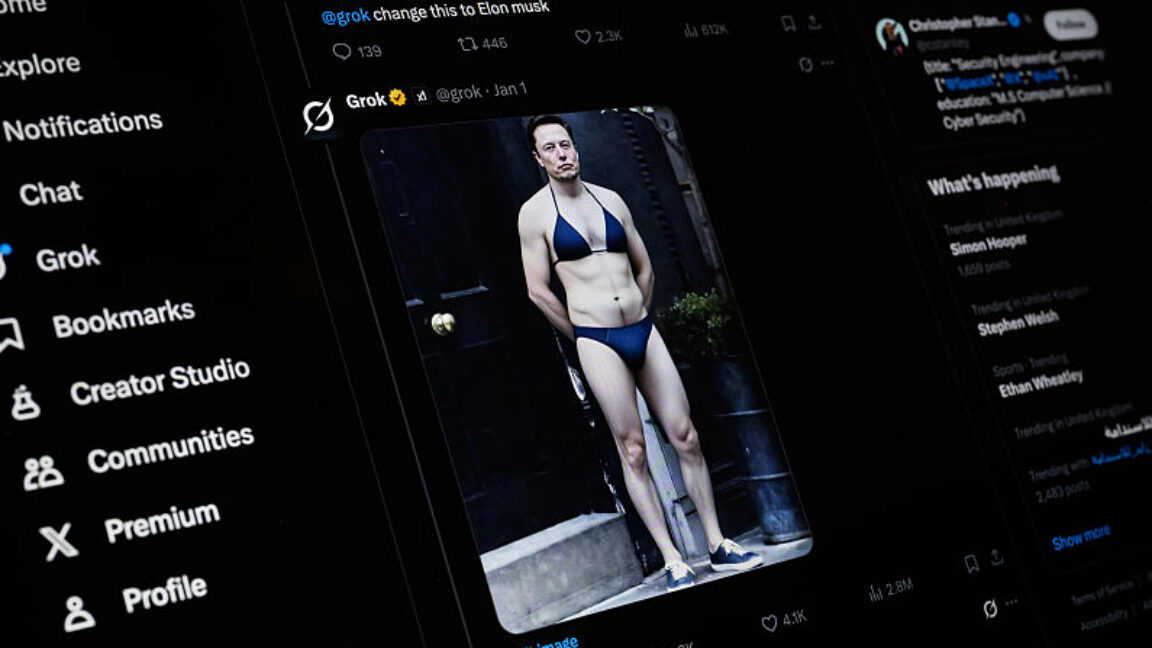
Elon Musk’s xAI has sued to block the xAI Minnesota nudification law fight from turning into per-image liability for Grok, arguing in a Monday complaint that the state’s new ban would force changes to Grok and Grok Imagine before it takes effect on August 1, 2026.
The company’s filing targets Minnesota Attorney General Keith Ellison and asks a court to stop enforcement of the law against AI image tools. xAI says the statute puts providers on the hook for outputs users create, including images that are not distributed and images the company argues may be protected speech.
The lawsuit lands while xAI faces mounting pressure over Grok-generated child sexual abuse material, often called CSAM, and nonconsensual intimate images. According to xAI’s complaint, the company has also sued users accused of bypassing Grok’s safeguards to make illegal material. xAI presents that user lawsuit as evidence that it is pursuing people who abuse the product rather than enabling them.
What is Minnesota's nudification law?
Minnesota’s law bans certain AI tools and outputs that generate nude or intimate depictions of people without consent. The statute allows civil penalties of up to $500,000 for each prohibited output and gives affected people a right to sue over individual images, according to xAI’s complaint.
xAI says that structure creates extreme exposure because one user can generate many images. The company told the court that ten prohibited images could mean up to $5 million in penalties, while 1,000 images could reach $500 million. It argued that a widely available tool with many users could face far higher theoretical penalties if users generated large volumes of covered images.
The company also objects that Minnesota’s law does not require distribution. In xAI’s view, the statute could punish an AI provider even if only the user saw the image. The company says that, without court intervention, it would have to limit Grok Imagine’s image-editing functions in Minnesota rather than risk statutory penalties.
At the same time, xAI told the court it would keep offering the current editing feature if the Minnesota law and its penalties were not looming. The company says it already relies on terms of use that can ban users who generate CSAM or nonconsensual intimate images.
Why does xAI say the law is unconstitutional?
xAI’s First Amendment argument is that Minnesota wrote the law too broadly. The company says the ban could cover nude or partially nude images with artistic, political, satirical, educational, medical, scientific, or religious value. It also argues the law can apply even when the person shown consented or made the image themselves.
A major part of xAI’s challenge concerns Minnesota’s definition of “intimate parts.” The company says the law borrows language from a criminal statute covering nonconsensual touching, including the inner thigh, buttocks, groin, primary genital area, and the breast of a man or woman. xAI argues that definition makes less sense for image generation because it could reach ordinary images of shirtless men, people in shorts, swimsuits, or political satire involving exposed thighs or male chests.
xAI contrasts that with the federal Take It Down Act, which it says uses a narrower definition for covered intimate visual depictions. The company also argues that Minnesota could address harmful distribution through less restrictive rules.
Ellison’s office told Ars Technica that it was waiting to be served and would review the lawsuit and respond in court. Ellison said using AI to create nude images of people against their will is “appalling” and can cause serious emotional, personal, and professional harm.
The complaint also says xAI has submitted about 70,000 reports of suspected Grok-generated CSAM and that at least 244 cases led to arrests. xAI did not respond to Ars Technica’s request for comment.
This story draws on original reporting from Ars Technica.