Donald Trump tried to use newly declassified election intelligence to accuse China of interfering in the 2020 vote. The records released by the White House do not carry that argument very far.
The visible portions of the 2020 National Intelligence Council assessment point in a different direction: U.S. intelligence assessed that Russia sought to help Trump and hurt Joe Biden, while China avoided aggressive action against the election process. Large parts of the Russia discussion remain redacted, which is convenient for anyone trying to wave the documents around as proof of something else.
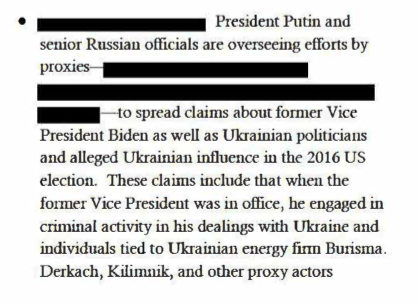
The assessment, produced while Trump was president, says Russian President Vladimir Putin intended to support Trump’s candidacy and damage Biden’s. It also says Russian operatives pushed false claims about Biden and Ukraine before the election and tried to get those claims in front of people inside Trump’s White House.
On China, the main intelligence assessment is more cautious. It says Beijing probably preferred Biden over Trump, but did not mount a comparable operation to affect the vote. The documents describe China as spreading broad anti-U.S. messaging, while judging that Beijing saw little benefit in taking direct action against election infrastructure because exposure could trigger blowback.
What the records say about China
A separate view in the release, described elsewhere as a minority position, goes further than the main assessment but still stops short of Trump’s claim. It says Beijing took “at least some low-level, exploratory steps to undermine the president’s reelection chances.” The same passage says those efforts probably did not include China’s most aggressive options because Beijing wanted to reduce the risk of backlash and stabilize relations after the election.
That is not the same thing as evidence of a major Chinese hack of the 2020 election. The documents, as released, describe capability, possible preference, and limited exploration. They do not show China manipulating election systems.
A comparison chart included in the release is even more awkward for the White House’s claim. According to that chart, Russia was the only one of Russia, China, and Iran assessed as seeking to manipulate the election process by “targeting, accessing, or manipulating election processes or election-related systems.” For China, the chart notes preliminary steps but says U.S. intelligence did not observe an actual attack on election systems.
Russia gets the sharper finding
The Russia material is partly blacked out, so the public record is incomplete. What remains visible is still clear enough: U.S. intelligence assessed that Moscow acted in Trump’s favor, including through election-related activity and influence work aimed at Biden.
That distinction matters for the current political fight over election legitimacy. Trump’s public claim puts China at the center of the 2020 interference story. The declassified material released by his own White House instead says Russia ran the more direct operation, while China held back from the most aggressive tools it had available.
The records do not show a clean election-security fairy tale. They show foreign governments watching U.S. politics, probing for advantage, and weighing risk. But on the specific claim Trump is selling, the documents are a bad witness: they say China was cautious, and Russia was the actor U.S. intelligence saw working to help him.
This story draws on original reporting from Techdirt.